
Last updated November 15, 2026
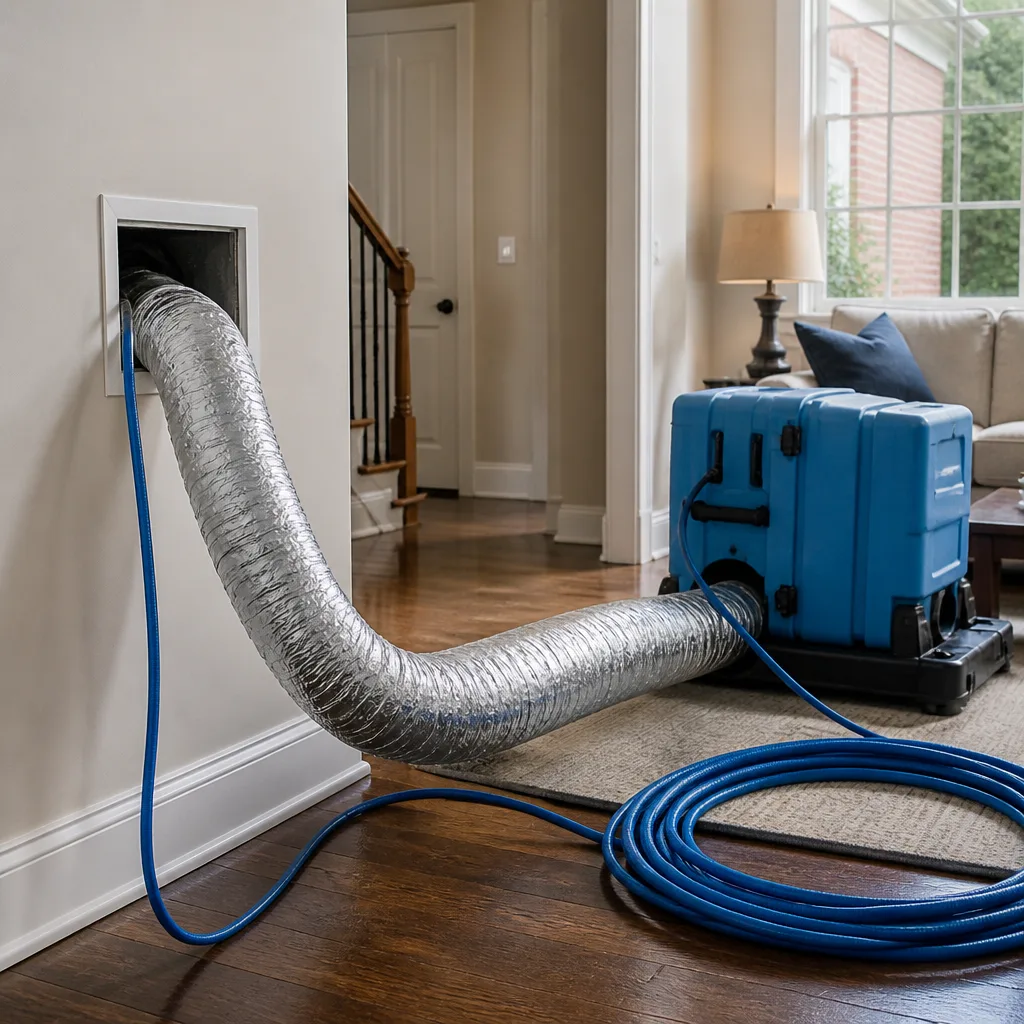 Whole-home duct cleaning
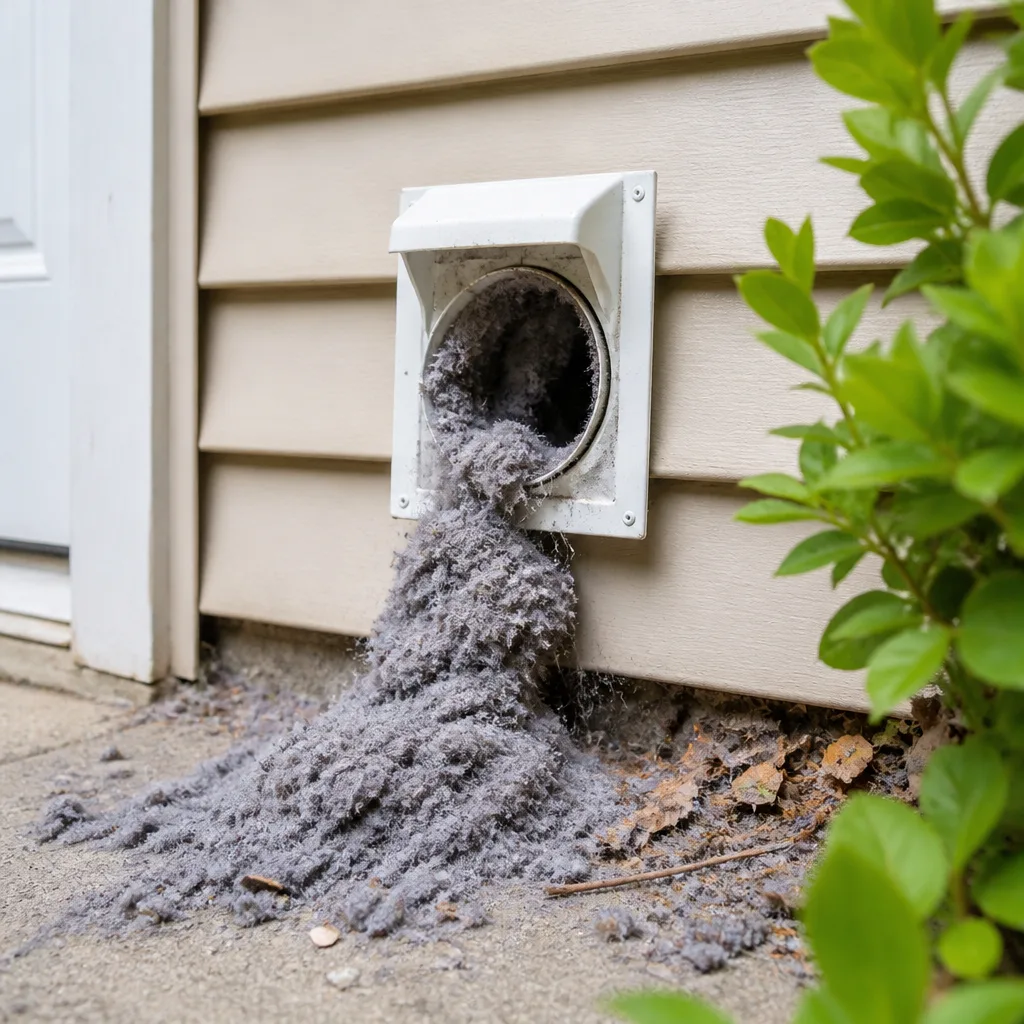 Dryer vent cleaning
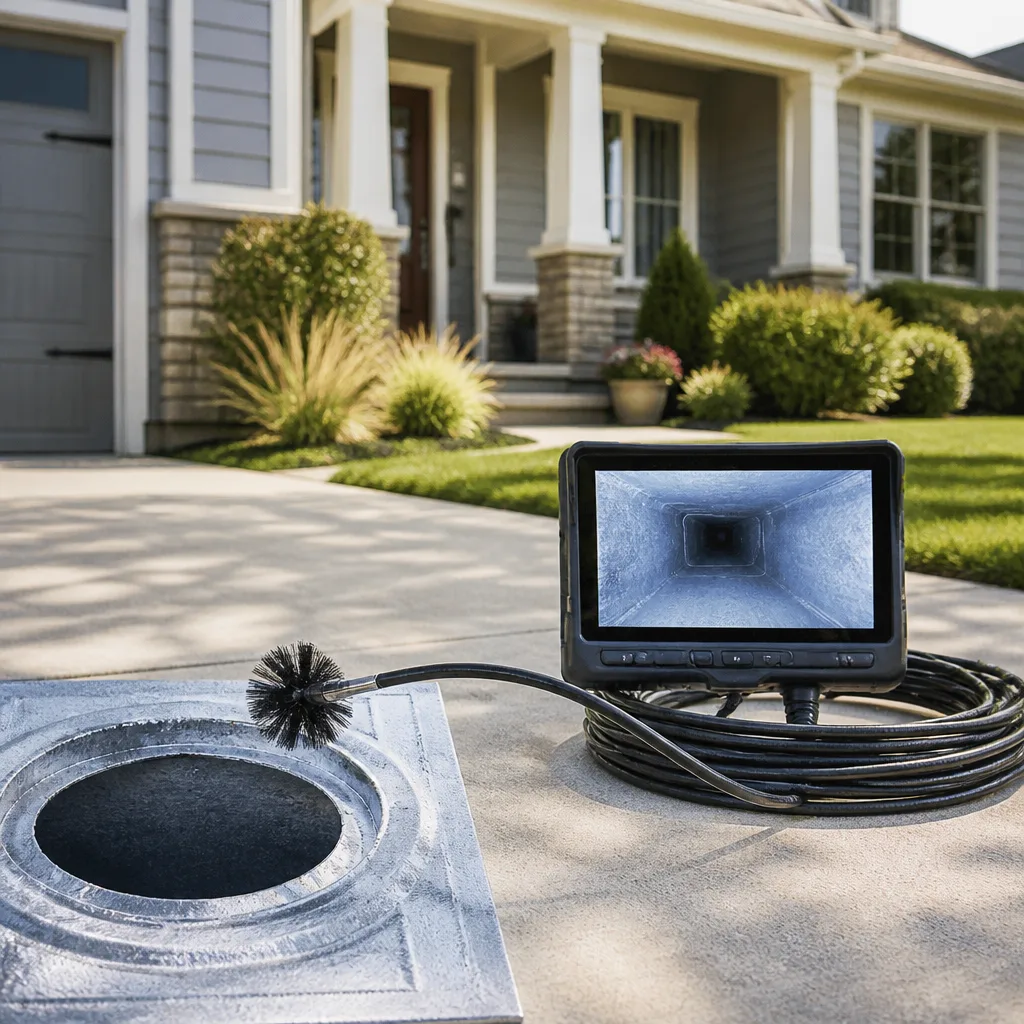 Camera inspection
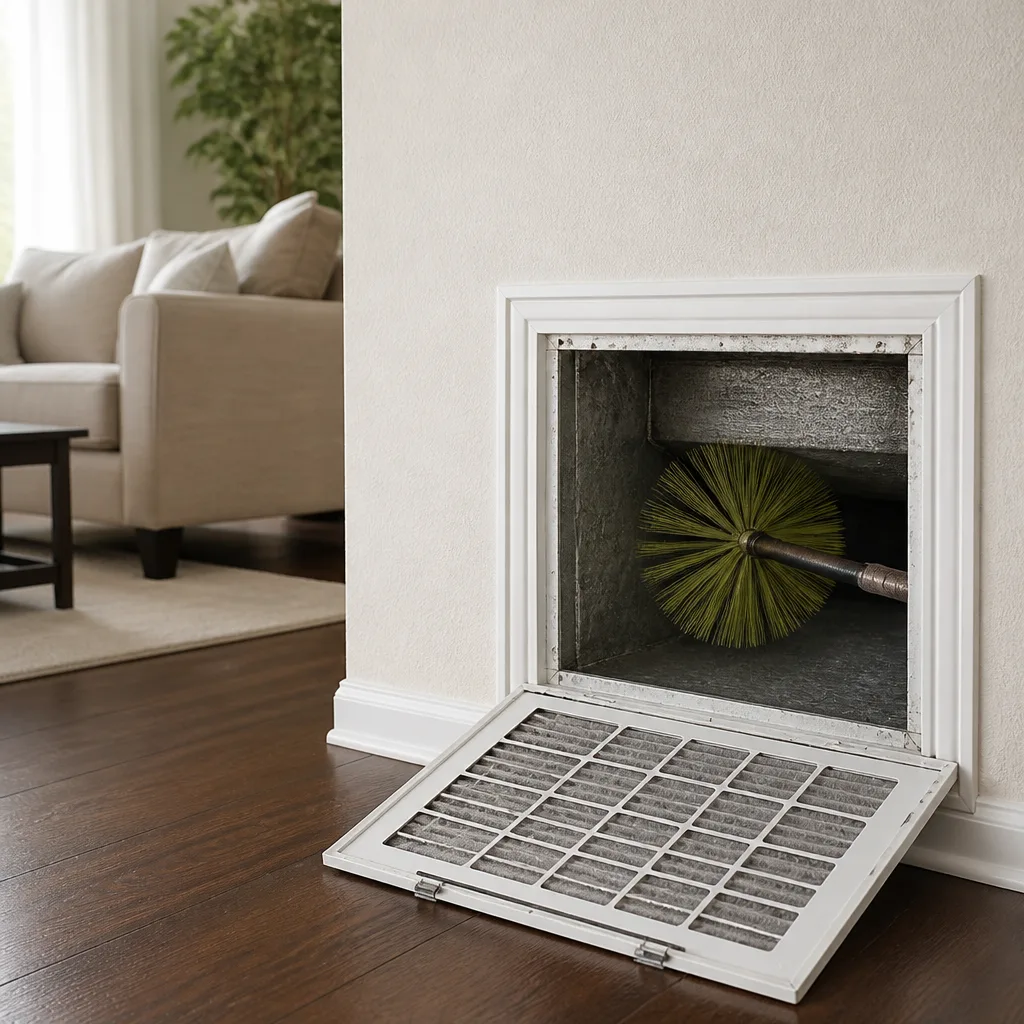 Sanitizing & deodorizing
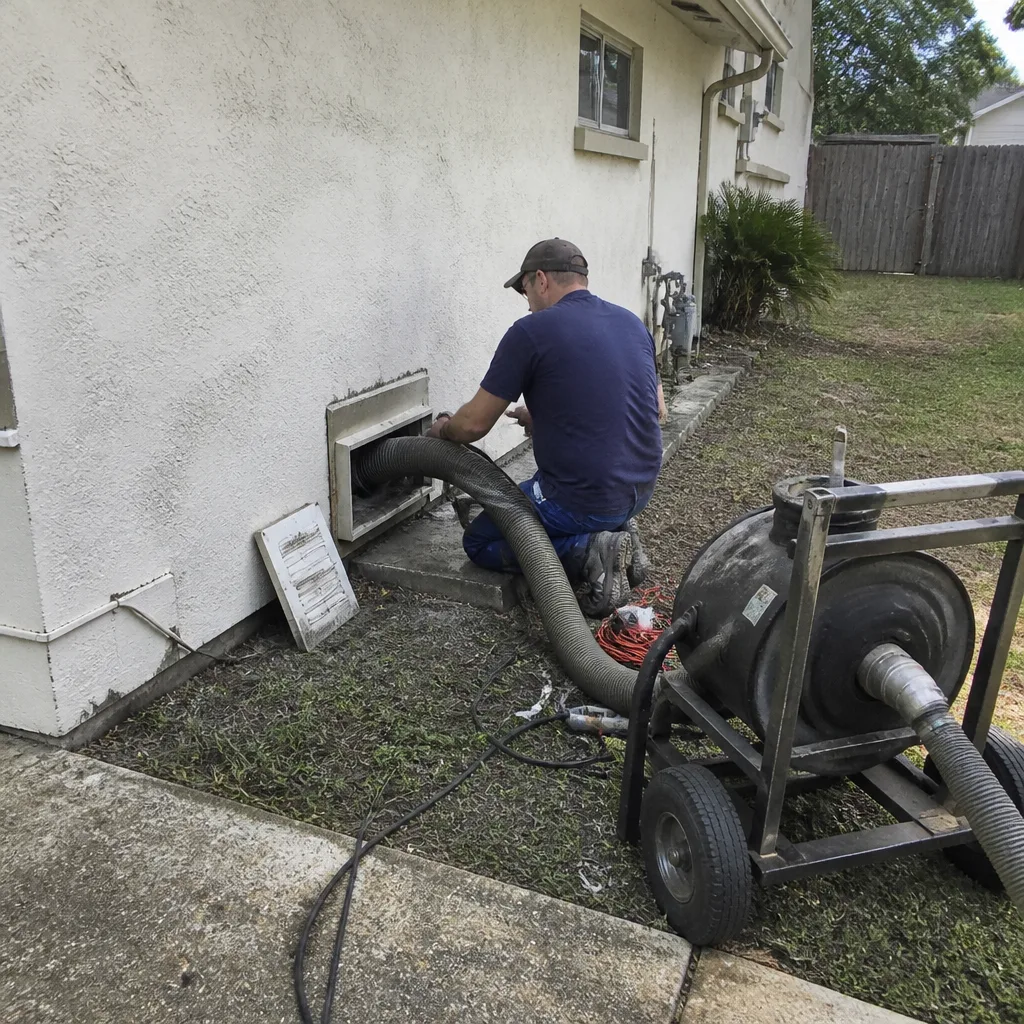
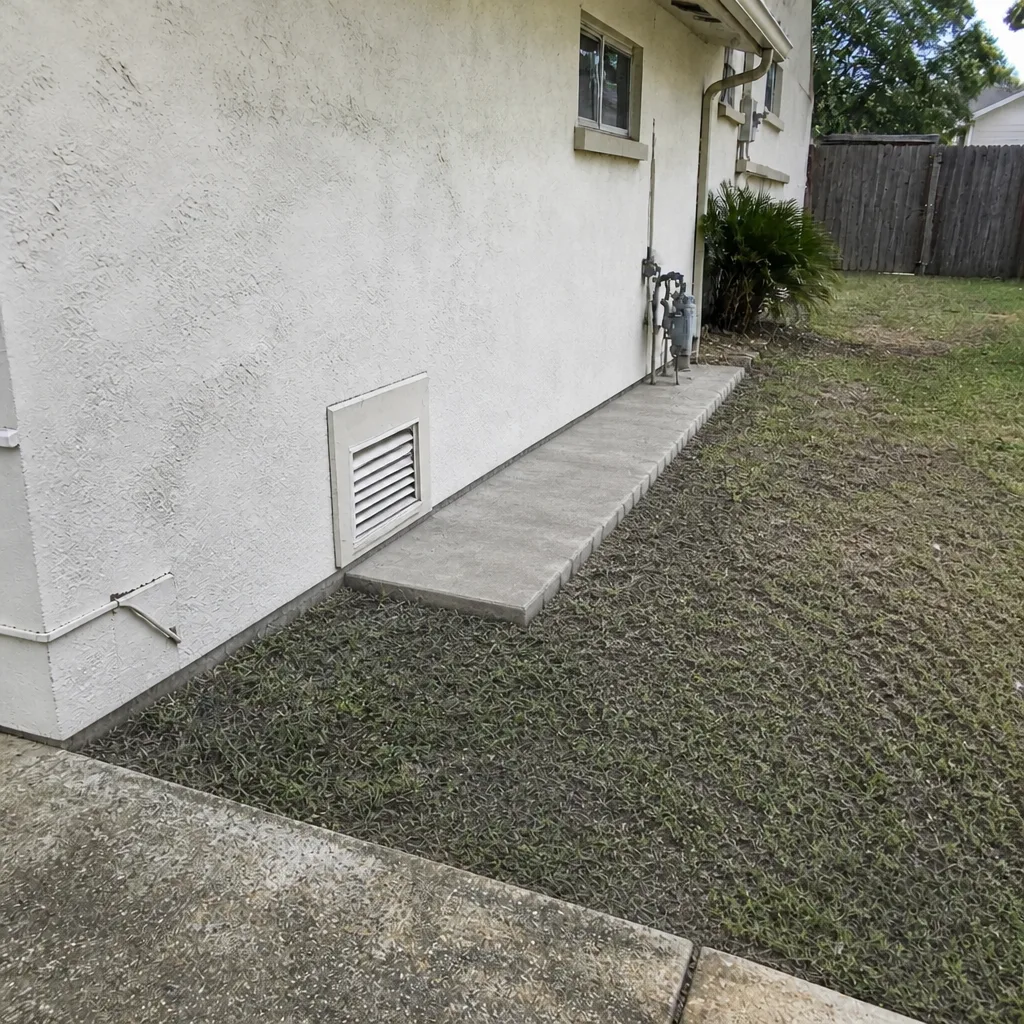
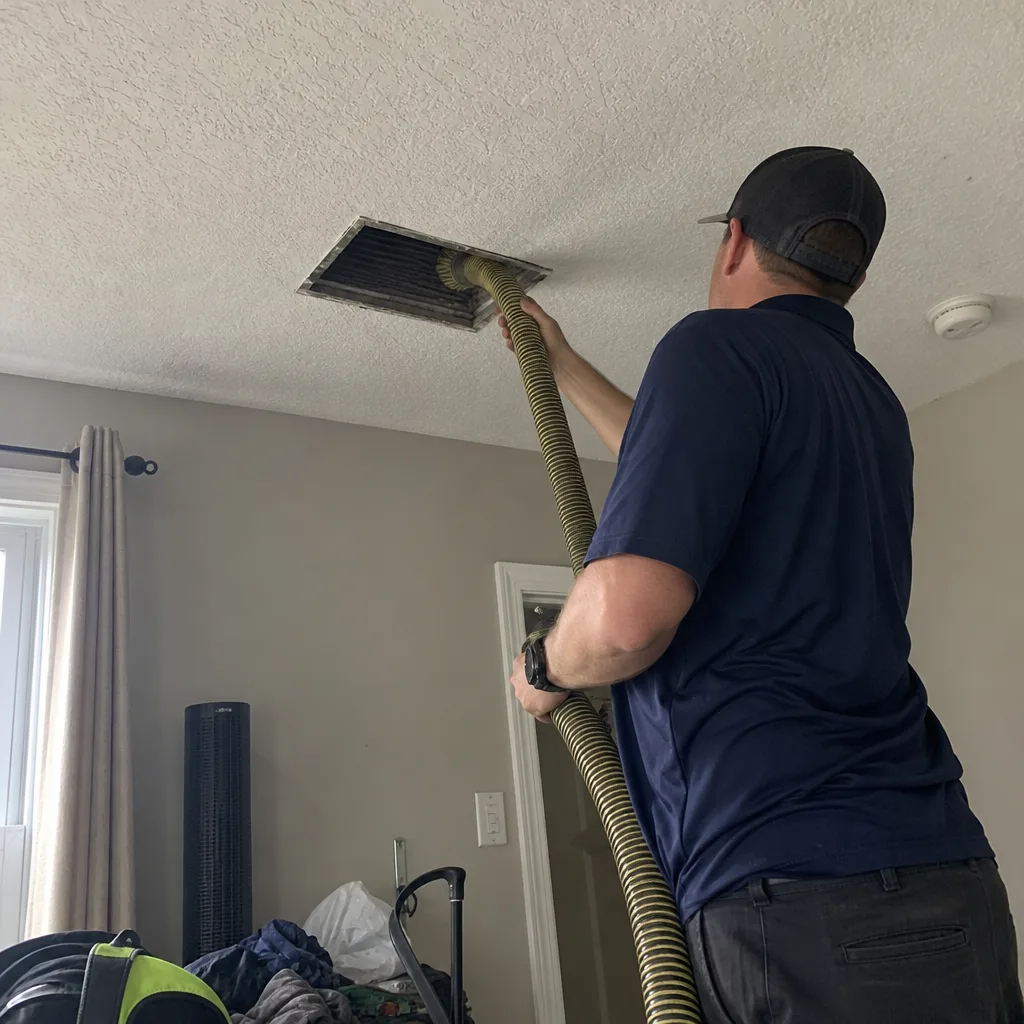
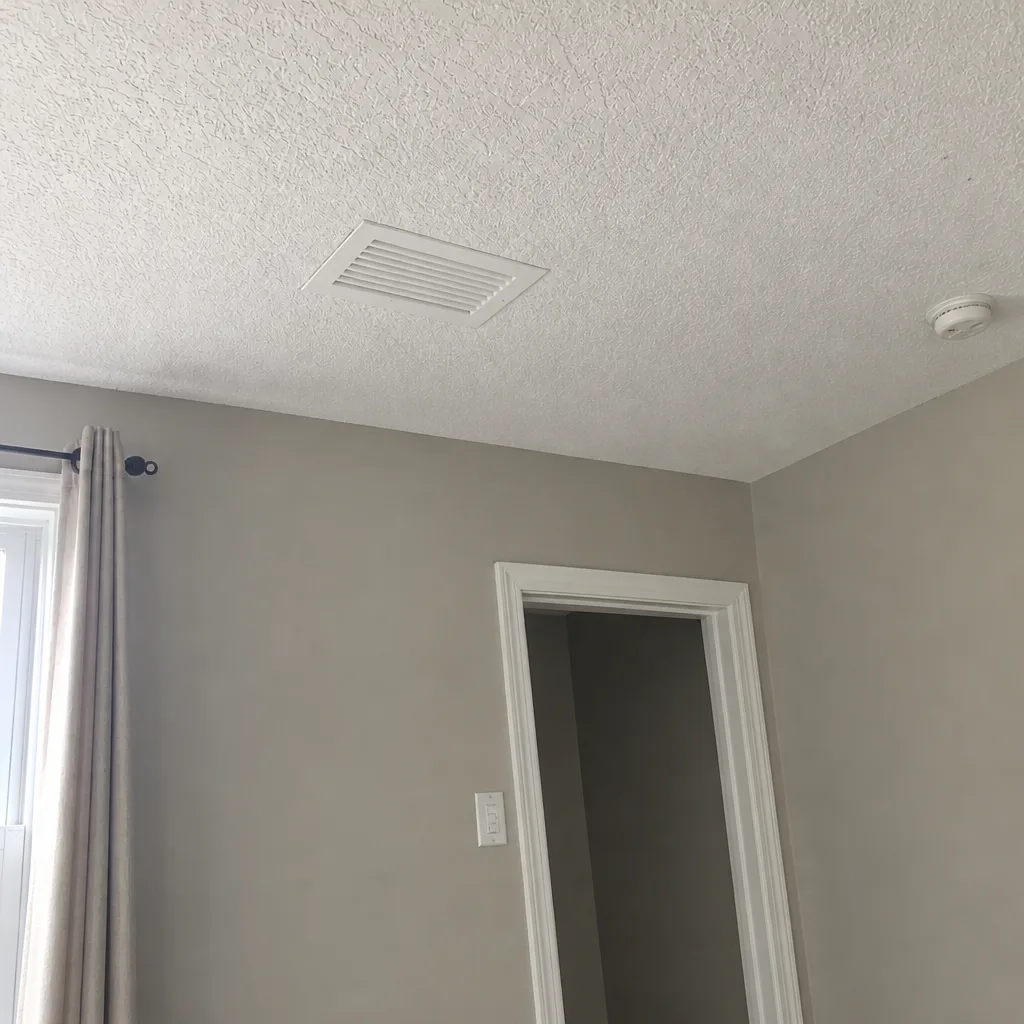
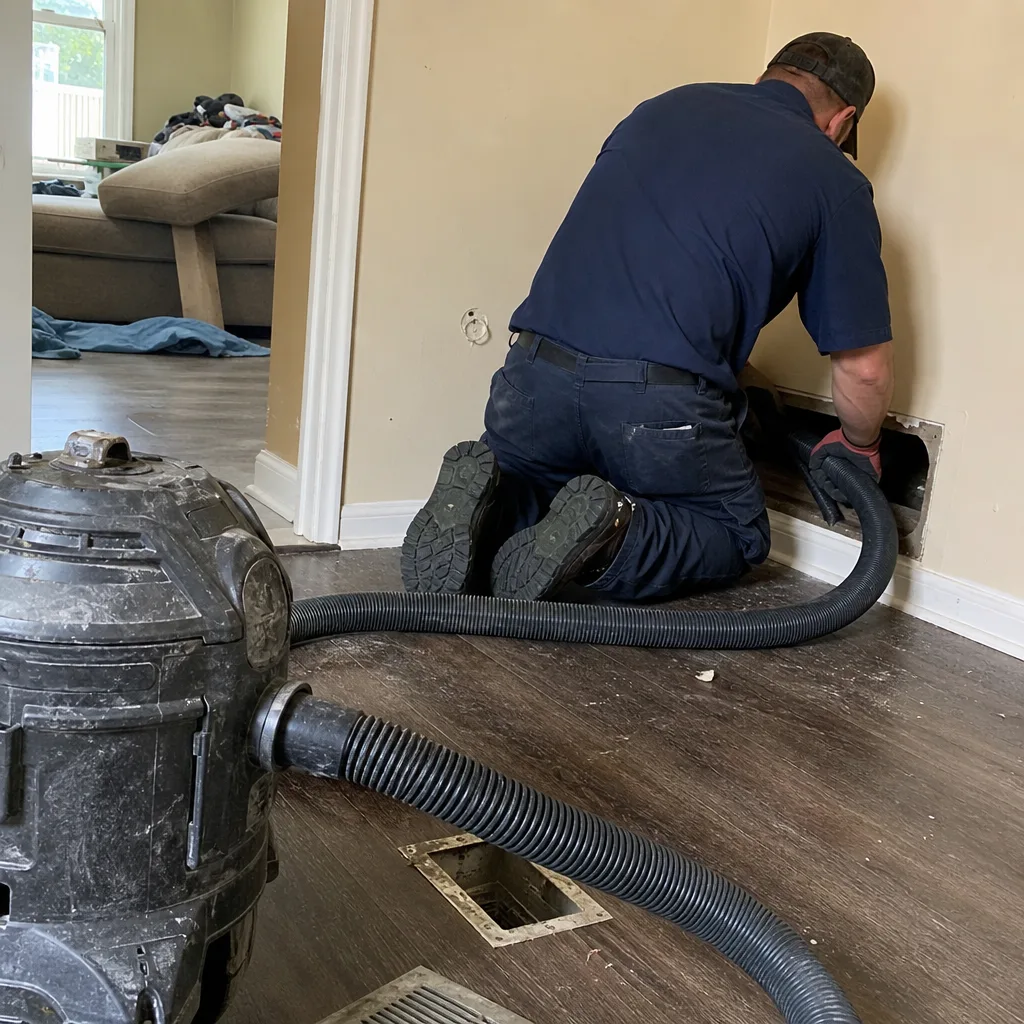
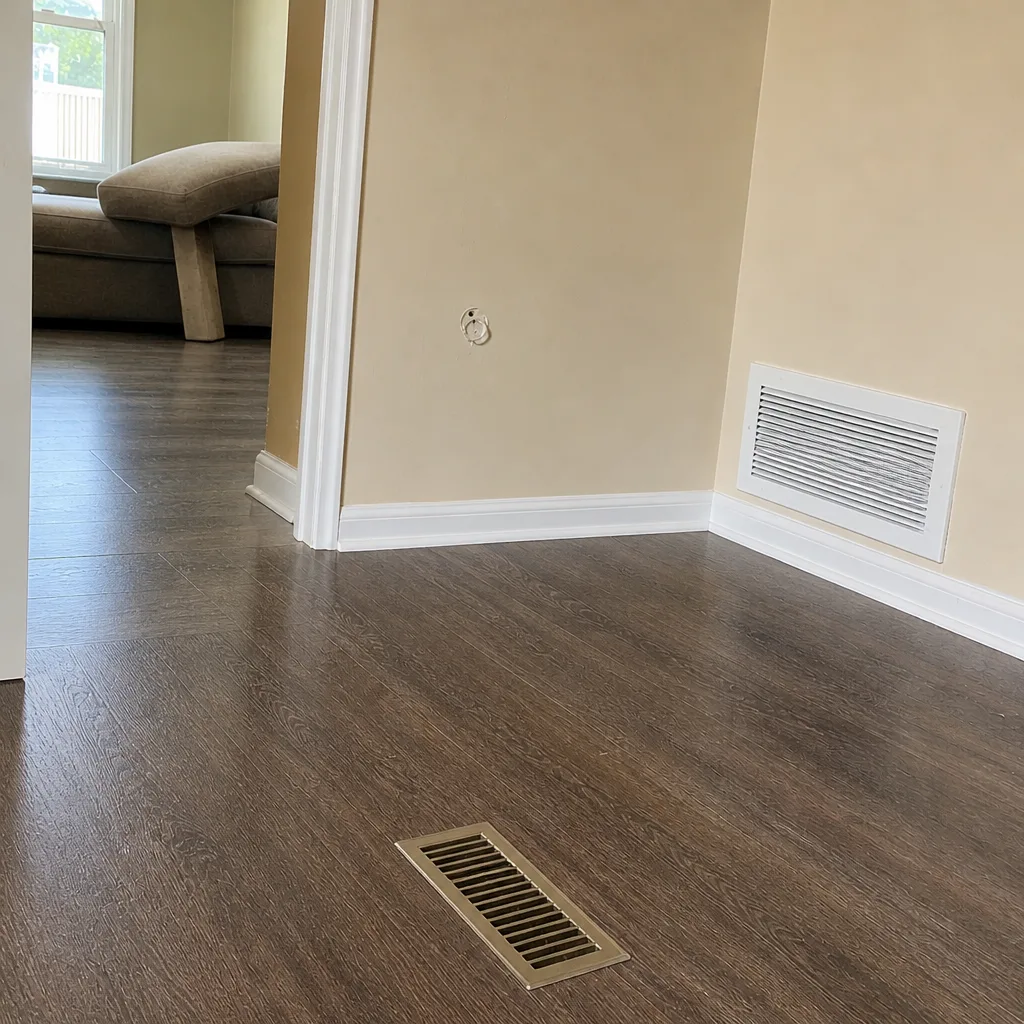
Whole-system duct and dryer vent check with before-and-after photos - you see exactly what came out of your vents
That "$99 whole-house special" is a bait ad - the real number appears once they are in your hallway, or the "clean" is a shop-vac at the register. We photograph the inside of your ducts before and after instead.
DIY vs Professional Air Duct Cleaning: The Palm Coast Homeowner’s Decision Guide
Most homeowners who try to clean their own ducts don’t fail because they lack effort. They fail because of physics. A $30 drill brush and a shop vacuum can reach a single accessible register, but connecting that brush to a 10-foot flex duct run and expecting the debris to actually exit the system requires a negative-air machine pulling 1,500 to 4,000 cubic feet per minute of containment. No consumer product on a hardware-store shelf does that. What happens instead is that contamination gets loosened and pushed back into the living space. In this guide, we’ll walk through where the DIY approach genuinely works, where it makes things worse, and how Palm Coast homeowners can inspect their own systems to make an informed call rather than guess.
Styles & brands we work with
- Whole-home duct cleaning
- Dryer vent cleaning
- Camera inspection
- Sanitizing & deodorizing
Quick Answer
DIY air duct cleaning works for surface-level tasks like register cleaning, return grille washing, and clearing an accessible dryer vent. It does not work as whole-system cleaning, because a shop vacuum cannot generate the negative-air pressure required to carry dislodged debris out of the duct run – it redistributes contamination into the living space and the air handler. For any flex duct run over 15 feet, attic-routed systems, or any visible microbial growth, call a professional; in Palm Coast, we offer free estimates at (855) 592-3509.
Table of Contents
- The Physics of Negative-Air Containment
- Three DIY Tasks Palm Coast Homeowners Can Do Well
- What Happens to Dislodged Debris Without Negative Air
- Palm Coast Conditions That Push Jobs Into Professional Territory
- A Five-Point Visual Inspection You Can Do Yourself
- What Professional Equipment Actually Does Differently
- What Air Duct Cleaning Costs in Palm Coast
- Repair vs Cleaning: When It’s Not Just Dust
- Common Mistakes to Avoid
- When to Call a Professional
- Frequently Asked Questions
- The Bottom Line
The Physics of Negative-Air Containment
Negative-air containment is the technical dividing line between cleaning that works and cleaning that redistributes. It’s not a marketing term and it’s not professional-brand loyalty. Here’s what’s happening in the ductwork of any home.
When a technician dislodges dust from the inner wall of a duct – by brush, by air whip, by mechanical agitation – that dust has to go somewhere. Gravity pulls it down. Airflow inside the duct pushes it along. If a vacuum source at the far end of the run is pulling 1,500 to 4,000 CFM, the dislodged debris travels to the collection point. If the only vacuum source is a shop vac attached to one register with maybe 100 to 200 CFM of suction and no seal, most of that debris settles in the next section of duct, leaks out at the seams, or gets drawn back into the return and blows into the house.
This is why we use contact cleaning systems from Rotobrush, which physically brush debris from duct walls while a negative-air machine downstream captures it. The brush disturbs. The containment transports. Neither half works without the other. That combination is what the phrase “brush-and-extract process” actually means, and it’s the same standard used in professional remediation work – which is why commercial-grade equipment brands like Nikro and Abatement Technologies appear on real duct-cleaning rigs and not on consumer products.
If you take one thing from this section, make it this: the question isn’t whether a homeowner can loosen dust inside a duct. Most people can. The question is whether they can move it out of the system once loosened. In almost every case, they can’t.
Three DIY Tasks Palm Coast Homeowners Can Do Well
There are legitimate, useful things you can do yourself. We’re not in the business of telling you everything requires a professional. Here are the three tasks where DIY effort actually pays off.
- Register cleaning. Pop the supply registers off, wash them in a sink with dish soap and warm water, dry them fully, and reinstall. Do the same for the return air grilles. This is where most visible dust accumulates, and it’s entirely manageable with a sponge and 20 minutes.
- Return grille washing. The return grille is the big intake grille near your air handler or in a central hallway. It collects a surprising amount of hair, lint and dust film. Vacuum it, wash it, dry it. If it has a washable filter behind it, rinse and dry that too before reinstalling.
- Accessible dryer vent clearing. If your dryer vent run is short and straight – say, under 10 feet with one or two elbows and you can reach the outside hood – you can push a vent brush through and pull lint out. This matters for fire safety. According to the U.S. Fire Administration, thousands of residential fires each year are linked to clogged dryer vents. Clearing the accessible portion is a genuine safety improvement.
Notice what these three have in common: they’re all surface-level or exterior-accessible. None of them require moving debris through 30 feet of flex duct in an attic. That’s where DIY stops being effective – and we cover that in the next section.
What Happens to Dislodged Debris Without Negative Air
When dust gets loosened but not extracted, it doesn’t disappear. It relocates. Here’s where it deposits, and why the cost of fixing the aftermath usually exceeds the cost of doing it right the first time.
- Downstream duct sections. Debris travels until the airflow slackens, which typically happens at a bend, a transition, or a section where the duct gets pinched. That’s where a new debris pile forms, often a half-inch to an inch thick against the duct floor.
- The air handler and evaporator coil. Contamination that reaches the air handler can coat the evaporator coil. A dirty coil loses efficiency, can ice up in humid weather, and is expensive to clean – far more expensive than duct cleaning itself.
- Living space air. If the register is open while a shop vac runs, the vacuum exhaust jet actually pushes fine dust past the register louvres and into the room. This is why some homeowners report more dust in the air right after a DIY attempt, not less.
- Duct seams and joints. Leaky seams are common in flex duct and in older galvanized systems. Debris that reaches a leak escapes into wall cavities or attic space, where it can feed mold growth over time.
In Palm Coast’s humidity, that last point matters more than it would in a dry climate. Fine dust in an attic space doesn’t stay dry. It absorbs moisture, and where dust accumulates and stays damp, microbial growth becomes a real possibility. That’s a bigger remediation problem than the original duct dust.
Palm Coast Conditions That Push Jobs Into Professional Territory
Some homes in Palm Coast can get by with surface-level DIY. Others can’t, and the specific conditions that push a job from “maybe” to “definitely professional” are architectural and environmental. Here’s what we look at.
1. Flex duct runs over 15 feet
Flex duct is common in Palm Coast homes built in the last 30 years, and a single run from the air handler to a register often exceeds 15 feet, especially in two-story homes with attic-routed trunks. Past 15 feet, a shop vac has almost no ability to move debris against the resistance of the duct walls and turns. Past 25 feet, it’s effectively a rounding error.
2. Attic-routed systems
In Palm Coast, the air handler typically sits in the attic or garage. Either way, the duct runs pass through unconditioned space, which means they absorb heat and humidity and are more prone to condensation on the exterior of the duct. Wet-then-dry cycling traps dust and creates a sticky residue on the inside of the duct wall that a brush alone won’t remove without proper containment.
3. Visible microbial growth
If you can see dark spotting, fuzzy patches, or any discoloration on a register, on the visible interior of a duct, or around the air handler cabinet, stop and call a professional. Microbial growth indicates moisture and organic material in the system. Agitating it without containment can aerosolize spores into the living space, which is the opposite of what you want if anyone in the home has allergies or respiratory sensitivity.
4. Post-renovation debris
After a kitchen or bath remodel, drywall dust, sawdust, insulation fibers and caulk fragments migrate into return ducts. This is fine particulate that a shop vac’s filter simply can’t trap at scale. It’s one of the most common reasons Palm Coast homeowners call us – the dust is visible on every surface a week after a job is done.
A Five-Point Visual Inspection You Can Do Yourself
Before you decide, look at your own system. Here are five things you can check without any tools beyond a flashlight and a screwdriver.
- Pop a supply register. Remove the register cover and shine a light into the duct. If you see a visible coating of dust, lint, or fuzzy debris on the walls, the ducts are carrying contamination. If the walls are clean metal or clean flex liner, they’re not.
- Check the return grille and filter. A return grille that’s matted with hair and dust is a sign the whole system is working harder than it should. If the filter behind it is dark grey or clogged, replace it before making any other decision – that single step can resolve most of what homeowners think is a duct problem.
- Sniff a register while the system runs. A stale or musty smell at a supply register suggests microbial activity somewhere in the air pathway. A neutral smell suggests it’s just dry dust.
- Look at the drain pan and coil. If you have access to the air handler, shine a flashlight on the evaporator coil. A coil that’s dusted over with a grey felt-like coating means contamination is already reaching the coil – which needs professional cleaning, not DIY.
- Run your hand along a register louvre. A thin film of dust is normal. A thick, sticky, dark film suggests oil-based contamination – often cooking grease from a nearby kitchen return – which needs solvent-based cleaning and containment.
If you score low on all five, you’re a reasonable DIY or “wait and see” candidate. If you score high on even one of the last three, professional cleaning is the sensible path. For a free Palm Coast estimate, we’re happy to walk through what we see with you.
What Professional Equipment Actually Does Differently
The gap between a shop vacuum and a duct cleaning rig isn’t brand loyalty. It’s a different class of tool capable of a fundamentally different job. Here’s the honest technical comparison.
- Contact cleaning vs air agitation. A professional Rotobrush contact cleaning system uses a rotating brush on a flexible whip to physically scrub duct walls while a vacuum pulls dislodged material out. Air-only “cleaning” (a device that just blows air into the duct) doesn’t remove anything – it just repositions it. This is the single biggest difference between a real cleaning and a cosmetic one.
- Negative-air containment. Commercial-grade extraction equipment from Nikro and Abatement Technologies can hold 1,500 to 4,000 CFM with a sealed collection point. That pressure difference is what actually carries debris out of the system instead of letting it settle downstream.
- HEPA and filtration staging. Commercial remediation equipment stages filtration so that fine particulate doesn’t exhaust into the living space. Shop vacs use basic filters, and most shop vacs on a construction site are rated for debris, not for respirable particulate.
- Before-and-after documentation. A proper cleaning includes photographs of the same duct sections before and after, so the homeowner can see what was extracted. If a company won’t photograph your ducts, that tells you something.
- Filtration upgrades in the same visit. Honeywell, Aprilaire and Guardsman products let us upgrade filtration or add air-quality components during the same appointment, rather than a second trip. That’s a convenience, not a necessity – but on older Palm Coast HVAC systems, it’s often worth doing.
The comparison isn’t “professional equipment is nicer.” It’s “the physics of the task requires equipment that a shop vacuum can’t replicate.” That’s the whole point.
What Air Duct Cleaning Costs in Palm Coast
Professional whole-system air duct cleaning in Palm Coast typically runs $350 to $700 for an average home, and up to $900 or more for larger homes with multiple air handlers, long flex duct runs, or heavy contamination. The price depends on the number of systems, the length and accessibility of the duct runs, the level of contamination, and whether repairs are needed. We set one flat price per system before work starts, agreed in writing.
| Service | Typical Palm Coast Range | What It Covers |
|---|---|---|
| Whole-home air duct cleaning (single system) | $350 – $700 | Full supply and return cleaning, register removal and washing, negative-air extraction, before-and-after photos |
| Air duct cleaning (two systems) | $600 – $1,100 | Same scope across two air handlers or zones |
| Dryer vent cleaning | $120 – $200 | Full run from dryer connection to exterior hood, lint extraction, airflow verification |
| Air duct repair (per issue) | $150 – $450 | Reconnecting disconnected flex duct, sealing leaks, replacing torn liner |
| Filter upgrade install (Honeywell / Aprilaire / Guardsman) | Quoted on site | Correctly sized media cabinet or filter install for your system |
Those are estimates for planning. The written estimate sets the final price, and it’s free to request. If a quote you receive is dramatically below this range, ask what’s actually included – specifically, whether contact cleaning and negative-air extraction are part of the process, or whether the technician is only doing air-only “blow-through” cleaning.
Repair vs Cleaning: When It’s Not Just Dust
Half the calls we get in Palm Coast turn out to involve a repair, not just cleaning. The two services overlap, and it helps to know the difference before you buy.
Cleaning addresses the accumulation of dust, lint, dander and particulate on duct walls and in the air pathway. Repair addresses a structural problem: a disconnected duct section that’s dumping conditioned air into the attic, a torn flex liner that’s shedding fiberglass into the airstream, a crushed section of duct that’s choking airflow, or a leaky joint that’s pulling attic air into the system. These are different problems, and cleaning alone doesn’t fix them.
That’s why we offer duct cleaning in Palm Coast together with air duct repair as separate services – so if a technician finds a disconnected duct during a cleaning, we can address it on the same visit rather than referring you to a second contractor. It’s also why the inspection matters: a crushed flex run behind a knee wall in a Palm Coast attic isn’t visible from a supply register, but it can cost you 15-20% of your system’s airflow, which drives up energy bills quietly.
Signs you may need repair, not just cleaning:
- One or two rooms never get cool, even when the AC runs constantly
- You hear a hiss or whistle at a register
- Attic insulation has visible dust staining around a duct run
- A flex duct visibly sags, kinks or is crushed in the attic
- Higher-than-expected cooling bills in summer without an obvious cause
Common Mistakes to Avoid
- Judging cleaning by “how much dust came out.” A shop vac attached to one register might pull a startling amount of lint, but that’s from the register boot and the first two feet of duct. Whole-system cleaning is measured by what was removed from the full run, not the register.
- Running the HVAC while you DIY. If you brush a duct while the system fan is on, you aerosolize dust straight into the living space. Turn the system off and close the registers during any DIY attempt.
- Assuming a low-priced coupon covers full cleaning. Many low-price duct cleaning offers cover only one or two registers and then quote per-vent pricing. Ask every company up front, before work starts, exactly how many registers are covered and what the total price will be. In Palm Coast, we quote one flat price per system.
- Skipping the dryer vent because “it’s just lint.” Lint is highly combustible. A clogged dryer vent is a fire risk, not an inconvenience. The U.S. Fire Administration links thousands of residential fires each year to clogged dryer vents – making dryer vent cleaning one of the highest-value routine services a homeowner can schedule.
- Ignoring a musty smell after a DIY attempt. A musty smell right after DIY cleaning means moisture is present somewhere in the system and the agitation has exposed it. Stop and get a professional inspection.
- Trusting a company that doesn’t photograph your ducts. Before-and-after photos of the same sections are the simplest way to verify work happened. A company unwilling to document is a company you can’t verify.
- Cleaning the ducts before addressing a source. If the return grille is pulling air from a dusty garage or an open attic hatch, or if the HVAC filter hasn’t been changed in a year, the ducts will re-contaminate within months. Fix the source first.
When to Call a Professional
In Palm Coast, we see the same handful of situations come up on the professional side of the decision over and over. Call a professional if any of the following applies. You’ve had recent renovation work and dust is still settling on surfaces weeks later. Your supply registers smell musty or stale when the system runs. Multiple family members have allergies and symptoms get worse indoors. You’ve seen visible microbial growth at a register. The duct runs in your attic exceed 15 feet, or the system is entirely attic-routed. You’re moving into a home and don’t know the duct history. Or you’ve had a low-priced cleaning and felt uncertain about what actually happened.
If any of those describe your situation, Duct Cleaning Palm Coast offers free estimates in Palm Coast – call (855) 592-3509. We set one flat price per system before work starts, provide before-and-after photos of your own ducts, and stay until the system is clean, repaired if needed, and documented. Our technicians have up to 15 years of experience with Rotobrush contact cleaning and commercial-grade extraction.
Frequently Asked Questions
Air duct cleaning in Palm Coast typically costs $350 to $700 for a single system, and $600 to $1,100 for homes with two systems. The written estimate sets the final price. If a company quotes you far below that range, ask specifically what equipment they’ll use and whether the price covers the full run or only a few registers. Call (855) 592-3509 for an exact quote – estimates are free.
Some quotes are cheaper because they’re quoting less work: fewer registers, air-only “blow-through” cleaning instead of contact cleaning, no negative-air containment, no before-and-after photos. A low coupon price that becomes a larger invoice once the technician is on site is the classic bait-and-switch pattern in this trade. Ask up front for one flat price per system, in writing, agreed before work starts.
Before-and-after photos of the same duct sections are the simplest verification. Any professional cleaning crew should be willing to show you the accessible interior of a duct before they start and after they finish. If a company can’t or won’t photograph the ducts, that’s a red flag worth paying attention to.
Most Palm Coast homes do well with cleaning every three to five years, but there’s no fixed schedule. Homes with pets, allergy sufferers, recent renovations, or a smoker indoors may need it more often. Homes with clean duct interiors and consistent filtration can go longer. The five-point inspection above is a better guide than a calendar.
You can clear the accessible portion if the run is short and straight. If the run is long, has multiple elbows, or exits through the roof, professional dryer vent cleaning is safer and more thorough. A clogged dryer vent is linked to thousands of residential fires each year per the U.S. Fire Administration, so this isn’t a task to half-do.
Cleaning removes accumulated dust and debris from duct walls. Repair fixes a structural problem: a disconnected joint, torn flex liner, crushed run, or leaky seam. Many Palm Coast jobs involve both, which is why we offer cleaning and repair as separate services under one company – problems found during cleaning get addressed on the same visit. Call (855) 592-3509 for a free estimate on either.
The Bottom Line
DIY air duct cleaning isn’t a bad idea – it’s just a partial one. Register cleaning, return grille washing and accessible dryer vent clearing are real, useful tasks, and Palm Coast homeowners should keep doing them. But once a duct run exceeds 15 feet, travels through an attic, or shows visible microbial growth, the physics of negative-air containment is what separates cleaning from redistribution. The negative-air machine isn’t a professional-brand loyalty signal. It’s the tool that moves debris out of the system instead of deeper into it. If your five-point inspection points toward professional cleaning, that’s the answer. Free estimates at (855) 592-3509, one flat price per system, and photos of your own ducts.
If you’re still deciding, one more Palm Coast Palm Coast consideration: the local humidity means any debris left in the system has more opportunity to absorb moisture and feed growth. That’s a strong argument for not agitating a system you can’t contain. Call us and we’ll walk through it with you.
Call (855) 592-3509. We answer 24/7. Fast dispatch from 7am to 7pm, Sunday through Friday.
Written by the team at Duct Cleaning Palm Coast.
See the difference
 Before
 After
 Before
 After
 Before
 After