
Last updated November 15, 2026
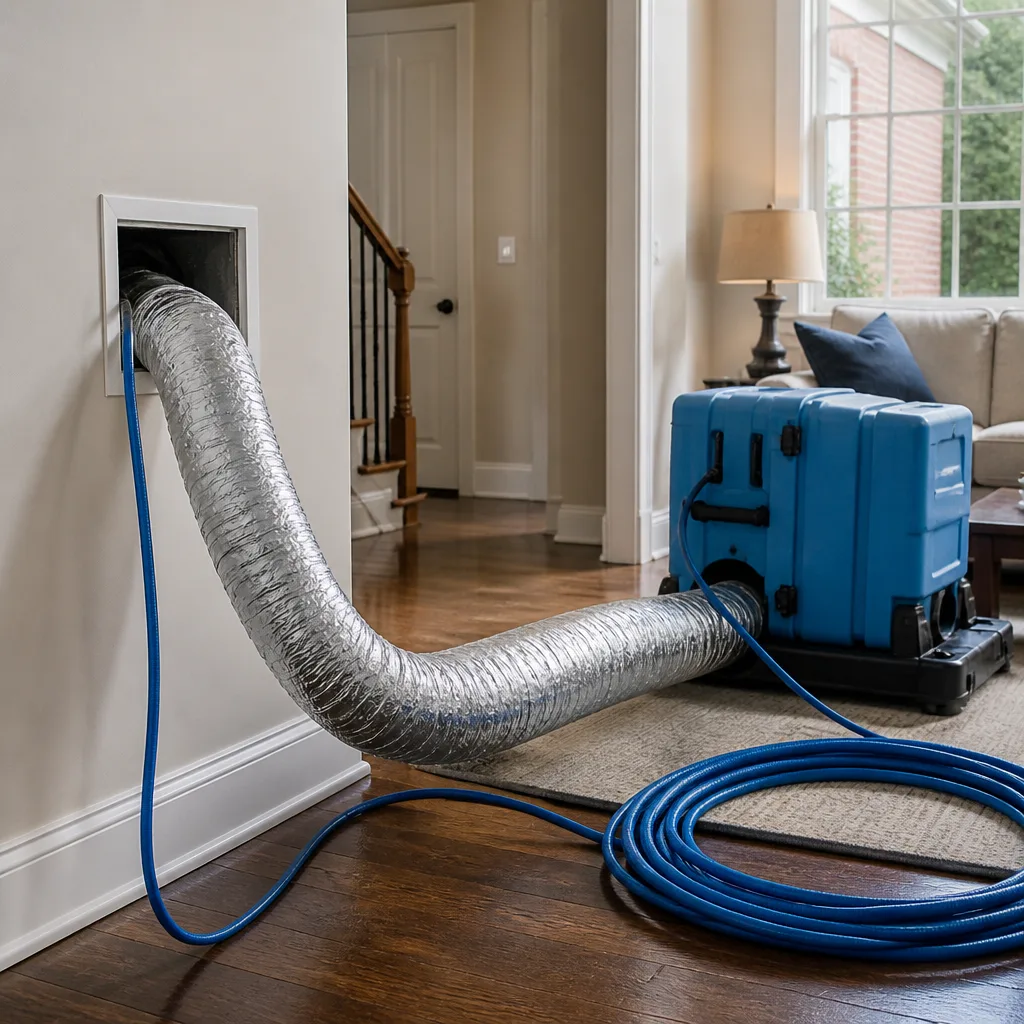 Whole-home duct cleaning
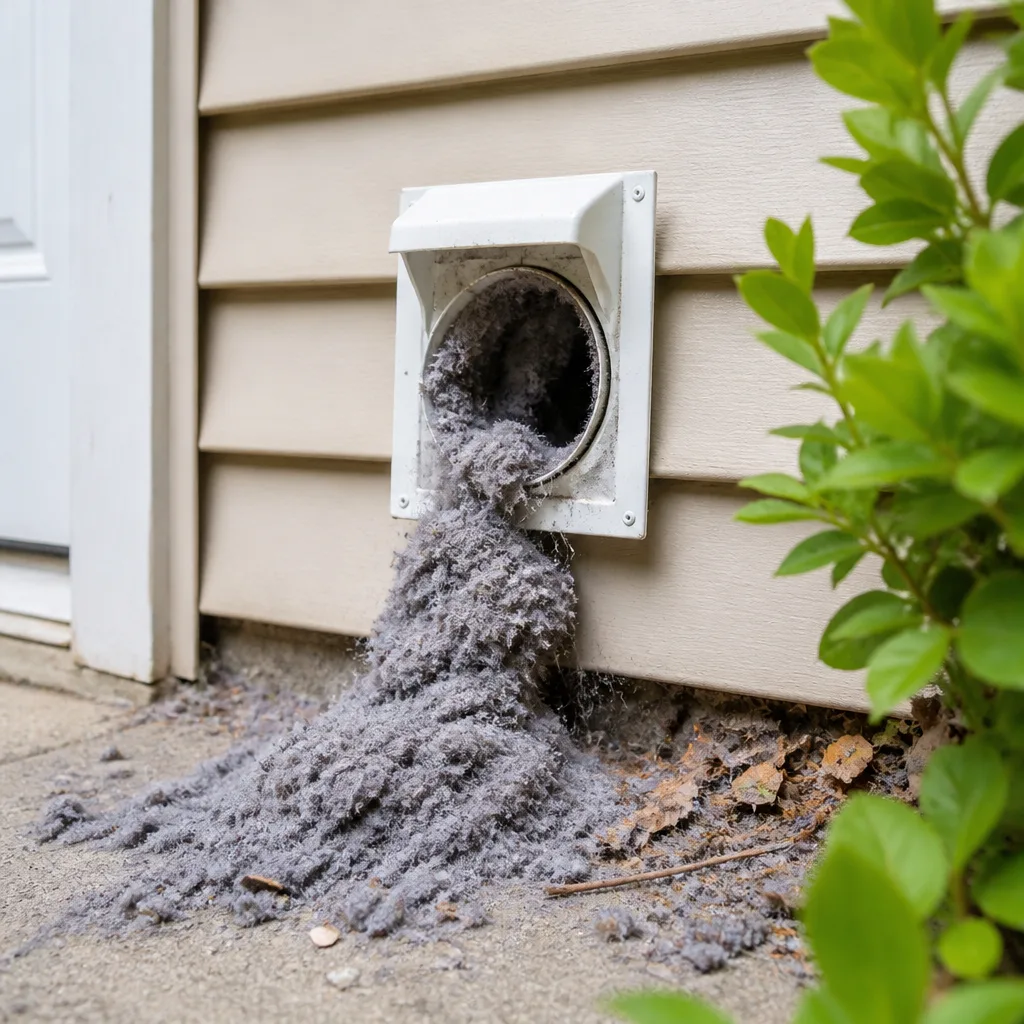 Dryer vent cleaning
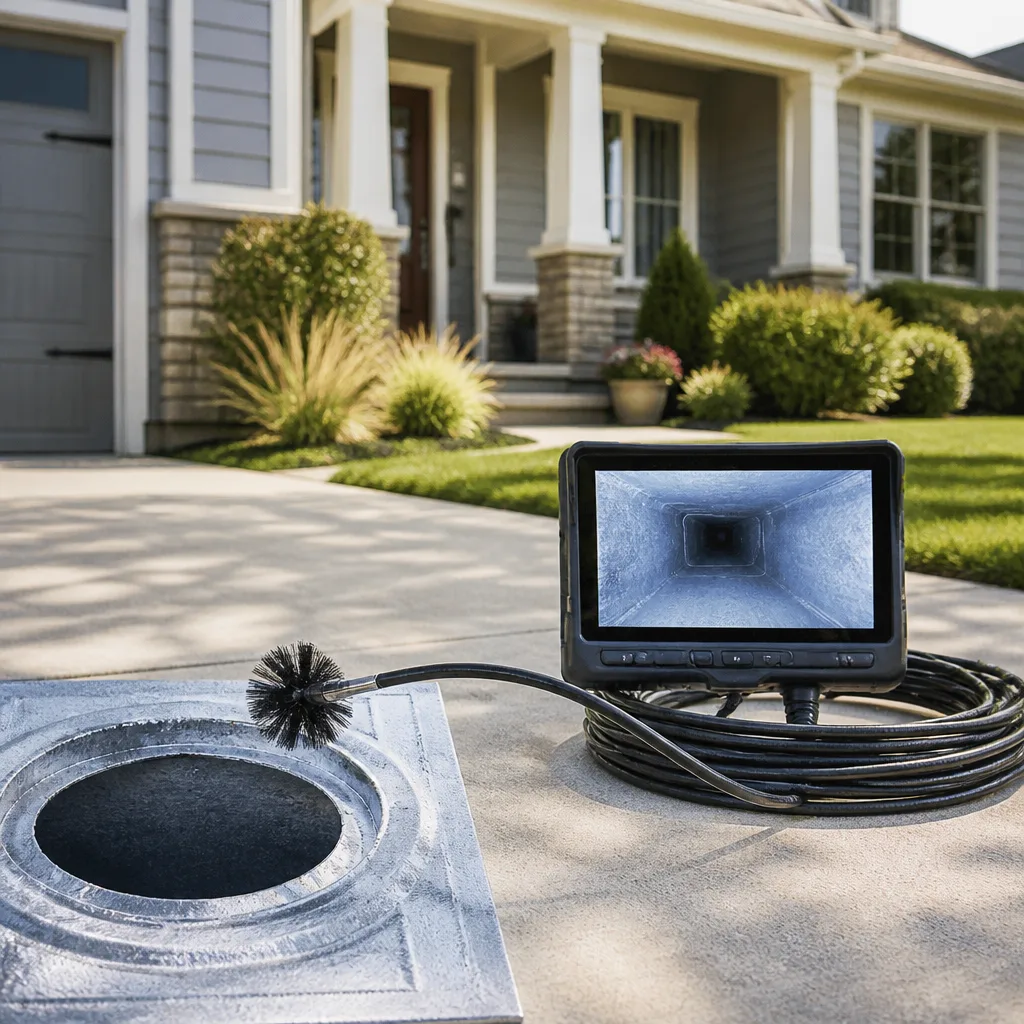 Camera inspection
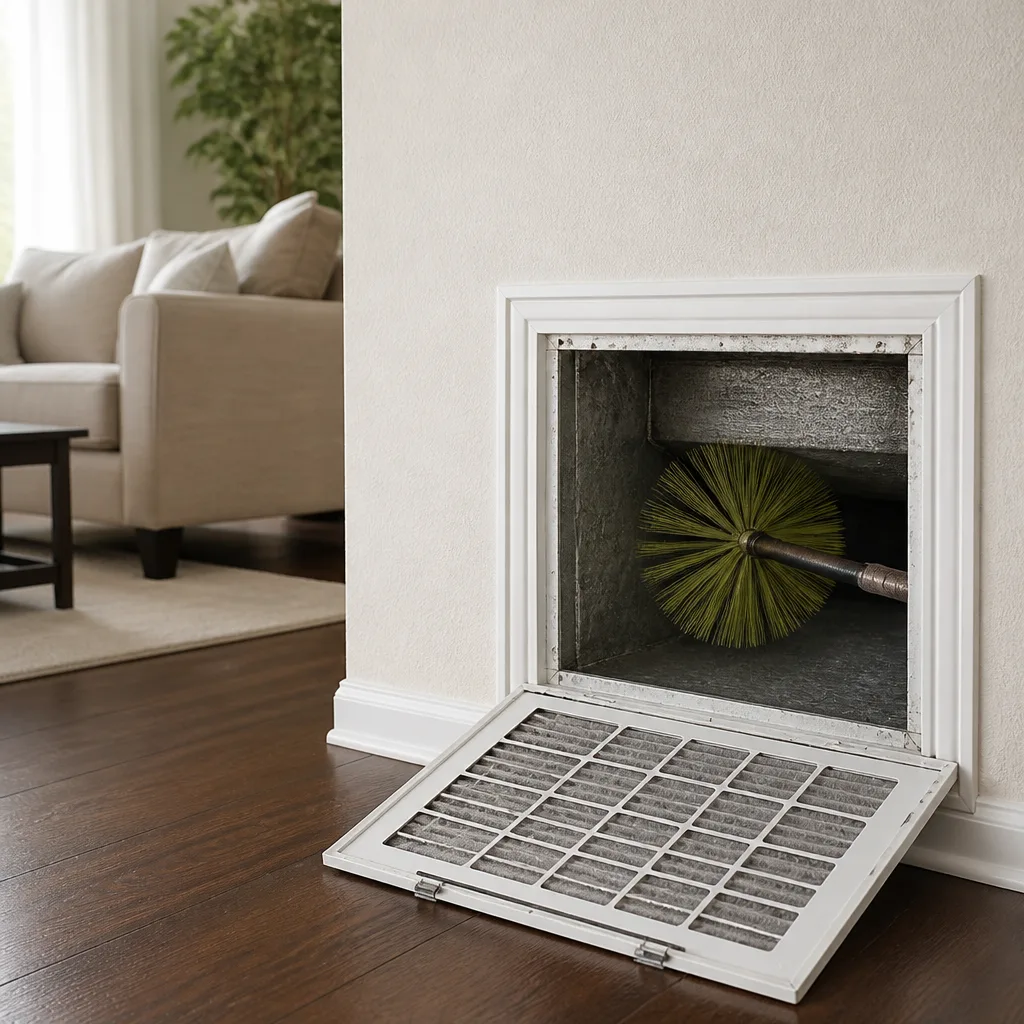 Sanitizing & deodorizing
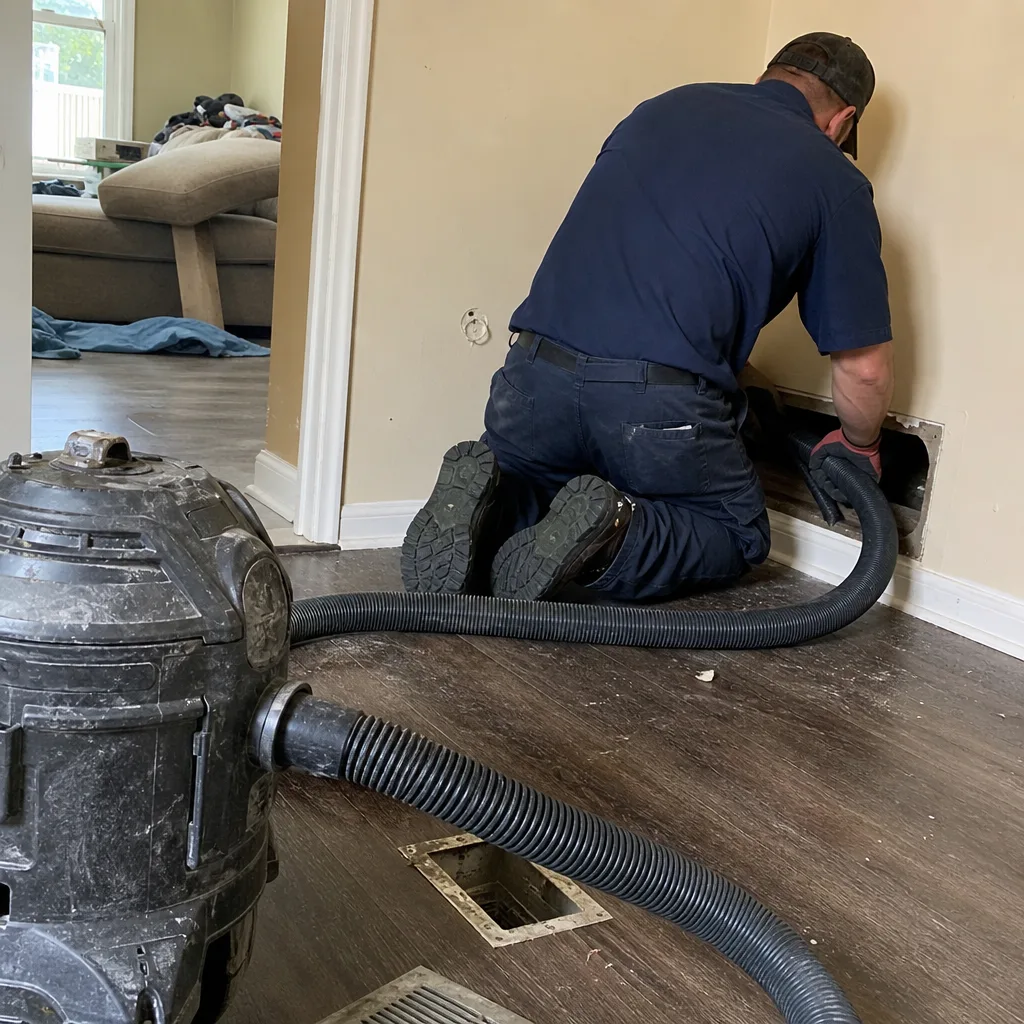
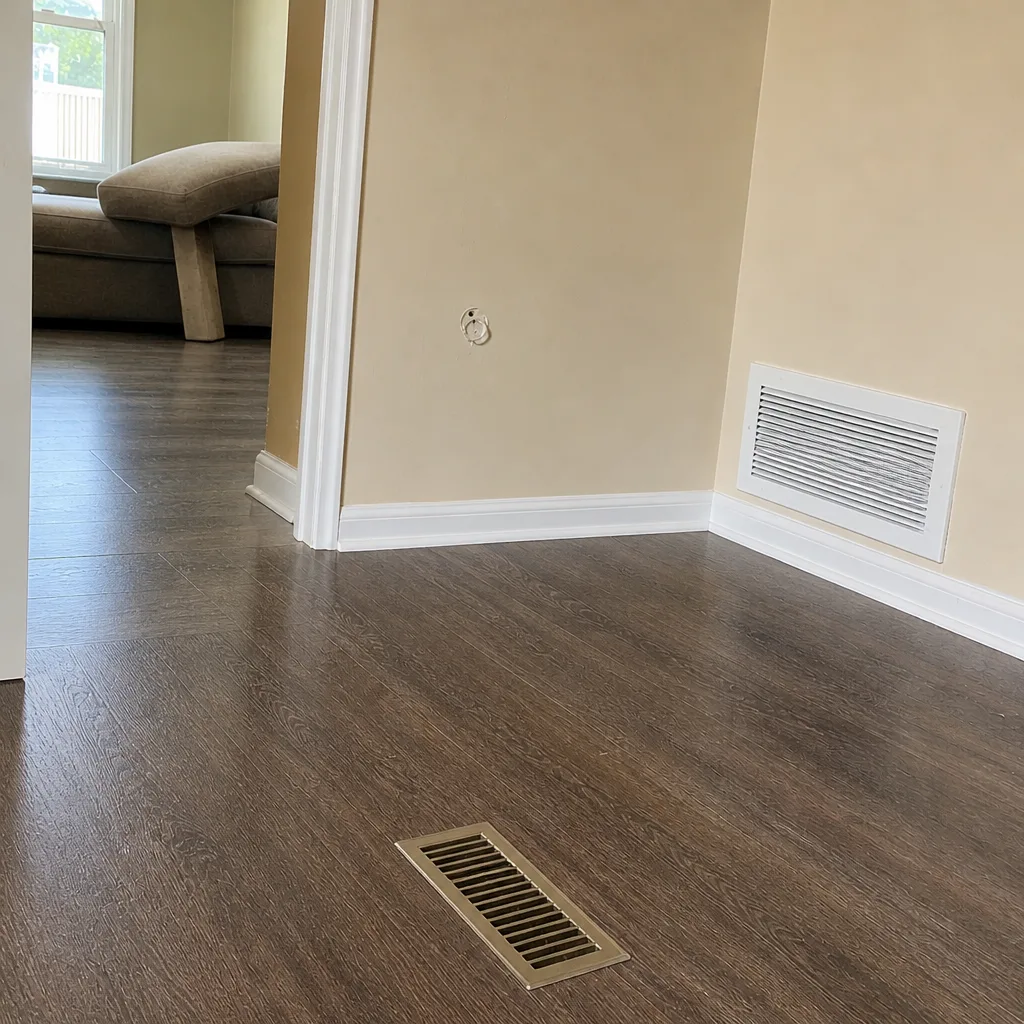
Whole-system duct and dryer vent check with before-and-after photos - you see exactly what came out of your vents
That "$99 whole-house special" is a bait ad - the real number appears once they are in your hallway, or the "clean" is a shop-vac at the register. We photograph the inside of your ducts before and after instead.
How to Hire an Air Duct Cleaning Contractor in Palm Coast: A Step-by-Step Guide
A $49 duct cleaning ad is not a deal. It’s a door-opener. The business model behind that number depends on upselling sanitizer, coil cleaning, and “mold treatment” once the crew is already inside your home, and the homeowner who didn’t ask the right questions beforehand ends up paying for work they never agreed to. Florida doesn’t require a universal license to clean air ducts, which puts the burden of verification squarely on you. This guide walks through the equipment questions, the paperwork, and the walkthrough steps that separate an equipment-serious contractor from a coupon-based crew in Palm Coast.
Quick Answer
To hire an air duct cleaning contractor in Palm Coast, ask five equipment questions (negative-air CFM, brush system type, containment method, extraction equipment, and documentation), request a written scope of work that itemizes zones and access points, and verify the contractor’s equipment and process rather than the price. A legitimate contractor quotes after knowing your square footage and duct count, uses commercial-grade systems like Rotobrush, Nikro, or Abatement Technologies, and provides before-and-after photos of your own ducts. Never book from a phone quote given without those details.
Styles & brands we work with
- Whole-home duct cleaning
- Dryer vent cleaning
- Camera inspection
- Sanitizing & deodorizing
Table of Contents
- Why hiring is different in Florida
- The five equipment questions to ask before booking
- How to verify NADCA membership and what it actually means
- Red flags specific to Palm Coast’s contractor market
- Why a written scope of work matters more than price
- How to structure the job walkthrough
- What counts as real before-and-after documentation
- Don’t overlook the dryer vent
Why Hiring Is Different in Florida
Florida does not mandate a single statewide license for air duct cleaning. That’s the first thing to understand, because it changes what “licensed and insured” actually means when a contractor hands you a business card. HVAC contractors are licensed through the state, and mold remediation has its own licensing framework, but duct cleaning as a service falls into a gap where anyone with a van and a shop vacuum can print a flyer and call themselves a specialist. In Palm Coast, where the population has grown quickly and new neighborhoods keep appearing alongside established ones like Palm Harbor and Grand Haven, that gap attracts transients: crews that move through, run a round of cheap ads, and are gone before the complaints pile up.
This doesn’t mean every local operator is a problem. It means the homeowner has to do the verification that a licensing board would otherwise do. Here’s what that looks like in practice:
- Ask for a physical local address and check whether it matches the business name on the truck and the paperwork. A PO box or a phone number alone tells you nothing.
- Confirm insurance and bonding in writing, not verbally. A certificate of insurance should name the work being done and the property where it’s being done.
- Ask what equipment the crew will bring before you book. A legitimate operation answers this question without hesitation because the equipment is the reason they do the work.
- Check that the company offers repair as well as cleaning. A firm that can only clean has an incentive to tell you the ducts are fine; one that can repair and document problems has a real scope.
The good news is that once you know what to ask, the screening takes about ten minutes. The contractors worth hiring welcome the questions. The ones who get defensive or vague have told you what you need to know.
The Five Equipment Questions to Ask Before Booking
Equipment is the single biggest separator between a professional duct cleaning and a cosmetic one. Most homeowners have never been asked to think about what’s actually inside the truck, so here are the five questions to ask any contractor before they set foot in your Palm Coast home.
- What’s the CFM rating on your negative-air machine? Negative air pressure keeps debris from escaping into your living space while it’s being extracted. Consumer-grade blowers run a few hundred CFM; commercial extraction systems run much higher. Ask for the number. A contractor who can’t name it doesn’t have one worth naming.
- What type of brush system do you use? A contact-cleaning brush system like Rotobrush physically scrubs the duct walls rather than just agitating air. The difference is visible in the debris that comes out: contact cleaning removes the adhered layer, air-only agitation redistributes it.
- How do you contain the work area? Look for drop cloths, corner guards, and sealing of the supply registers. The controlled-containment approach used in commercial remediation work is the standard to ask for, and it’s the reason Nikro and Abatement Technologies equipment exists. If the answer is “we just hook up a vacuum,” that’s not containment.
- What extraction equipment do you use for the return side? Supply ducts get most of the attention, but return ducts pull air back through the system and collect a different kind of debris. Ask how the contractor handles both sides of the air pathway.
- How do you document what you find and what you clean? Before-and-after photos are the answer. If a contractor can’t produce images of your own ducts, you have no way to know what was actually done.
In our experience, the answers to these five questions tell you more than any review or price quote. A contractor using professional Rotobrush contact-cleaning systems and commercial-grade extraction answers them in plain language. A contractor whose equipment is a van-mounted shop vacuum deflects, changes the subject, or quotes you a price without knowing how many vents you have.
How to Verify NADCA Membership and What It Actually Means
The National Air Duct Cleaners Association (NADCA) publishes an assessment, cleaning, and restoration standard for HVAC systems, and membership is one of the few external signals a homeowner can check. It’s worth verifying, but it’s worth understanding what it does and doesn’t certify before you treat it as a pass or fail.
What NADCA membership signals: the company has agreed to follow a published industry standard for how duct cleaning is performed, and it has met the association’s entry requirements, which include insurance and a commitment to its code of ethics. What it does not signal: that the individual technicians arriving at your Palm Coast home on a given day are certified, that the company’s equipment meets any specific performance threshold, or that the work itself will be done to a particular standard without your oversight. Membership is a floor, not a ceiling.
How to verify:
- Search the association’s online directory by company name and by city, not just by the name on the truck.
- Ask the contractor for the membership number and cross-check it against the directory listing.
- Ask whether the technicians assigned to the job hold individual certifications, and expect a specific answer with a name and credential, not “yes, we’re all certified.”
If a contractor isn’t a member, that’s not automatically disqualifying. Plenty of competent operators don’t carry membership. But combine a missing membership with a missing local address and a quote given without knowing your square footage, and the pattern is clear. In Palm Coast, where anyone can hang a shingle, the verification is on you, and a five-minute directory check is the cheapest piece of due diligence available.
Red Flags Specific to Palm Coast’s Contractor Market
Florida’s transient contractor problem shows up in predictable patterns, and they’re easier to spot than they seem once you know the shape of them. Here are the specific red flags to watch for when you’re comparing quotes in Palm Coast.
- No verifiable local address. A phone number and a website are not a physical location. Ask for the address and check whether it appears on the estimate, the invoice, and the truck.
- No lettering on the vehicle. An unmarked van or pickup is not automatically a scam, but it’s a common feature of crews that don’t intend to be found again.
- A quote given before anyone asks your square footage or duct count. Duct cleaning is priced per system, and no one can quote a system they haven’t measured. A firm number over the phone without those details is a lure, not an estimate.
- Pressure for “one-time” pricing that expires today. Legitimate contractors don’t need artificial deadlines.
- Upsells that appear after the crew is inside. Sanitizer, coil cleaning, and “mold treatment” offered as required add-ons once the equipment is running are the classic bait-and-switch move.
- No written scope, only a verbal promise. If it isn’t on paper, it isn’t agreed.
One Palm Coast-specific wrinkle: recent construction and renovation dust. New neighborhoods mean active building activity, and drywall dust and construction debris settle into duct systems in ways ordinary household dust doesn’t. A contractor who cleans ducts after renovation needs a different process than one doing routine maintenance. If your home has had recent work done, tell the contractor up front and ask how they handle construction dust. A vague answer is itself a flag.
Why a Written Scope of Work Matters More Than Price
Price is the easiest thing to compare and the least useful. A written scope of work is the document that tells you what you’re actually buying, and it’s the single best defense against the bait-and-switch model. A legitimate scope should itemize the following:
- Number of zones or systems covered. Duct cleaning is per system, and a home with two air handlers is two systems, not one.
- Access points to be opened and resealed. A contractor who doesn’t list where they’ll cut in either hasn’t planned the job or is planning to leave access holes behind.
- Supply and return sides. Both should appear. If only “ducts” is listed, ask which.
- Equipment to be used. Brand names are fine to ask for: Rotobrush, Nikro, Abatement Technologies. The equipment is the process.
- Before-and-after documentation. Photos of your own system, delivered with the invoice.
- What happens if problems are found. Debris, disconnected runs, or damaged flex duct may need repair, and the scope should say how repair will be handled, whether it’s included, separately quoted, or flagged for a return visit.
The written estimate sets the final price, and it should be agreed before work starts. If a contractor resists putting the scope in writing, or adds line items after the crew arrives, that’s the bait-and-switch in motion. In our experience, the whole-system price in the written scope is the honest number, and the contractor with the cheap phone quote is usually the one with the most room to add charges later. You can read more about how that price is structured on our air duct cleaning page.
How to Structure the Job Walkthrough
The walkthrough is the five to ten minutes before work starts, and it’s where scope disputes are prevented. Show the technician these things before they open a single register, and both sides know exactly what’s covered.
- Every air handler in the home. If there’s an attic unit and a garage unit, both get checked. A contractor who only looks at one is planning to clean one.
- The returns, especially in hallways and near the air handler. Return grilles are usually the dirtiest part of the system and the most important to include in scope.
- Any room with recent renovation, pets, or an allergy sufferer. These rooms may need extra attention, and it’s better to agree on that up front than to argue about it after.
- Any registers you’ve noticed blowing weak or off-temperature air. That’s a possible sign of a disconnected or damaged run, and it may need repair rather than cleaning.
- The dryer vent, if it connects to the laundry area. Ask whether it’s in scope. Dryer vent cleaning is a separate service but often bundled in the same visit, and it’s worth asking about at the walkthrough rather than after.
Once you’ve done the walkthrough, the technician should be able to confirm the scope and price in writing before starting. If the number changes based on what they see, ask why and get the revised scope on paper. A legitimate contractor does this without friction. A bait-and-switch operation won’t, because the walkthrough was never meant to be a fair confirmation, only a step toward the upsell. Palm Coast homes range from brand-new builds to older systems in established neighborhoods, and the walkthrough is how the contractor learns which kind of job they’re on.
What Counts as Real Before-and-After Documentation
Photos are the answer to the question every homeowner asks after the crew leaves: “How do I know the work was actually done?” But not all photos count. The standard to hold a contractor to is this: dated before and after images of your own ducts, taken at the access points and registers, delivered to you with the invoice or by email.
What doesn’t count: stock photos, images from a previous job, a generic “after” shot of a clean duct that could belong to anyone, or a promise to send photos later that never arrives. Ask at booking how documentation is delivered and confirm it’s in the written scope. A legitimate contractor using a Rotobrush contact-cleaning system will produce visible evidence, because contact cleaning produces visible results.
Photos are also useful for repair work. If the contractor finds a disconnected run or damaged flex duct and recommends repair, the photos should show the problem in your system, not a representative example. Ask for the before photo of any repair recommendation. It’s a small ask, and the right contractor answers it without hesitation. For Palm Coast homeowners, this is the evidence that turns a verbal claim into a verifiable record. For more on how the full process is scoped, see how we approach duct cleaning in Palm Coast.
Don’t Overlook the Dryer Vent
Duct cleaning and dryer vent cleaning are different services, but they share a hiring standard, and the dryer vent carries a safety weight the air ducts don’t. The U.S. Fire Administration links thousands of residential fires annually to clogged dryer vents. That’s a third-party fact, and it’s the reason dryer vent cleaning belongs in any serious home-safety conversation, not just an HVAC maintenance list.
When you’re interviewing a duct cleaning contractor, ask whether dryer vent cleaning is part of the service lineup. If it is, ask how the vent is cleaned (a proper brush-and-extract process, not a quick puff of air from a leaf blower), and ask for before-and-after documentation the same way you would for the ducts. If it isn’t, you’ll need a separate call, and it’s worth making. Lint accumulation is a fire hazard that builds slowly and announces itself at the worst possible time. You can read more about that service on our dryer vent cleaning page.
For Palm Coast homeowners with pets, heavy laundry use, or a vent run that’s longer than a few feet, the vent is often the more urgent of the two jobs. Ask about it in the same booking conversation. It’s one visit instead of two and one set of documentation for both systems.
Common Mistakes to Avoid
- Booking from a phone quote without giving your square footage or duct count. A contractor who quotes a price without knowing the size of the system is quoting the ad, not the job. Expect the real number to be higher once the crew arrives.
- Treating NADCA membership as a guarantee rather than a floor. It signals real commitment to industry standards, but it doesn’t certify the individual technicians at your door. Use it as one check among several.
- Skipping the written scope because the price seemed fine. The scope is what prevents the price from changing. Agree it in writing before work starts, or don’t start.
- Assuming “licensed and insured” means something specific in Florida. Duct cleaning has no universal state license. Verify insurance and bonding directly, in writing, rather than accepting the phrase as a credential.
- Letting the contractor leave without before-and-after photos of the ducts. Once the truck is gone, so is the evidence. Ask at booking how documentation is delivered and hold the contractor to it.
- Ignoring the dryer vent because the ducts got all the attention. A clogged dryer vent is a fire risk that builds slowly. Ask about it in the same conversation, and get it documented the same way.
- Not walking the system with the technician before work starts. The walkthrough is where scope disputes get prevented. If it doesn’t happen, the scope is whatever the contractor decides it is after the fact.
See the difference
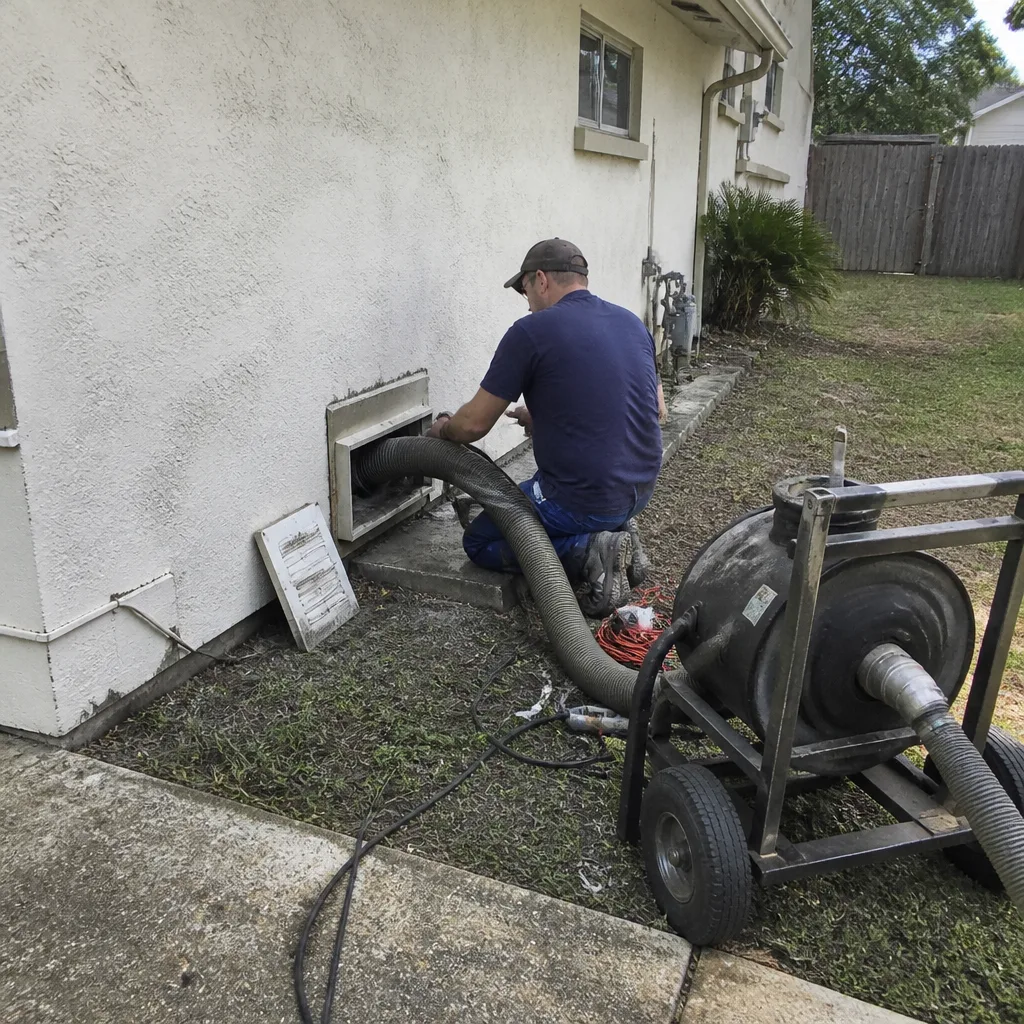 Before
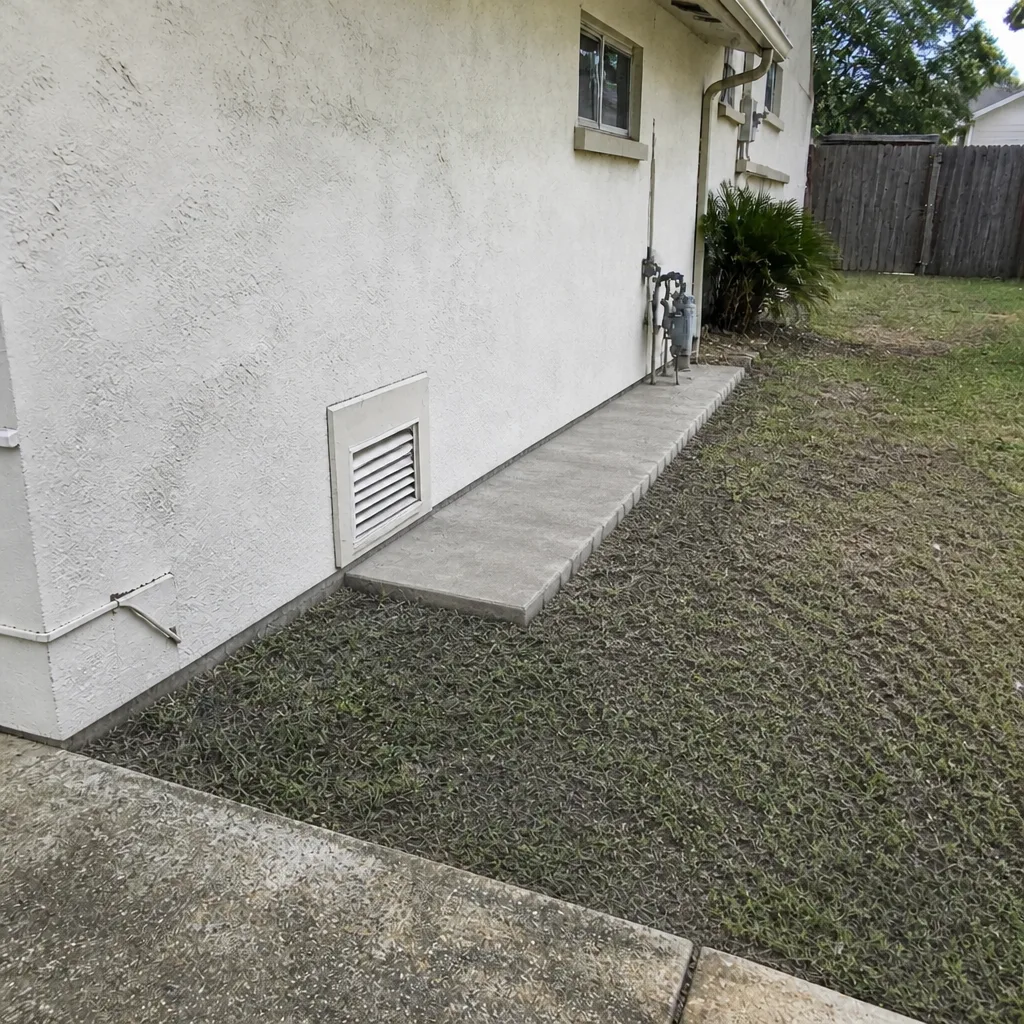 After
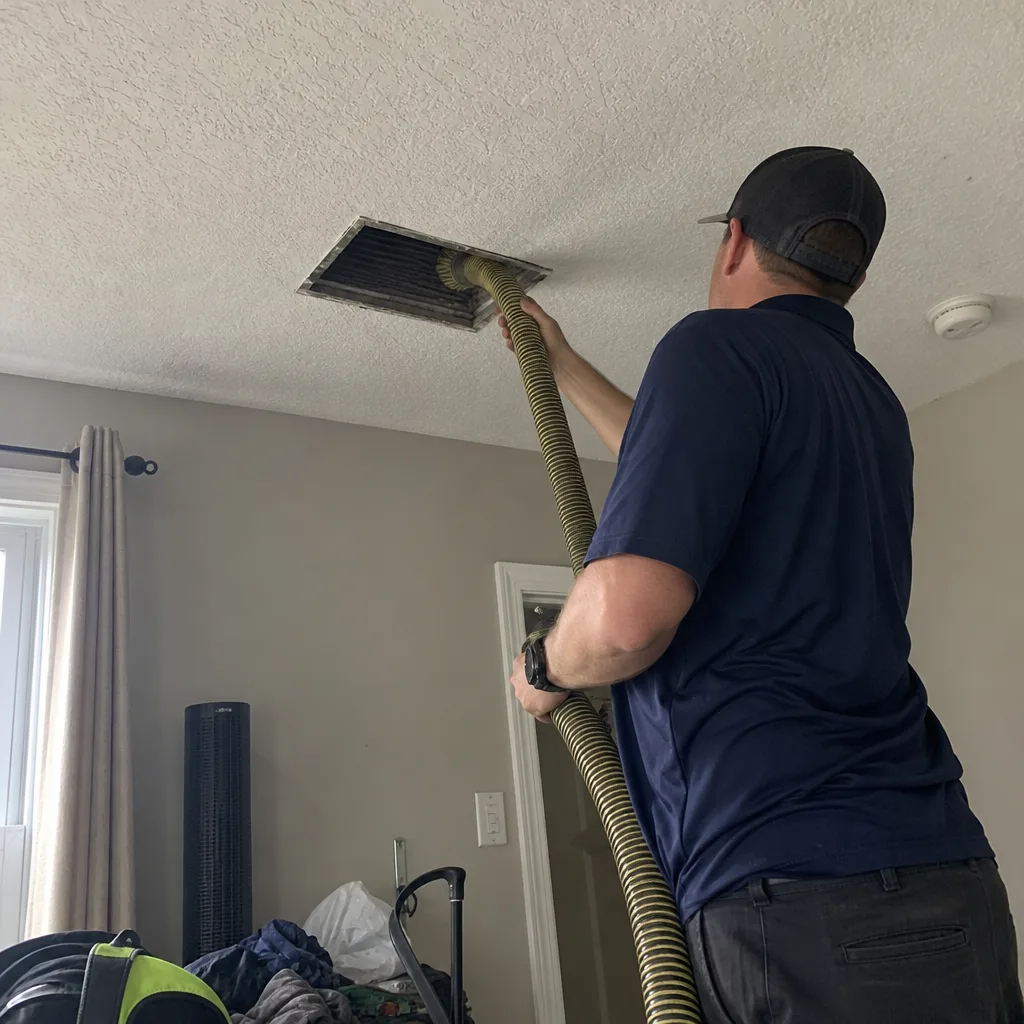 Before
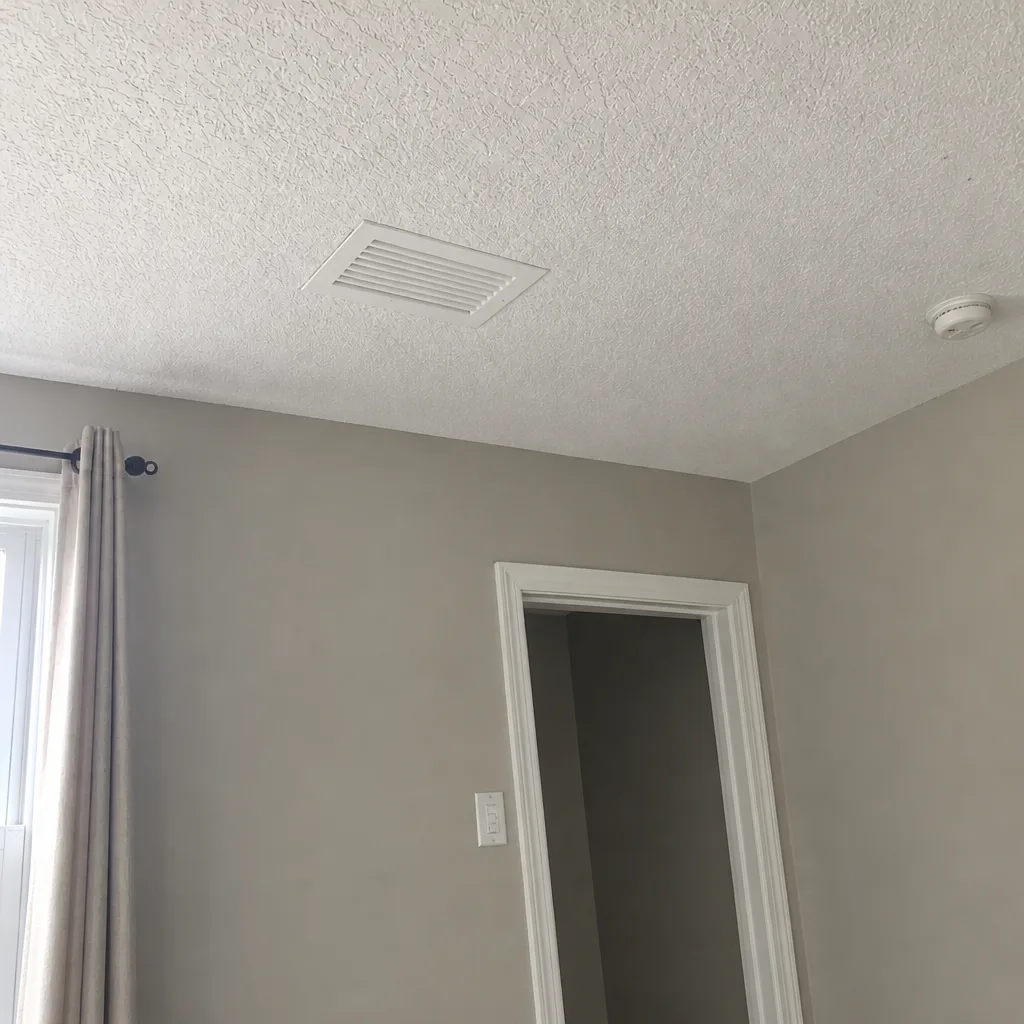 After
 Before
 After
When to Call a Professional
Some duct problems tell you they’re there. If you notice visible dust blowing from registers after the system has been running, a musty or stale smell when the air comes on, or a persistent worsening of allergy symptoms that doesn’t track the seasons, the system is worth inspecting. Recent renovation or new construction dust is another clear trigger, because construction debris settles into ducts in a way routine household dust doesn’t, and a home in a newer Palm Coast neighborhood is more likely to have had that exposure. Pets, older HVAC systems, and dryers with heavy use all add to the case for a scheduled cleaning.
If your dryer vent is overdue, that’s a separate safety matter and worth scheduling soon. Duct Cleaning Palm Coast offers air duct cleaning, dryer vent cleaning, and air duct repair, with commercial-grade Rotobrush, Nikro, and Abatement Technologies equipment, and Honeywell and Aprilaire product availability for filtration upgrades during the same visit. Our technicians have up to 15 years of experience. Duct Cleaning Palm Coast offers free estimates in Palm Coast. Call (855) 592-3509. We answer 24/7. Fast dispatch from 7am to 7pm, Sunday through Friday.
Frequently Asked Questions
Air duct cleaning in Palm Coast is priced per system, not per vent, and the written estimate sets the final price before work starts. Instead of a coupon figure, ask for a whole-system range in writing after the contractor knows your square footage and how many air handlers the home has. Call (855) 592-3509 for an exact quote. Estimates are free.
Cheap quotes are usually a door-opener, not a price. The business model depends on adding sanitizer, coil cleaning, or “mold treatment” once the crew is inside, and the total ends up higher than an honest whole-system quote from an equipment-serious contractor. Compare the written scope, not the phone number. Call (855) 592-3509 for a scoped estimate on your system.
Before-and-after photos of your own ducts, taken at the access points and registers and delivered with the invoice or by email. Ask how documentation is delivered at booking, put it in the written scope, and hold the contractor to it. A contractor using contact-cleaning equipment produces visible evidence. Call (855) 592-3509 to schedule a documented cleaning.
Most homes don’t need it on a fixed schedule. Triggers are visible dust or musty smells, allergy symptoms that don’t track the seasons, recent renovation or construction dust, and a system that hasn’t been cleaned since the home was built. Pet-heavy households and older systems tend to need it sooner. Call (855) 592-3509 for a scope based on your home, not a calendar.
Florida does not mandate a single statewide license for air duct cleaning as a service. That means verification is on you: check insurance and bonding in writing, confirm a physical local address, verify NADCA membership if the contractor claims it, and ask for the equipment brand names before you book. Call (855) 592-3509 and we’ll walk through the scope on your system.
Yes, if the vent connects to the laundry area and hasn’t been cleaned recently. The U.S. Fire Administration links thousands of residential fires annually to clogged dryer vents, and combining it with the duct cleaning is one visit and one set of documentation. Call (855) 592-3509 to book both at once.
The Bottom Line
The duct cleaning industry in Florida has no universal license and no shortage of low-bid operators, which makes the hiring process itself the most important safeguard. Ask the five equipment questions, verify NADCA membership if it’s claimed, watch for the transient-contractor red flags, get the written scope of work itemized before anyone starts, walk the system with the technician, and don’t sign off without before-and-after photos of your own ducts. Price is the last thing to compare, not the first. Palm Coast homeowners who ask these questions end up paying for real work, and the contractors worth hiring answer without hesitation. If you’re in Palm Coast and want to talk through a scope, we’re glad to help.
Call Duct Cleaning Palm Coast at (855) 592-3509 for a free estimate. We answer 24/7. Fast dispatch from 7am to 7pm, Sunday through Friday. We clean, repair, and restore your air pathway from furnace to vent using Rotobrush contact-cleaning systems and commercial-grade Nikro and Abatement Technologies extraction equipment, with Honeywell, Aprilaire, and Guardsman product availability for filtration upgrades during the same visit. One flat price per system, agreed before work starts, with before-and-after photos of your own ducts.
Written by the team at Duct Cleaning Palm Coast.