
Last updated November 15, 2026
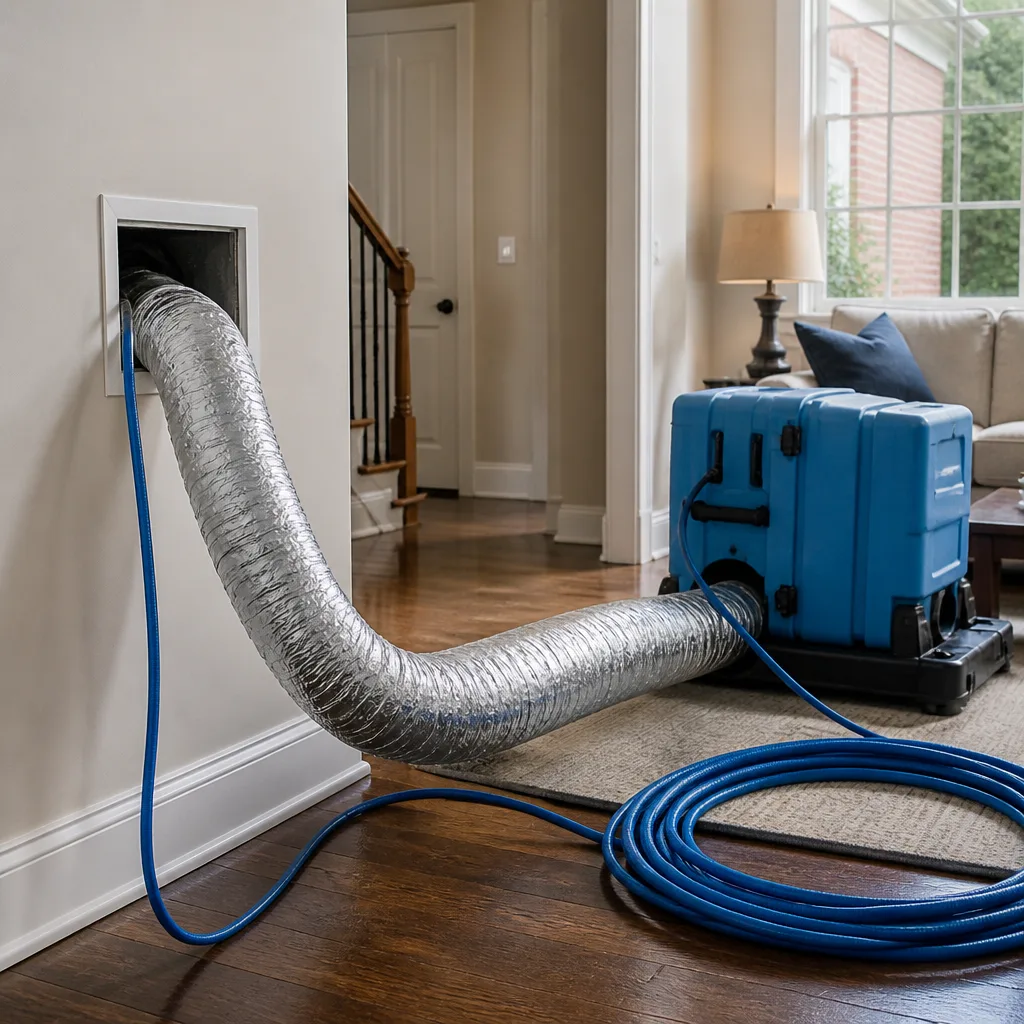 Whole-home duct cleaning
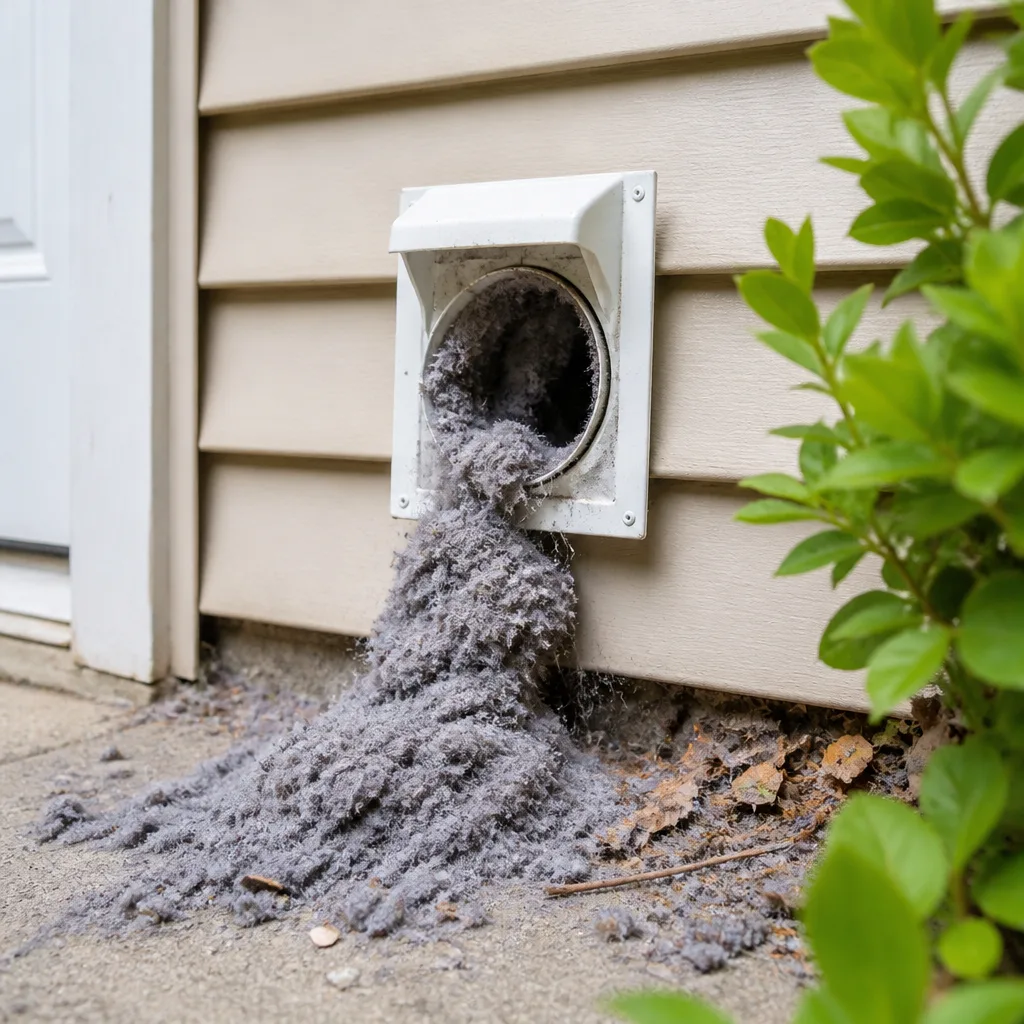 Dryer vent cleaning
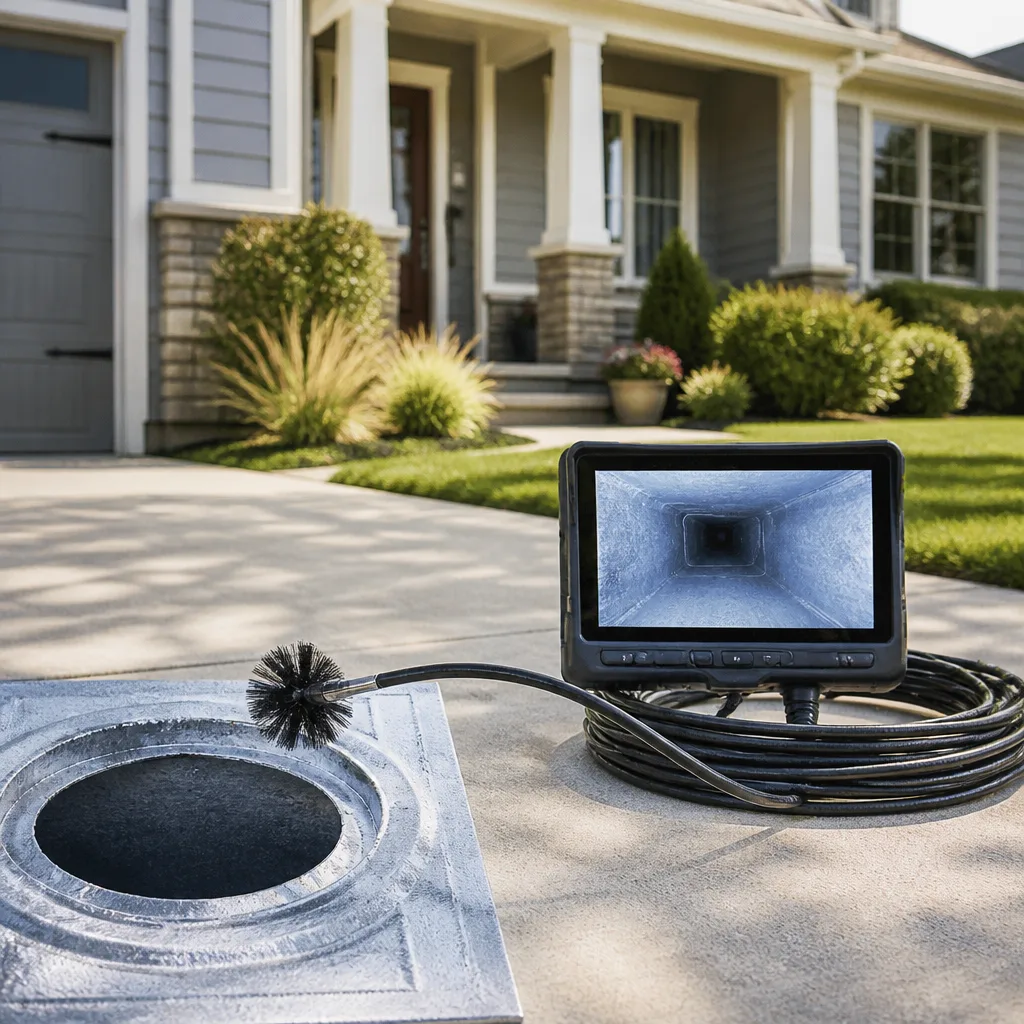 Camera inspection
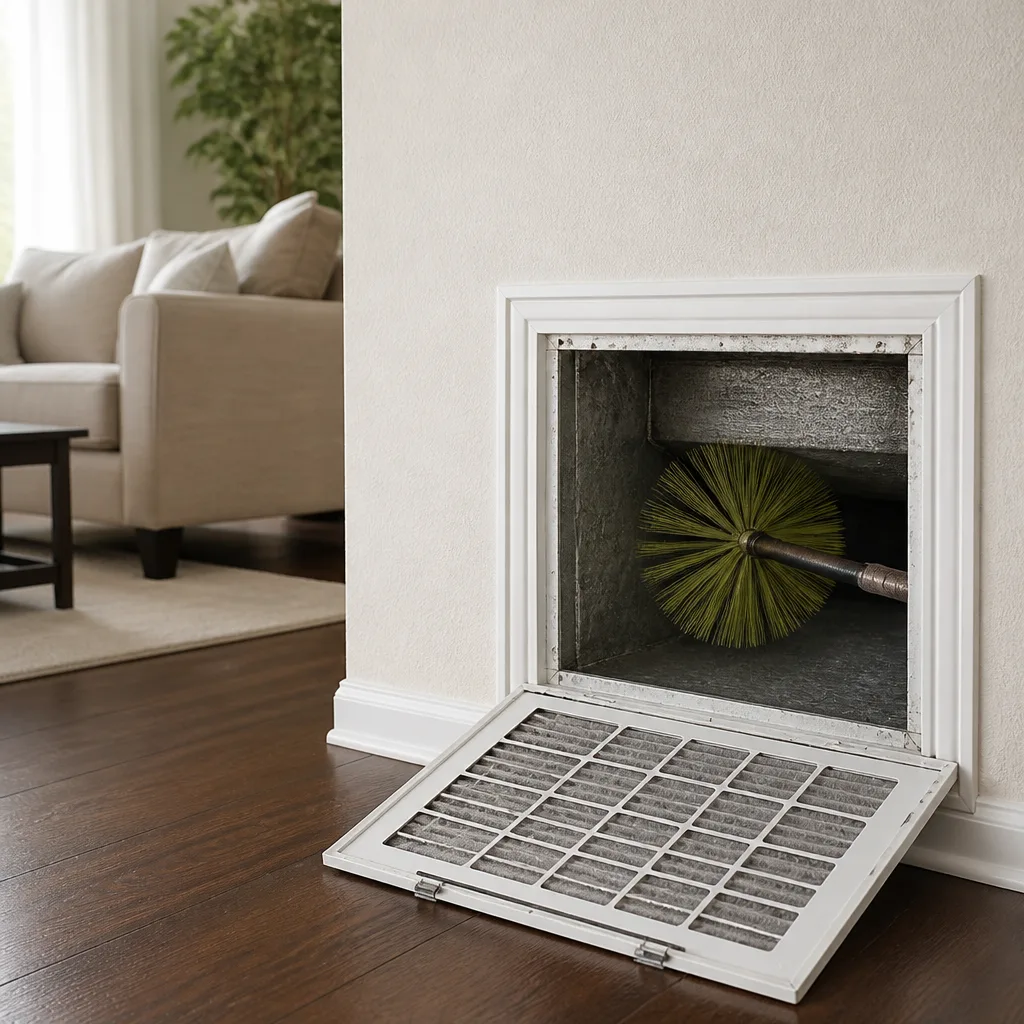 Sanitizing & deodorizing
Whole-system duct and dryer vent check with before-and-after photos - you see exactly what came out of your vents
That "$99 whole-house special" is a bait ad - the real number appears once they are in your hallway, or the "clean" is a shop-vac at the register. We photograph the inside of your ducts before and after instead.
The Complete Guide to Air Duct Cleaning in Palm Coast
Most people assume the dust on their furniture comes from their ductwork, so they book a cleaning and expect the dust to stop. Here’s the part that surprises them: the dirtiest section of most Palm Coast HVAC systems isn’t the duct runs at all. It’s the return air box, the plenum, and the air handler cabinet, three zones that a lot of cleaners never open. If those areas stay contaminated, cleaning the runs is a partial job that looks complete. This guide walks through the whole air pathway, what professional equipment actually does differently, what our humid climate does to flex duct, and how to verify the work was done properly. Palm Coast homeowners who read it will know exactly what questions to ask before they book.
Quick Answer
Air duct cleaning in Palm Coast is a whole-system job that removes built-up dust, debris, and moisture-driven buildup from all five zones of the air pathway: supply runs, return runs, the plenum, the air handler cabinet, and the register boots. Professional cleaning uses negative-air containment and contact brushing, not just a blower, and should include photo documentation before and after. If only the duct runs get cleaned, the system stays dirty and the dust returns quickly.
Styles & brands we work with
- Whole-home duct cleaning
- Dryer vent cleaning
- Camera inspection
- Sanitizing & deodorizing
Table of Contents
- Why Palm Coast’s Humid Climate Accelerates Duct Contamination
- The Five Zones of a Complete Air Pathway
- Professional Equipment vs. Portable Units: What Actually Differs
- What a Legitimate Pre- and Post-Inspection Looks Like
- New Construction Debris in Palm Coast’s Growth Areas
- How to Identify Biofilm and Contamination Before It Spreads
- How Much Does Air Duct Cleaning Cost in Palm Coast?
- How to Verify the Work Was Actually Done
Why Palm Coast’s Humid Climate Accelerates Duct Contamination
Palm Coast sits in a humid subtropical climate, and that single fact changes how duct contamination develops here compared to drier parts of the country. In a dry climate, dust inside ductwork stays dry and relatively inert. In Palm Coast, the air that moves through flex duct during cooling season carries vapor, and when that vapor condenses on cooler duct surfaces, it creates the moisture film that dust needs to stick and stay.
That moisture film is where biofilm starts. Biofilm forms when microscopic organisms colonize a wet surface and produce a sticky matrix that traps more dust, more debris, and more organic particles. Once it takes hold in a length of flex duct, it doesn’t dry out on its own. The next cooling cycle wets it again and again.
Here’s why this matters for the air handler: flex duct sections closest to the handler stay coolest and see the most condensation. Contamination tends to start there and work its way down the runs. By the time a homeowner notices musty odors or visible dust streaks at the registers, the problem has usually been building near the air handler for a while.
What to check before it spreads:
- Musty or earthy odor at the supply registers when the system starts
- Visible dark staining or speckling on the inside of return grilles
- Dust that settles again within days of cleaning a room
- Condensation or moisture on flex duct visible in attic inspection
- Increased allergy symptoms when the system runs
Cooling season in Palm Coast is long, which means the system runs more hours per year than in most of the country. More run time means more condensation cycles and faster accumulation. That’s the underlying reason duct cleaning here isn’t purely cosmetic maintenance.
The Five Zones of a Complete Air Pathway
A complete air pathway runs from the return grille through the return runs, into the return plenum, through the air handler cabinet, into the supply plenum, and out through the supply runs and register boots. Cleaning only the supply and return runs – which is what many low-bid jobs amount to – leaves three of the five zones untouched.
Here’s how a complete cleaning moves through the system:
- Register boots. The metal boxes behind each grille collect dust, pet hair, and debris at the tightest point of the system. Boots get brushed and vacuumed back to the run connection.
- Supply runs. Each branch line gets contact-cleaned with a rotating brush head, then negative air pulls loosened debris toward the collection unit.
- Return runs. Return lines often carry heavier debris loads than supply lines because they draw unconditioned room air. These get the same brush-and-extract treatment.
- Plenums. The supply and return plenums are the larger sheet metal boxes that distribute and collect air. Plenum surfaces collect fine dust that settles when airflow slows, and they’re frequently skipped entirely.
- Air handler cabinet. The cabinet housing the blower and coil sees the highest dust concentration of any part of the system. Cleaning here requires care around the coil and any electrical components.
If a cleaning quote covers “ducts” but never mentions the plenum or the air handler cabinet, that’s a signal to ask exactly which zones the price includes. On a typical Palm Coast system, the return plenum that sits in a garage or attic crawl space is often the dirtiest single component, because hot, humid air surrounds it year-round.
Professional Equipment vs. Portable Units: What Actually Differs
The single biggest difference between a professional duct cleaning and a cheap one comes down to equipment, and the gap isn’t small. Consumer-grade blowers and portable vacuums can move a few hundred cubic feet per minute of air at best, and they can’t hold containment. A single portable unit often pushes more dust into the living space than it removes.
Professional systems work as a pair: a negative-air machine that pulls the system under containment, and a contact-cleaning tool that physically disturbs debris from duct walls so it can be captured. We use Duct Cleaning Palm Coast standard equipment for this reason, meaning the Rotobrush contact-cleaning system paired with Nikro and Abatement Technologies extraction machines.
What that hardware difference actually means:
- Contact cleaning vs. air agitation. Rotobrush systems physically brush duct walls with a rotating head. Agitation-only tools loosen dust into the airstream, but a brushing tool removes it from the surface where biofilm and adhered debris live.
- NFM capacity and containment. Nikro and Abatement Technologies negative-air machines pull volume that shop-vac rigs can’t approach. That capacity is what keeps dust inside the collection system instead of migrating into rooms.
- HEPA filtration. Commercial extraction units filter exhaust air through HEPA media, which means what comes out of the machine is cleaner than the room air around it.
- Hose reach and control. Long, flexible hoses let a technician reach every branch from the register while maintaining a seal, keeping containment unbroken.
There’s a reason professional remediation crews use equipment from Nikro and Abatement Technologies: these machines are built for indoor-air-quality containment work where dust escape isn’t acceptable. Duct cleaning is a smaller version of the same contamination-control problem.
What a Legitimate Pre- and Post-Inspection Looks Like
Any duct cleaning should begin with an inspection and end with documentation, and homeowners shouldn’t have to take it on faith. A proper inspection identifies where contamination is and establishes a baseline. The post-inspection should show the same areas cleaned.
A legitimate inspection includes:
- A camera survey of representative branches. The technician inserts a camera into supply and return runs, including at least one run closest to the air handler where contamination concentrates.
- Access to the plenum and cabinet. A proper inspection lifts or creates access to see inside the plenum and air handler cabinet, not just the runs.
- Photographs of recognizable landmarks. Photos should show identifiable features – a specific register opening, a duct joint – so you can tell before and after shots of the same spot.
- A written scope of what will be cleaned. The estimate should list each zone: how many register boots, how many runs, the plenum, and the cabinet.
- Post-cleaning photos or video of the same areas. The after-photos should be taken in the same spots as the before-photos, so you can compare directly.
- A walk-through of findings. Any issues found during cleaning – loose flex duct, disconnected joints, damaged boots – should be pointed out so they can be repaired.
If a contractor can’t or won’t provide before-and-after documentation of your actual ductwork, ask why. In a market where cheap quotes are common, photos of your own system are the clearest evidence the work happened as described. This is also where air duct cleaning done right differs from a single tool run through a single vent.
New Construction Debris in Palm Coast’s Growth Areas
Newer homes in Palm Coast’s active building corridors present a different contamination profile than resale homes. Construction debris gets into ductwork during the build, and it doesn’t always come out at first occupancy. Drywall dust is the biggest offender. It’s fine enough to travel deep into duct runs and light enough to keep circulating for months.
Other construction-related debris commonly found in ducts after a build:
- Drywall and joint compound dust settled in the bottom of flex runs
- Wood shavings and sawdust from cabinet and trim work
- Insulation fibers from duct and wall cavities
- Packaging debris, tape residue, and cardboard dust
- Tile grout and thinset dust from flooring installation
The return air box is usually the worst-hit zone. During construction, when the system runs for temperature control, it acts as a giant vacuum, pulling airborne fine dust back through return grilles that may not have filters installed yet. That material settles in the return plenum and air handler cabinet.
Older resale homes have a different profile: the dust is more evenly distributed, the contamination is more biological than construction-related, and the material is often stuck to the duct walls rather than loose. Both profiles respond to contact cleaning; the full picture differs, so a proper inspection matters either way.
How to Identify Biofilm and Contamination Before It Spreads
Biofilm doesn’t announce itself, but it leaves signals. The earliest sign is usually an odor, then visible staining, then symptoms. Catching it at the odor stage means the contamination hasn’t spread into the air handler cabinet yet.
Signs worth checking for in a Palm Coast home:
- Musty odor when the system starts. A persistent, damp, earthy smell that appears when the blower runs is the most common biofilm signal.
- Dark speckling on register interiors. Remove a register grille and look into the boot. Dark speckled patches that aren’t simply dry dust suggest biological growth.
- Wet or moist flex duct. In the attic, look for condensation or water droplets on the outer jacket of flex runs, especially near the air handler.
- Dust with an unusual feel. Biological buildup tends to clump slightly, rather than falling as fine dry powder.
- Allergy or asthma symptoms that spike when the system runs. Symptoms that follow the cooling system are a lot more common than most people notice.
If any of these signs are present, a proper inspection is the next step, followed by cleaning if contamination is confirmed. These signals often pair with filter and filtration questions, and upgrading to a proper media filter from brands like Honeywell, Aprilaire, or Guardsman can reduce ongoing buildup after cleaning.
How Much Does Air Duct Cleaning Cost in Palm Coast?
Air duct cleaning in Palm Coast typically costs in the range you’d expect for a whole-system job, not a single-vent run-through. The honest range depends on the size of the home, the number of branches, and whether the plenum and air handler cabinet are included. Estimates should line-item each zone so you know exactly what you’re paying for.
A structured pricing estimate usually looks like this:
- Base system cleaning (supply and return runs + boots): lower end of the range, standard home size
- Plenum and air handler cabinet add-on: adds meaningful cost, but it’s the zone most often contaminated
- Additional runs or zones: priced per additional branch, not per vent
- Dryer vent cleaning as an additional service: separate price, based on length and vent configuration
- Air duct repair (disconnected flex, damaged boots): priced separately after inspection
The written estimate should set the final price before any work starts, with no per-vent pricing that balloons once the technician is on site. If a quote is dramatically cheaper than others, ask which zones it actually covers. It usually covers fewer than you think.
For Palm Coast homeowners who’ve been through the low-price-then-surprise-invoice routine, one flat price per system agreed in advance, plus photos of your own ducts before and after, is the standard to insist on. Call (855) 592-3509 for an exact quote – estimates are free.
How to Verify the Work Was Actually Done
Verification comes down to three things: photos of your own ductwork, a walk-through of the cleaned zones, and a contractor who welcomes questions about process. A homeowner doesn’t need to inspect duct interiors personally, but should see the documentation that proves someone did.
Ask for before-and-after photos of the same locations, not just any photos. Ask which zones were cleaned and confirm the plenum and cabinet were opened. If a technician saw a disconnected duct or a damaged boot, ask what the repair involves. If the answer is “we don’t do repairs,” that’s useful information – it means the problem stays until a separate contractor gets involved.
We offer Palm Coast homeowners documentation as standard, along with our three-service scope: cleaning, repair, and dryer vent service. That last one matters for home safety. The U.S. Fire Administration links thousands of residential fires annually to clogged dryer vents, and that’s one of the reasons dryer vent cleaning is part of the lineup rather than an upsell.
Common Mistakes to Avoid
- Booking on price alone without asking which zones are covered. A cheap quote often means supply runs and boots only. The return plenum and air handler cabinet – the two dirtiest zones in many homes – get left out, and the problem persists.
- Letting a technician agitate with air only. Agitation without contact brushing loosens dust without removing it from duct walls. Ask specifically whether the process physically brushes surfaces.
- Accepting no documentation. Without before-and-after photos, there’s no way to know what changed. Ask for photos of your own ductwork, not stock images.
- Ignoring moisture signs during Palm Coast’s cooling season. A musty odor that appears when the air comes on is a biofilm signal. Waiting a few more months gives it time to spread into the air handler cabinet.
- Skipping inspection on newer construction. Drywall dust in the ducts of a recently built home is common. A pre-clean inspection catches it before it keeps circulating.
- Forgetting the dryer vent. Duct cleaning and dryer vent cleaning are separate services that address different risks. A clogged dryer vent is a fire-safety issue, not just an airflow nuisance.
- Assuming a filter upgrade replaces cleaning. Better filtration reduces future accumulation, but it doesn’t remove what’s already adhered inside the system.
See the difference
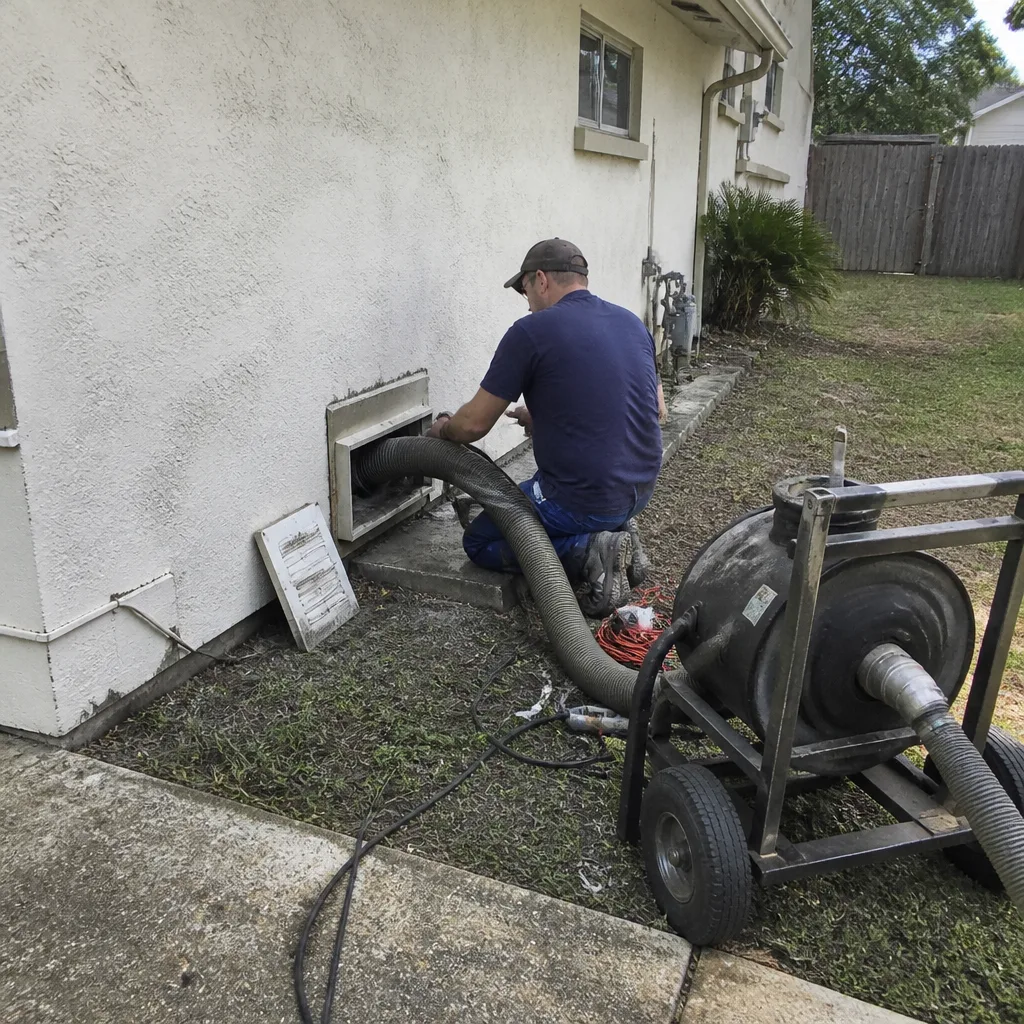 Before
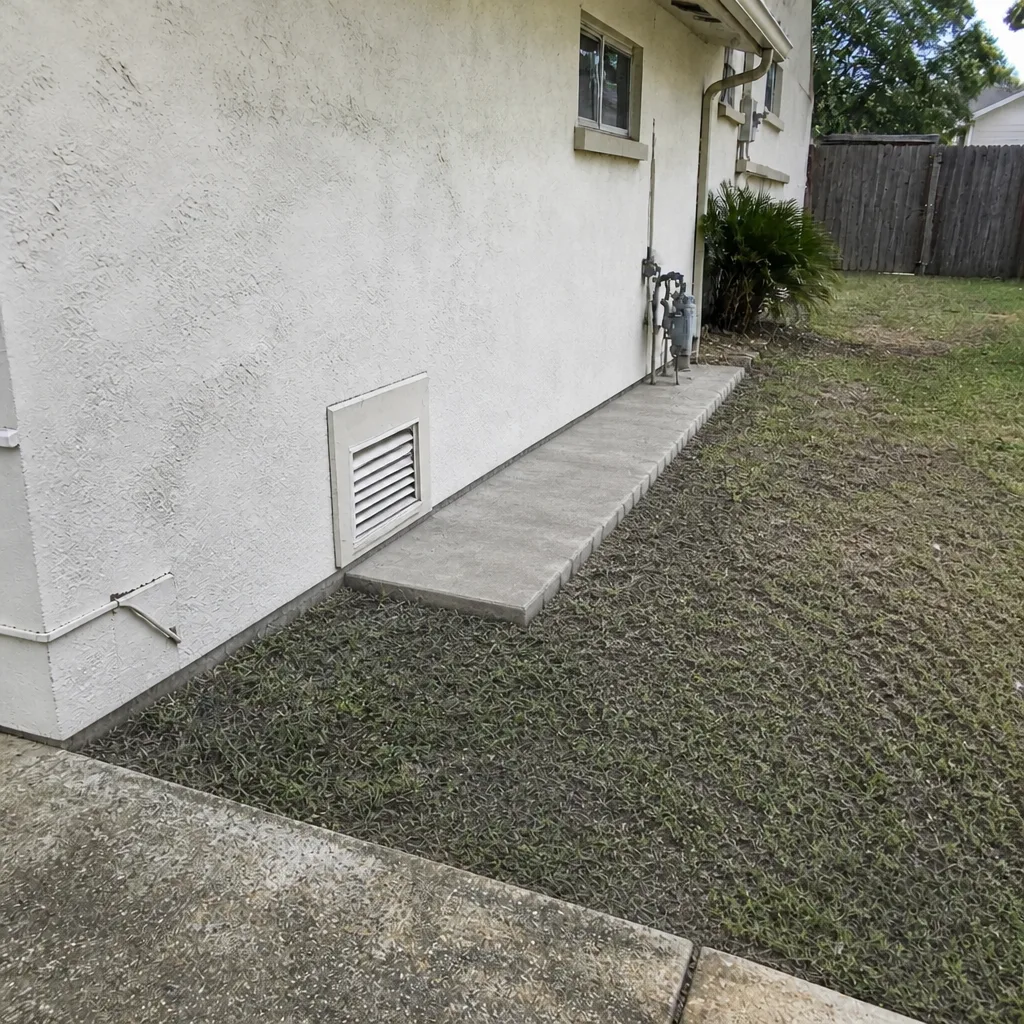 After
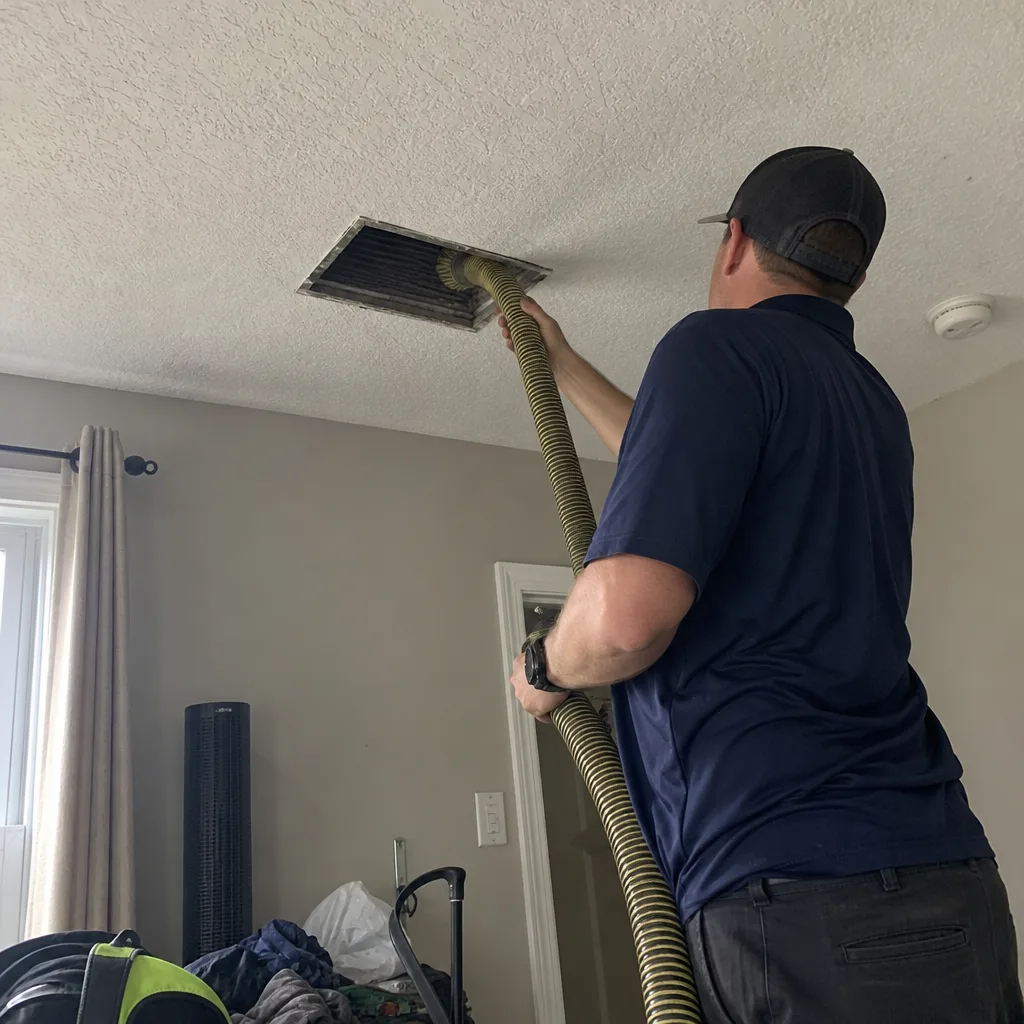 Before
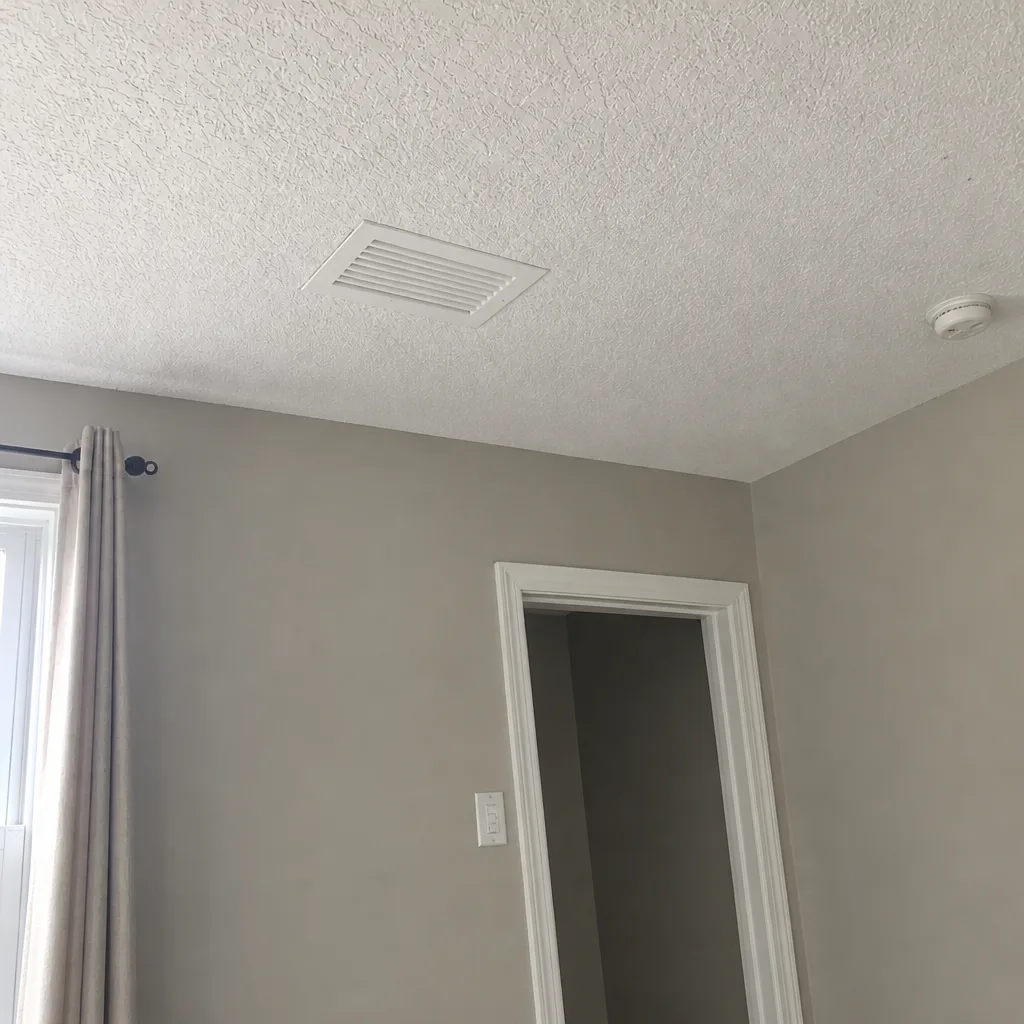 After
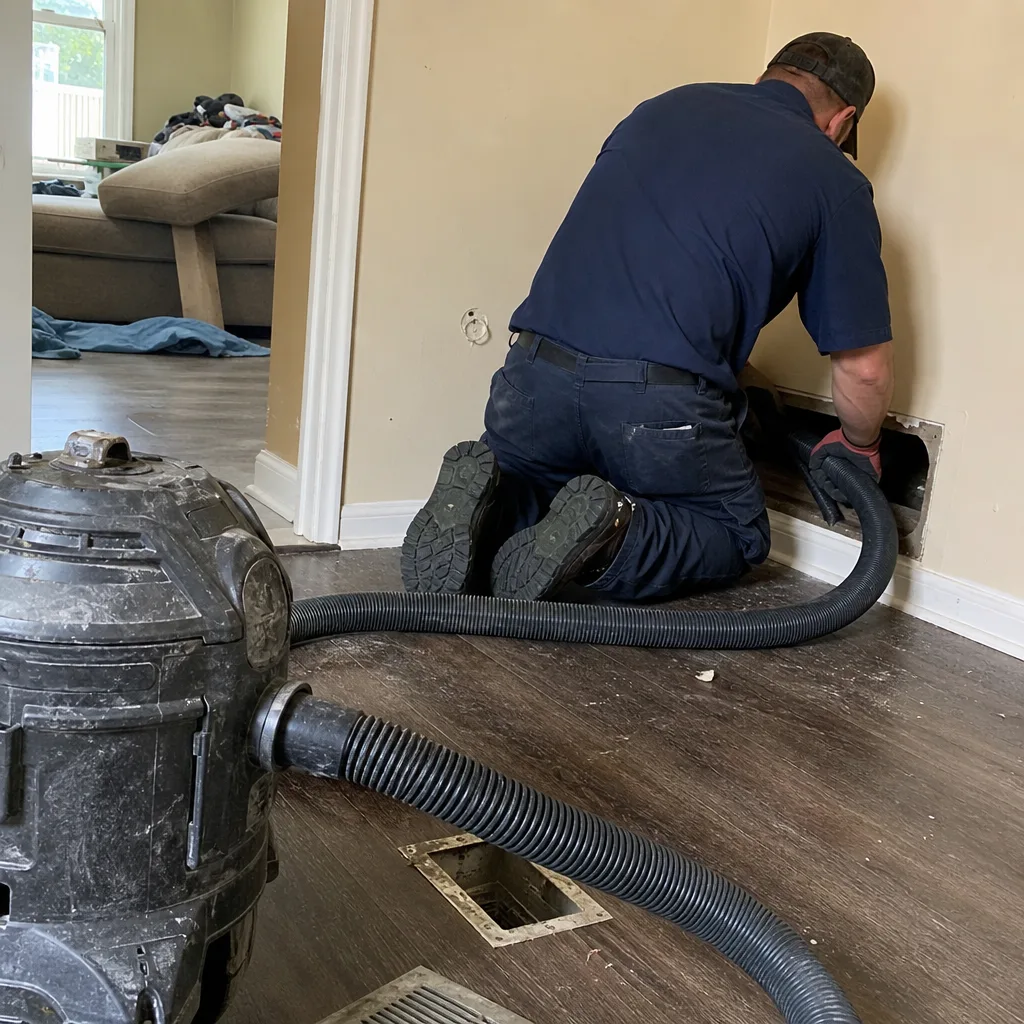 Before
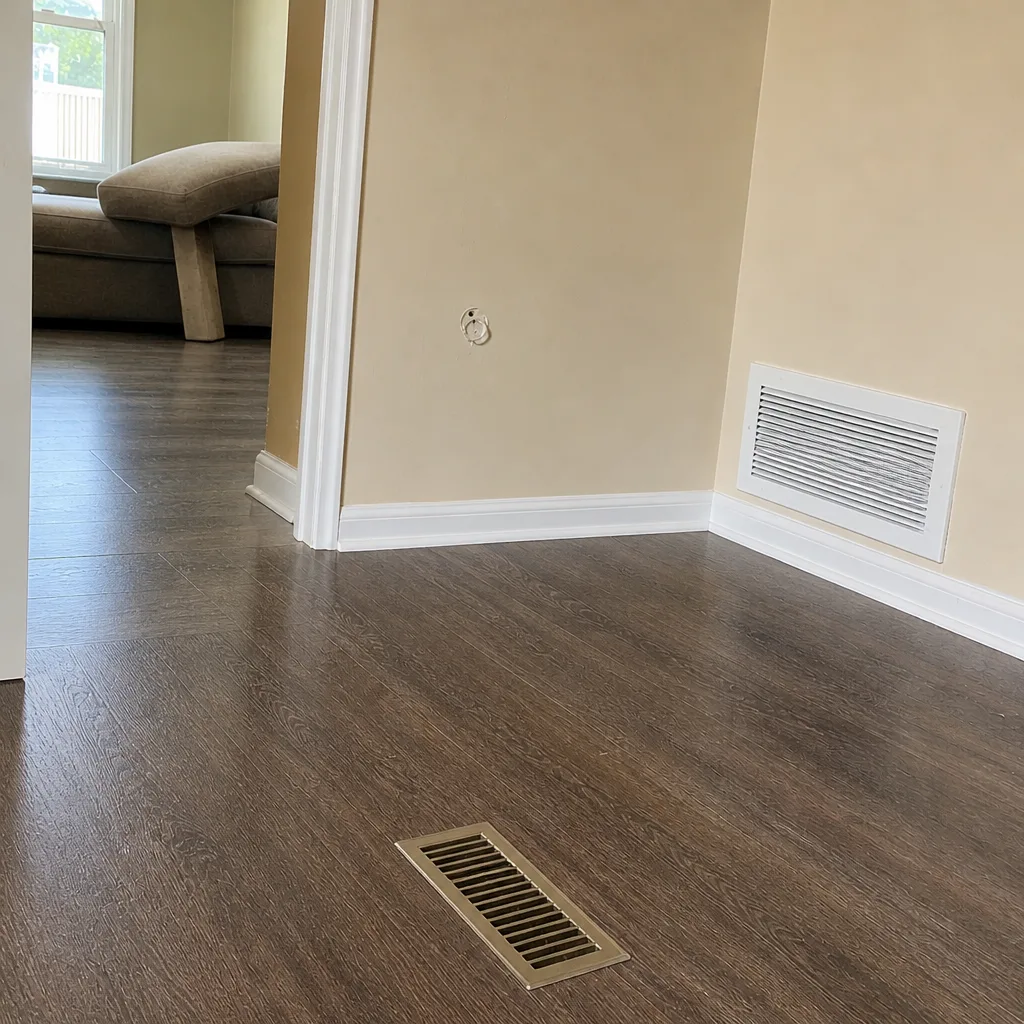 After
When to Call a Professional
Some situations call for professional equipment and process, not DIY. If you notice a musty odor that appears when the system starts, visible staining inside register boots, moisture or condensation on flex duct in the attic, or allergy symptoms that spike when the cooling system runs, those point to contamination a vacuum can’t address. The same is true for a recently built or recently renovated home, where construction debris may be sitting in the return plenum and air handler cabinet. Dryer vent clogging is a safety matter, and should be handled with proper equipment, not a shop vac. Duct Cleaning Palm Coast offers free estimates in Palm Coast – call (855) 592-3509. We answer 24/7. Fast dispatch, 7am-7pm.
Frequently Asked Questions
Air duct cleaning in Palm Coast typically costs in the whole-system range rather than the low single-vent prices you see advertised. The honest number depends on the number of branches, whether the plenum and air handler cabinet are included, and whether any repairs are needed. The written estimate sets the final price, and per-vent pricing is a red flag. Call (855) 592-3509 for an exact quote – estimates are free.
Cheaper quotes usually cover fewer zones. A quote that lists “duct cleaning” without mentioning the plenum or air handler cabinet typically cleans the visible runs and leaves the two dirtiest sections untouched. Ask which zones the price includes, and ask about documentation before booking. Call (855) 592-3509 for an exact quote – estimates are free.
Before-and-after photos of your own ductwork – with recognizable landmarks so you can tell they’re the same spots – are the clearest evidence. A walk-through of the cleaned zones and a clear explanation of any issues found should accompany it. Call (855) 592-3509 for an exact quote – estimates are free.
For most Palm Coast homes, every three to five years is a reasonable starting point, but the schedule depends on pets, allergies, renovations, and moisture conditions. Homes with pets, allergy sufferers, or recent construction often benefit from more frequent cleaning. Call (855) 592-3509 for an exact quote – estimates are free.
It can, particularly when biofilm and accumulated debris are present in the system. Cleaning removes the contamination source, and filtration upgrades afterward, like better media filters from Honeywell, Aprilaire, or Guardsman, reduce how fast it builds back. Call (855) 592-3509 for an exact quote – estimates are free.
We clean all five zones: supply runs, return runs, register boots, the supply and return plenums, and the air handler cabinet. If we find a disconnected duct or damaged boot during the job, air duct repair is available on the same visit rather than requiring a separate contractor. Call (855) 592-3509 for an exact quote – estimates are free.
The Bottom Line
Palm Coast homeowners don’t have a dust problem so much as a system problem. The duct runs get the attention, but the return plenum, air handler cabinet, and boots are where contamination concentrates, and in a humid climate those zones stay wet enough to feed biofilm year-round. Cleaning only the runs leaves the real source untouched. Professional contact cleaning with equipment like Rotobrush, plus negative-air extraction from Nikro or Abatement Technologies, addresses all five zones. Documented before-and-after photos make the work verifiable. Our technicians have up to 15 years of experience, and we keep the focus on the full air pathway from furnace to vent.
Get a Free Estimate
If you’re ready to find out what’s actually sitting inside your system, we can help. We offer cleaning, repair, and dryer vent service as a combined scope, with documentation and one flat price per system agreed before work starts. Call (855) 592-3509 to book a free estimate in Palm Coast. We answer 24/7. Fast dispatch, 7am-7pm, Sunday through Friday.
Written by the team at Duct Cleaning Palm Coast.