
Last updated November 15, 2026
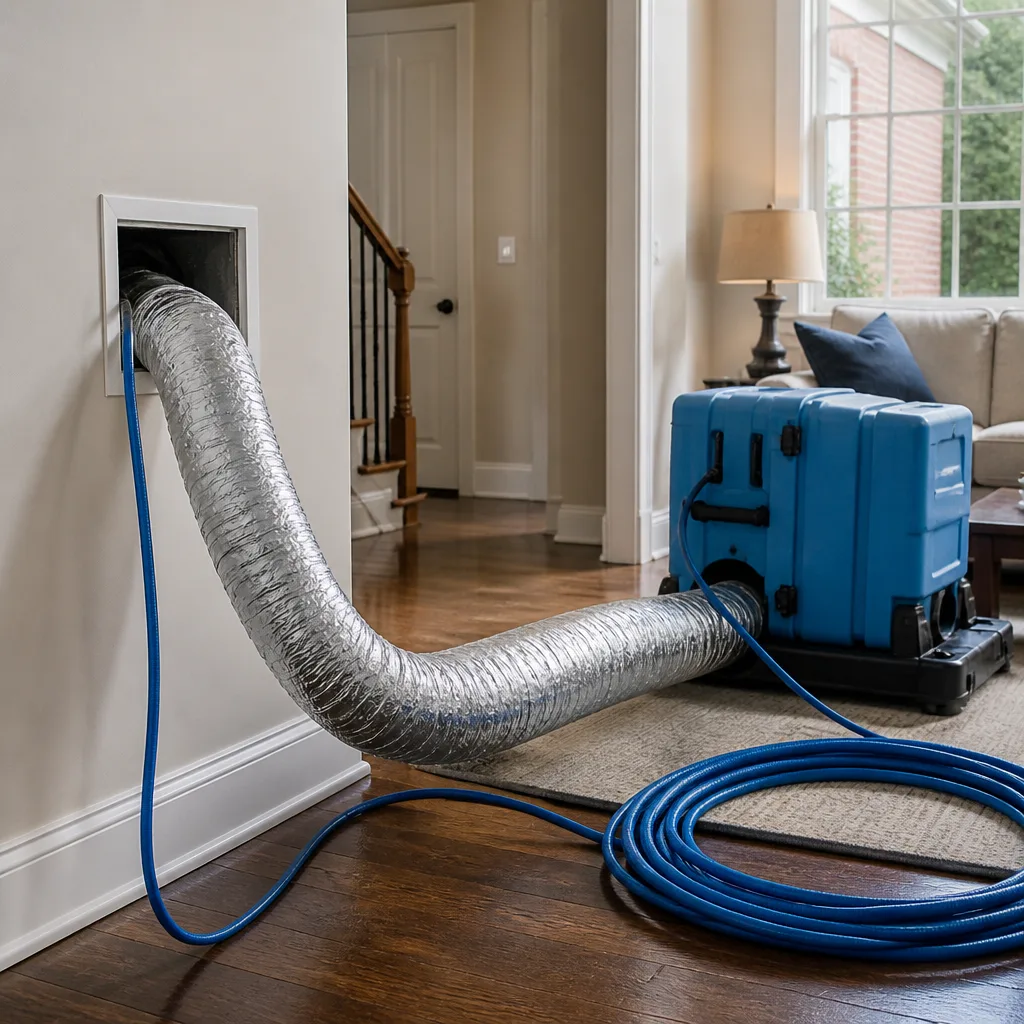 Whole-home duct cleaning
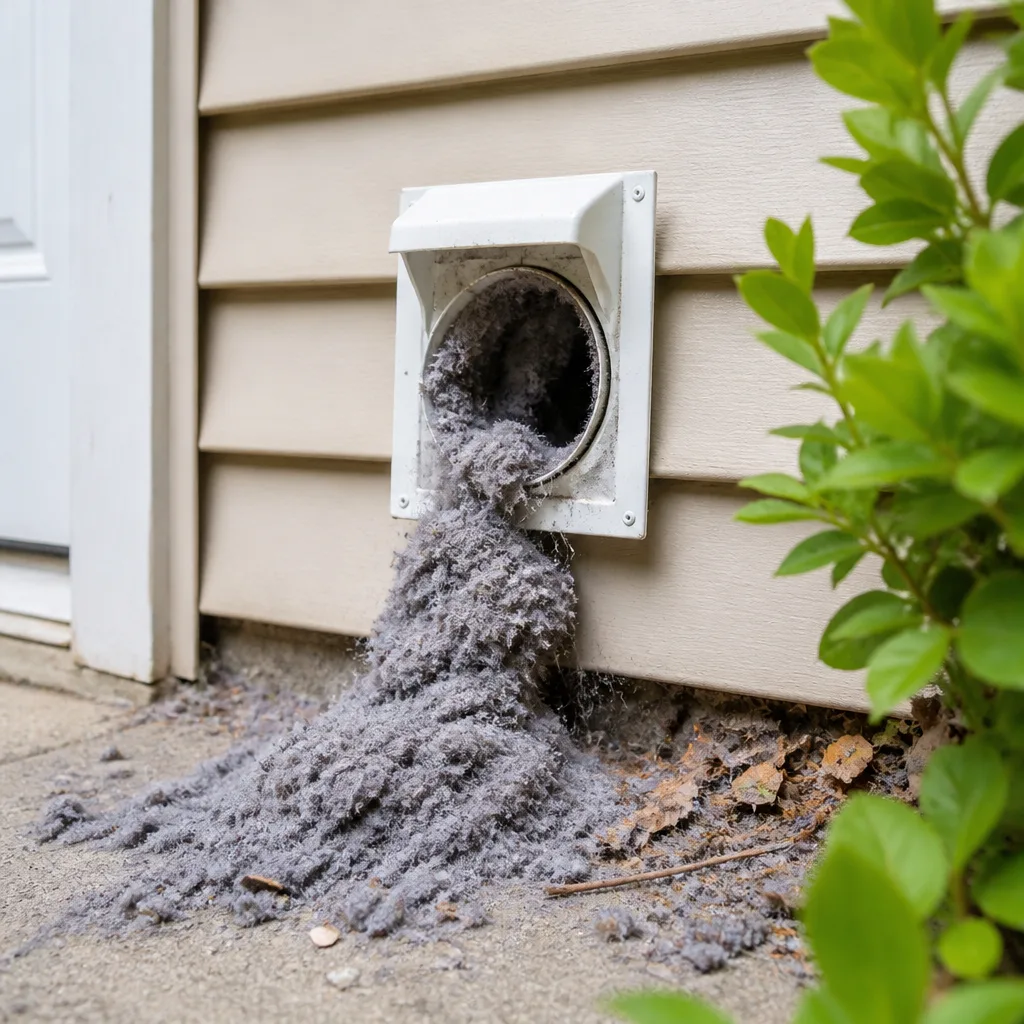 Dryer vent cleaning
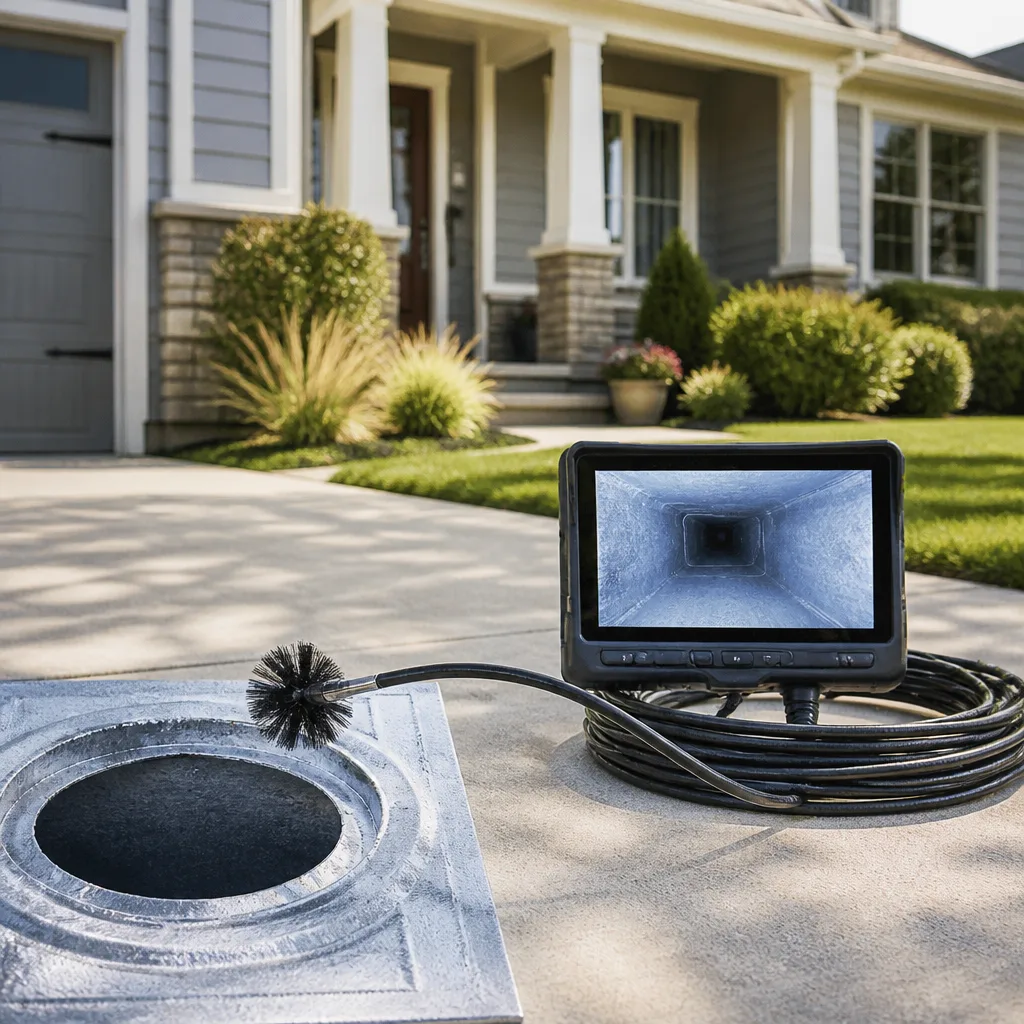 Camera inspection
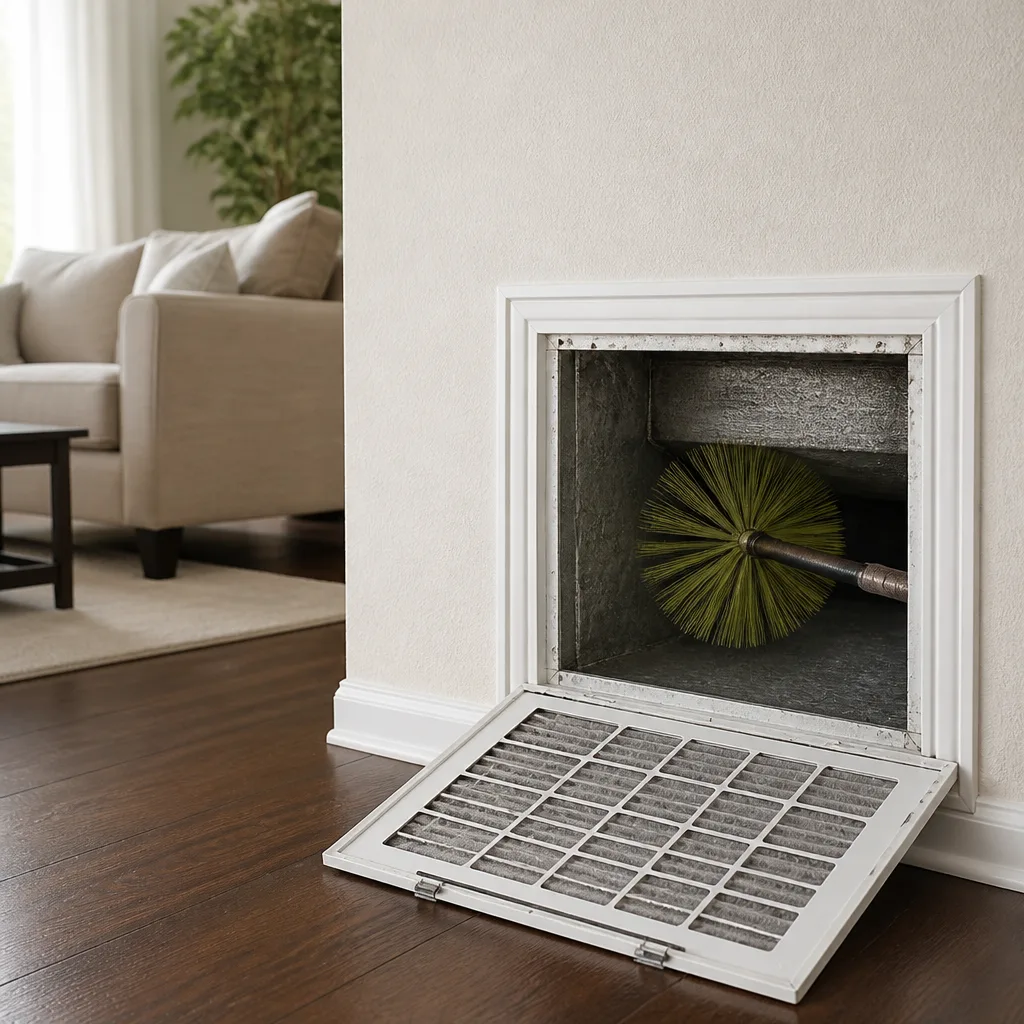 Sanitizing & deodorizing
Whole-system duct and dryer vent check with before-and-after photos - you see exactly what came out of your vents
That "$99 whole-house special" is a bait ad - the real number appears once they are in your hallway, or the "clean" is a shop-vac at the register. We photograph the inside of your ducts before and after instead.
Air Duct Cleaning Maintenance Checklist for Palm Coast Homeowners
The advice to change your filter every 90 days was written for dry-climate homes, and it doesn’t hold up in Palm Coast. Here, a clogged or undersized filter during an August humidity spike can push the supply plenum cool enough that condensation forms inside it within a single billing cycle. That moisture then sits against duct liner, and liner is where contamination starts. What follows is a month-by-month checklist built for the way homes in Palm Coast actually run: high runtimes, long cooling seasons, humid attic air, and flex duct overhead.
Quick Answer
A workable air duct maintenance checklist for Palm Coast pairs four professional visits a year with simple monthly homeowner checks: filter inspection every 30 days in cooling season, register-by-register visual walks, drain pan verification, and a post-storm attic inspection of flex duct connections. The homeowner part is observation and documentation. The cleaning, repair, and any work inside the air handler belong to a technician with contact-cleaning equipment.
Styles & brands we work with
- Whole-home duct cleaning
- Dryer vent cleaning
- Camera inspection
- Sanitizing & deodorizing
Table of Contents
- Why Palm Coast Ducts Age Faster Than the National Average
- The Month-by-Month Maintenance Calendar
- What to Look For at Every Register (No Tools Required)
- How to Log HVAC Runtime to Catch Restriction Early
- What to Check in the Attic After a Storm
- Homeowner Tasks vs. Technician Tasks
- The Dryer Vent Belongs on the Same Checklist
- Filter and Filtration Upgrades That Make Sense
Why Palm Coast Ducts Age Faster Than the National Average
Most duct maintenance guidance assumes a system that runs hard for three months and rests the other nine. In Palm Coast, the cooling season is the year. Systems run long hours into October and pick back up in spring, and a system that never gets a real off-season never gets a real chance to dry out.
That matters because duct contamination has two drivers here: moisture and runtime. Humidity in the return air and in attic spaces stays elevated for most of the year. Add a blower moving hundreds of cubic feet per minute through flex duct and you get a steady film of condensation-friendly conditions along the duct walls. Dust sticks to that film. The liner starts to break down. Then pests follow the moisture.
Three conditions specific to homes in Palm Coast drive the timeline:
- Long cooling runtimes. A system that runs nine or ten months a year moves far more air than one in a short-season climate. More air, more dust loading, faster restriction.
- Elevated attic humidity. Flex duct in an attic with poor ventilation stays damp on the outside, and the liner degrades from the outside in.
- Pest pressure. Roaches, silverfish, and rodents in this climate find duct joints hospitable. Loose connections in flex runs give them a way in.
Retail-grade blowers and shop vacuums can’t correct that. Contact cleaning with a Rotobrush system physically brushes debris off the duct wall, which is the only way to remove a film that’s bonded to the liner. That distinction is the whole game. In our experience, a homeowner who understands the difference is the one who stops buying a $99 special and starts buying a clean air pathway.
The Month-by-Month Maintenance Calendar
A generic “spring and fall” duct schedule doesn’t map onto a Palm Coast year. Here’s a calendar tuned to what the system is actually doing each month.
January through March
- Filter inspection every 30 days. Runtimes are shorter now, so this is the one quiet stretch. Replace or clean as needed based on what you find.
- Register walk-through with a flashlight and a notepad. Photograph anything you see. You’ll want a baseline before humid season.
- Check the condensate drain pan for standing water. If you find water, note it and call a technician. That’s a symptom of a system issue, not a duct issue, but it affects the air pathway.
- If you’ve never had the ducts professionally cleaned and the home has pets, carpet, or renovation history, get a baseline cleaning this quarter. It’s easier to schedule before the heavy season.
April through June
- Filter inspection every 30 days as runtimes climb. If you have a washable filter, verify the wash schedule.
- Check return grilles for dust buildup. Returns pull the most loaded air.
- Walk the attic if you can do so safely. Look for disconnected elbows, sagging flex runs, and any joint that isn’t sealed.
- Open the condensate drain line and verify it’s flowing. A clogged drain near the air handler can overflow into the duct system in some configurations.
July through September
- Filter inspection every 30 days, without exception. Peak humidity is when a clogged or undersized filter is most likely to drive condensation inside the supply plenum.
- Register walk-through every six weeks. Look for staining that wasn’t there in April.
- Note any new smell at a supply register. Musty smell after the system shuts down is a classic sign of moisture in the air pathway.
- Drain pan verification weekly. Yes, weekly.
October through December
- Filter inspection every 30 days.
- Post-storm attic check each time a tropical storm passes through the region.
- Professional cleaning if you’re on a routine interval, or if you found staining in summer.
- Dryer vent cleaning on the same visit if it’s been long enough. Most of what we find is the accordion-style flex that sags and traps lint.
What to Look For at Every Register (No Tools Required)
You can learn a lot more than you’d expect from a flashlight and a 30-second look at each vent. The trick is knowing what the patterns mean.
Staining patterns and what they tell you
- Soft, spreading dark patches around the grille edges. Usually moisture. The condensation forms at the coldest part of the register, then wicks into surrounding drywall. Treat this as a moisture problem, not a cosmetic one.
- Dry grey-brown streaks in the airflow path. Dust loading from normal runtime. Not urgent, but it tells you the filter is loaded and the system is moving dust through the supply side.
- Faint speckling that reappears after cleaning. Sometimes insect activity. Look at the grille from below the register and at the duct boot after a cleaning. If the speckles return quickly, you may want a technician to inspect the joint behind the grille.
- Black staining that follows the shape of the grille vanes. Worth photographing and showing to a technician. It’s typically the early sign of a liner issue inside the duct.
A register walkthrough you can do in ten minutes
- Turn the system off, or you’re just looking at a blurry grille.
- Shine a light up into the supply boot at each register. Note anything that isn’t the color of the duct material.
- Smell the register. Your nose is more sensitive than you think to musty vs. dusty vs. clean air.
- Run your fingers around the grille edges. Feel for dampness. A palm test after a cooling cycle is useful here.
- Photograph every register and note which ones looked off. Keep the photos dated so you can compare in three months.
- Listen. A whistling register means restriction somewhere behind it.
Palm Coast homes with mature landscaping and long summer afternoons get more of every problem pattern. Repeat the walkthrough on a fixed schedule, not just when the house smells off. On the Duct Cleaning Palm Coast side, we do the same walk and photograph every register on arrival.
How to Log HVAC Runtime to Catch Restriction Early
Here’s a maintenance trick almost no homeowner uses: track how many hours your system runs and whether that number is trending up month over month. A system that used to cool the house in 20 minutes and is now taking 35 is telling you something. Restriction from debris accumulation is a common cause, and it stresses the blower motor on the way to becoming a bigger repair.
The method
- Pick a reference day each month, ideally the same week. For Palm Coast, use a hot afternoon in the same month.
- Note the outdoor temperature from your phone at the same time of day.
- Record the time the system turns on and the time it shuts off. Do this two or three times that day.
- Track the numbers on a spreadsheet or a note. Month-over-month is what matters, not one data point.
- Cross-reference against the outdoor temperature. A system running 40 minutes on a 98-degree day is normal. A system running 40 minutes on an 88-degree day probably isn’t.
If runtime is lengthening while outdoor temperature is flat or falling, suspect restriction. Filter first. Then a professional inspection, because you can’t see inside the duct from your living room. Modern thermostats also log runtime directly – if yours does, use that instead of a stopwatch.
A contact-cleaning visit with brush-and-extract equipment will tell you exactly what the duct walls looked like before and after. We photograph the interior before and after every clean, and that record is your baseline for years to come. That’s how you know the work was actually done and what the system looked like when it started the checklist.
What to Check in the Attic After a Storm
Tropical-storm winds do more than shake the shingles. They move flex duct in the attic and can disconnect elbows, boots, and terminations that look completely normal from inside the house. A disconnected register elbow doesn’t announce itself. The system just starts pulling attic air into the supply, and you’re running a cooling system that’s now moving hot attic air into the rooms you paid to cool.
Safe attic inspection after a storm
- Wait until daylight, and only go into the attic if the access is safe, there’s a stable walking surface, and the temperature is manageable. Attic heat is its own hazard after a storm.
- Carry a strong flashlight. Cell phone flashlight is a backup, not your primary.
- Look for sagging flex runs. A run that used to be straight and is now a low-hanging curve has likely lost a support strap.
- Inspect every flex-to-metal connection. The inner liner should be sealed over the collar and clamped. If you see a gap, photograph it.
- Look for pest activity: droppings, nesting material, or torn liner. Rodents and raccoons occasionally find their way to flex runs after a storm takes out trees near the roof line.
- Check the platform the air handler sits on for signs of water intrusion, and verify the condensate drain pan is clear.
- Don’t try to reattach or reseal flex duct yourself. Liner quality and clamp placement matter, and a bad reseal is worse than a disconnected run.
If anything looks off, get a technician out to look at it. This is where air duct cleaning visits often uncover a storm-related repair need – a separated elbow, a torn section of flex, a boot that’s no longer sealed to the drywall. Air duct repair as a standalone service means a technician can fix what they find on the same visit instead of handing you a list of other people to call. In a place like Palm Coast, where storm season runs long, having that repair capability under one roof matters.
Homeowner Tasks vs. Technician Tasks
There are tasks a diligent homeowner can safely observe, document, and handle. And there are tasks where a homeowner doing it themselves is a real risk of injury or a much more expensive repair.
What a homeowner can safely handle
- Filter inspection, replacement, or cleaning on the schedule above.
- Register walk-throughs with a flashlight and a camera.
- Tracking runtime and logging it.
- Condensate drain pan checks.
- Post-storm attic inspection, if access is safe.
- Cleaning grille covers with a vacuum and a damp cloth (exterior only, doesn’t reach the duct).
- Noting anomalies and photographing them.
What requires a licensed technician
- Any work inside the air handler.
- Any electrical work. Wiring inside an air handler carries line voltage and the risk is serious. Don’t open the panel.
- Reconnecting, sealing, or replacing flex duct. The inner liner seal, the mastic, the clamp placement, and the support strapping all matter, and a poor repair lets in attic air that no amount of cleaning fixes.
- Cleaning the duct interior with contact equipment. Consumer-grade tools don’t reach the duct walls, and improvised solutions can damage liner.
- Dryer vent cleaning past a short, straight run. Lint buildup plus a long vent run plus a dryer heat source is a real fire risk. The U.S. Fire Administration links thousands of residential fires annually to clogged dryer vents.
- Any suspected moisture intrusion or mold inside the system.
A well-run maintenance relationship works like this: you keep the checklist, we handle the inside of the duct. Call (855) 592-3509 for a free estimate on the professional side. We answer 24/7. Fast dispatch from 7am to 7pm, Sunday through Friday.
The Dryer Vent Belongs on the Same Checklist
Most homeowners separate “duct cleaning” from “dryer vent” in their minds. Both are air pathways, and both degrade in a Palm Coast climate at a similar rate. The dryer vent is the one with a fire risk attached.
Lint buildup in a dryer vent is the leading contributor to residential dryer fires, and the U.S. Fire Administration documents thousands of them a year. Palm Coast homes that run a dryer several times a week in humid conditions see the lint catch harder to the vent walls, and accordion-style flex venting traps more than a smooth metal run. A dryer vent cleaning appointment every year to eighteen months, depending on household size, is a reasonable interval. Larger households with pets should lean toward the shorter end.
What to check between cleanings
- Dryer lint trap emptied before every load. Obvious, and constantly skipped.
- Clothes taking longer to dry, or coming out hotter than they used to. That’s a sign of restricted flow, not a changing appliance.
- The exterior vent flap. It should open freely when the dryer is running and close cleanly when it stops. If it stays shut or flutters loose, there’s a problem.
- The vent run itself, if it’s a short straight run you can reach. If lint is visible inside, it needs cleaning.
- Any lint accumulation behind the dryer. That’s a sign the interior of the vent is loading.
Dryer vent cleaning uses the same containment standards as duct cleaning: Nikro and Abatement Technologies extraction equipment, and a technician who verifies the run is clear end to end. The safety benefit is the whole point of the visit. It’s not a nice-to-have for the appliance, it’s a maintenance task with a real reason behind it.
Filter and Filtration Upgrades That Make Sense
Filtration is where homeowners spend money that doesn’t help and skip spending that does. A tight-mesh, high-MERV filter in a system designed for a cheap pleated panel creates more restriction than it removes. That restriction stresses the blower and reduces airflow, and in a Palm Coast summer it pushes condensation risk up. Match the filter to the system’s return-air capacity, not to a MERV number you saw on a forum.
What actually improves filtration here is a filter cabinet sized to the return and a legitimate filter brand. Honeywell and Aprilaire both make filter cabinets and media that integrate with residential systems, and both are available directly in an appointment. Those are the upgrades worth considering, particularly in a household with allergy sufferers or pets.
Beyond the filter itself, three add-ons sometimes help:
- Duct-side filtration. A Guardsman in-line filter helps capture fine particulate between cleanings. Useful for anyone sensitive to dust.
- Return grille filters. Sometimes appropriate for a specific room, but check total system return capacity before adding them. Too many grille filters can starve the system.
- UV-C in-duct lamps. These are useful as an addition to physical cleaning, not a replacement. A lamp doesn’t remove the debris load. Cleaning the duct wall does.
When we walk through this with a homeowner, our focus is the full pathway from furnace to vent: filter, cabinetry, duct wall cleanliness, and the actual airflow path. Cleaning, repairing, and restoring as one scope is what separates a system that stays clean from one that gets recontaminated in two years. If the filter is undersized for the system, no amount of cleaning downstream compensates for it.
Common Mistakes to Avoid
- Following the 90-day filter rule blindly. In Palm Coast, a filter that’s clean at 60 days in February may be loaded at 30 days in August. Check monthly in cooling season and don’t rely on a fixed interval.
- Buying an inexpensive duct cleaning and expecting it to fix a smell. A cut-rate job often means an agitating air blow with no contact cleaning. That does nothing for a bonded debris film on the duct wall, and in some cases it just redistributes debris. Ask what equipment is used, and don’t accept a shop vacuum answer.
- Sealing a return register with furniture. A covered return starves the system and drives the blower faster. Common in remodeled rooms. Look at the returns every time you move furniture.
- Ignoring the attic between storms. A disconnected flex elbow after a tropical storm doesn’t make a sound. It just makes your cooling bill climb, and homeowners usually blame the AC unit instead of the duct. Walk it in daylight after every big wind event.
- Running a dryer vent past the interval. Two years between cleanings in a large household with pets is too long. The fire risk and the appliance wear aren’t worth saving the interval.
- Skipping the drain pan check in the wet season. A pan with standing water is a symptom. Catch it before it becomes a moisture source inside the air pathway.
- Doing your own duct repair after a storm. Reattaching flex is not a tape-and-go job. The inner liner seal matters more than the exterior appearance, and a bad seal pulls attic air into the supply for years.
See the difference
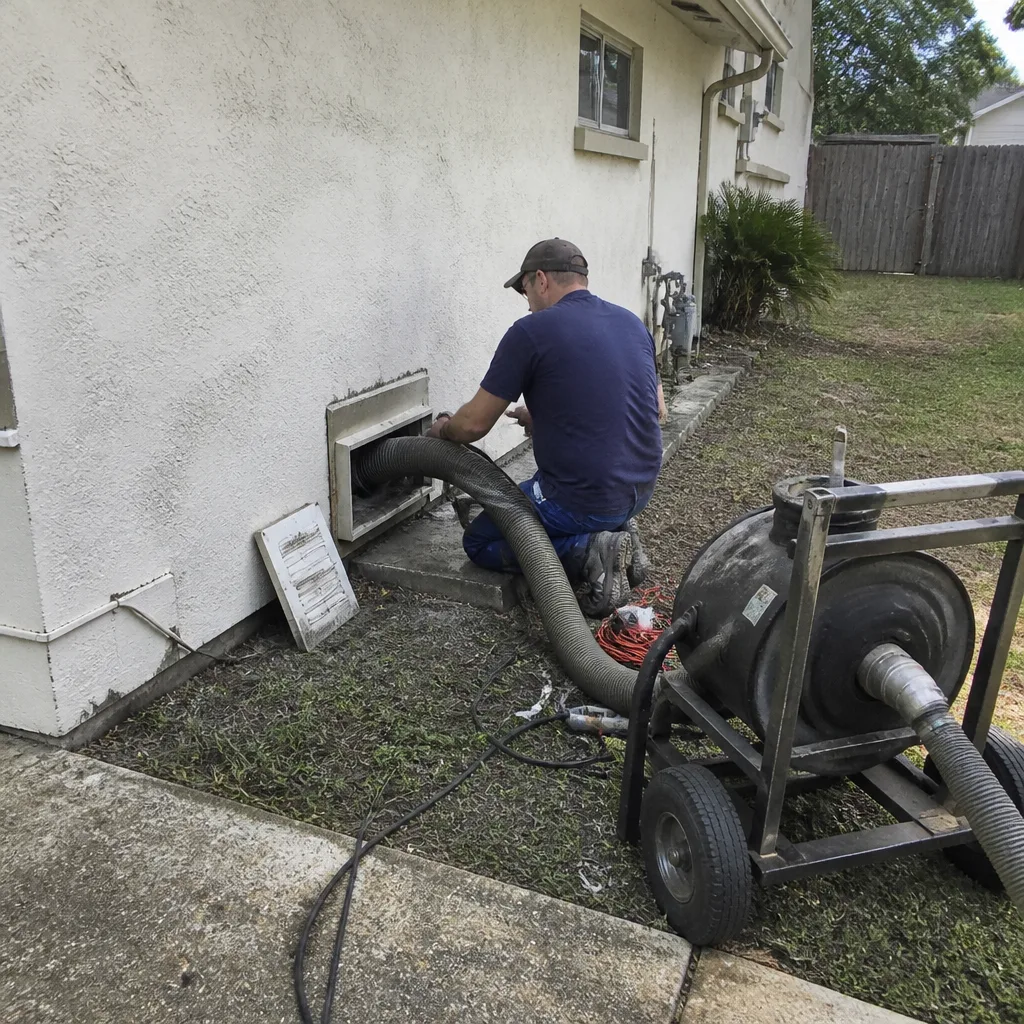 Before
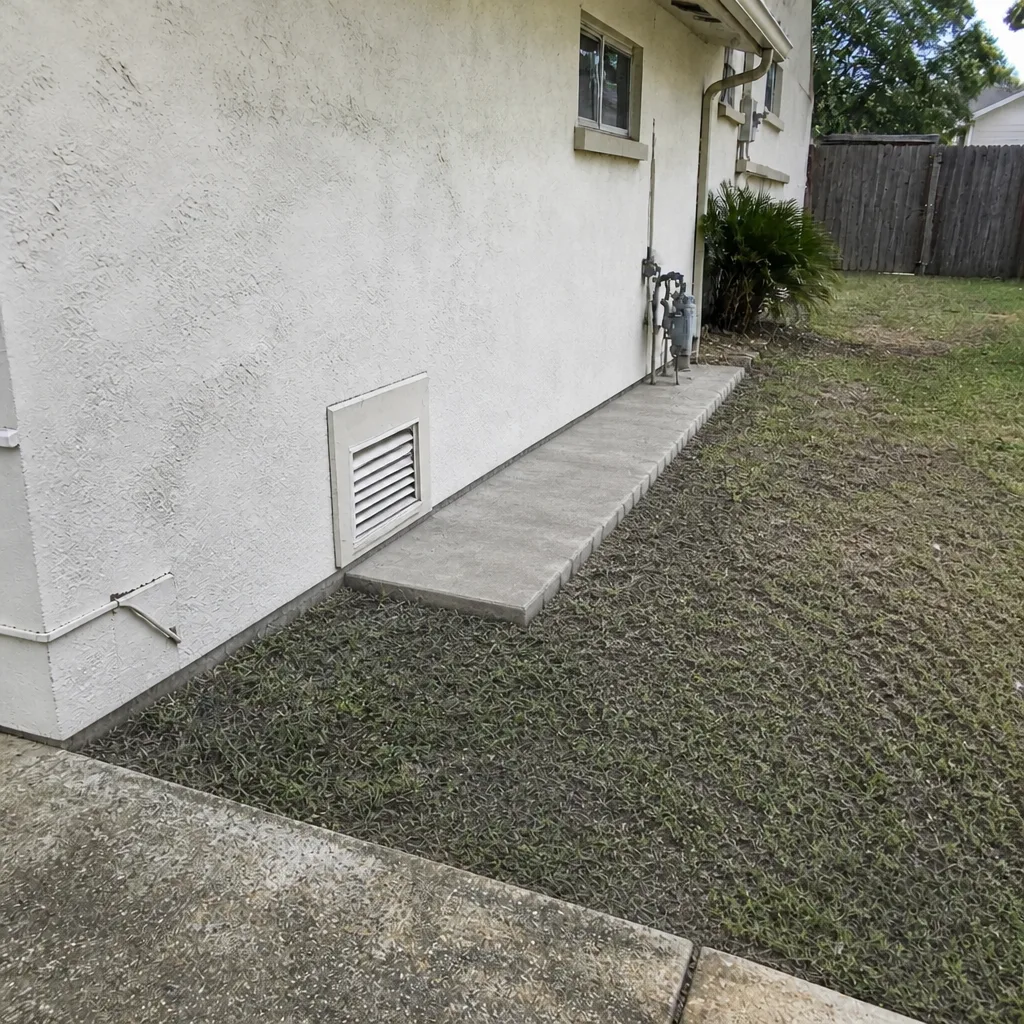 After
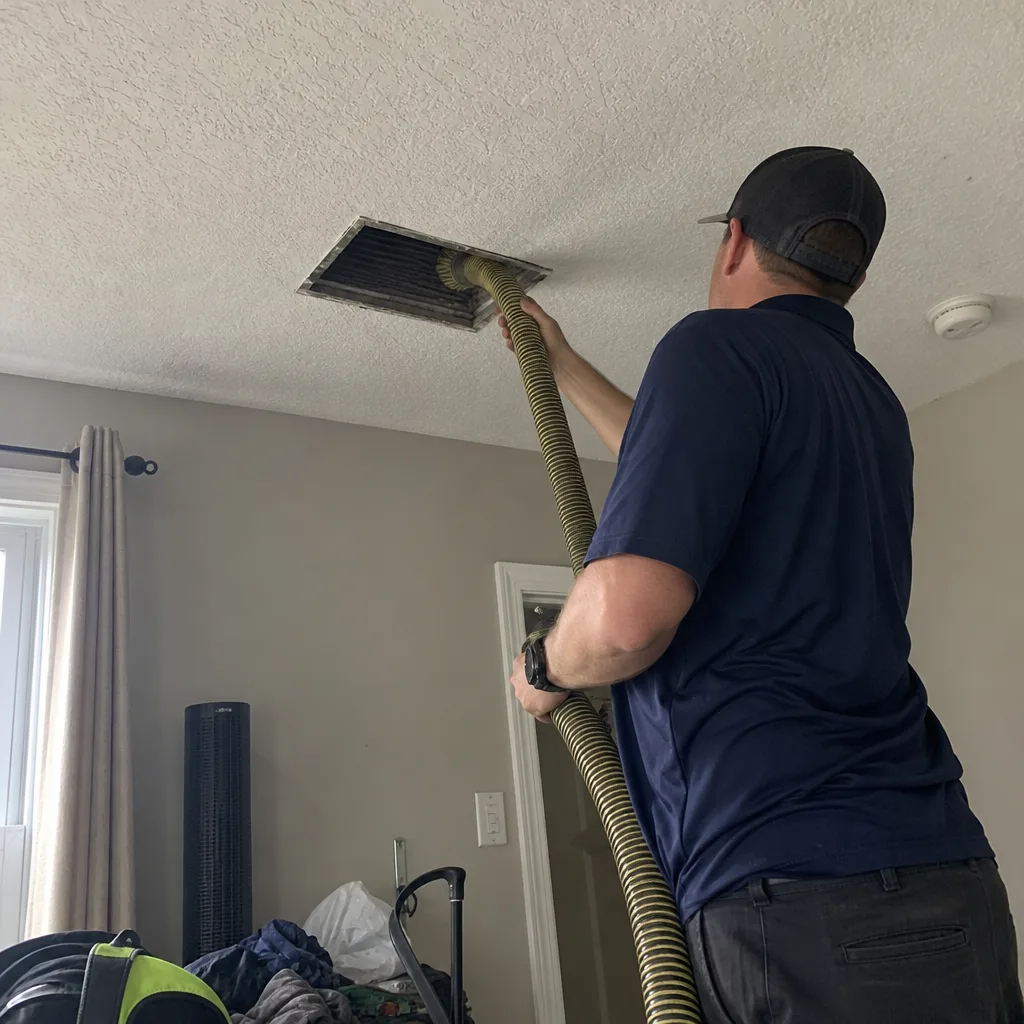 Before
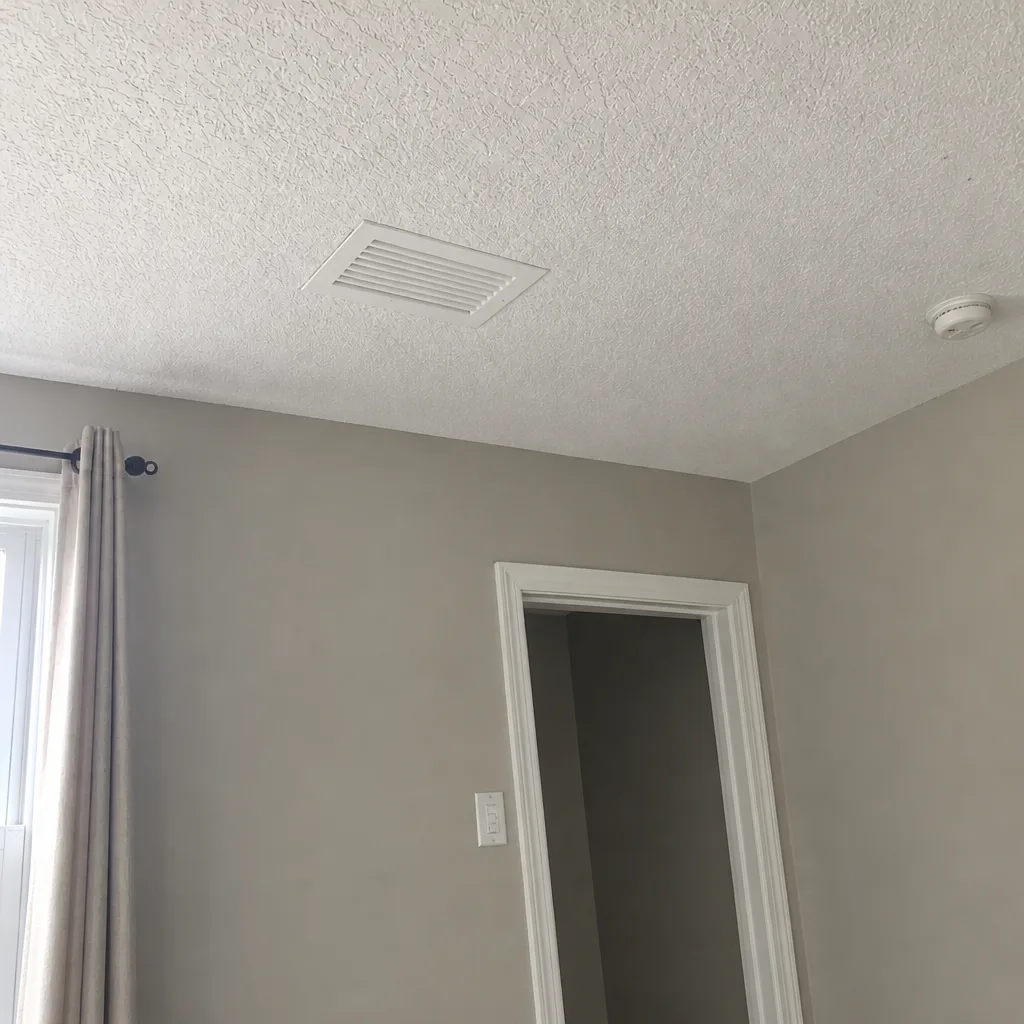 After
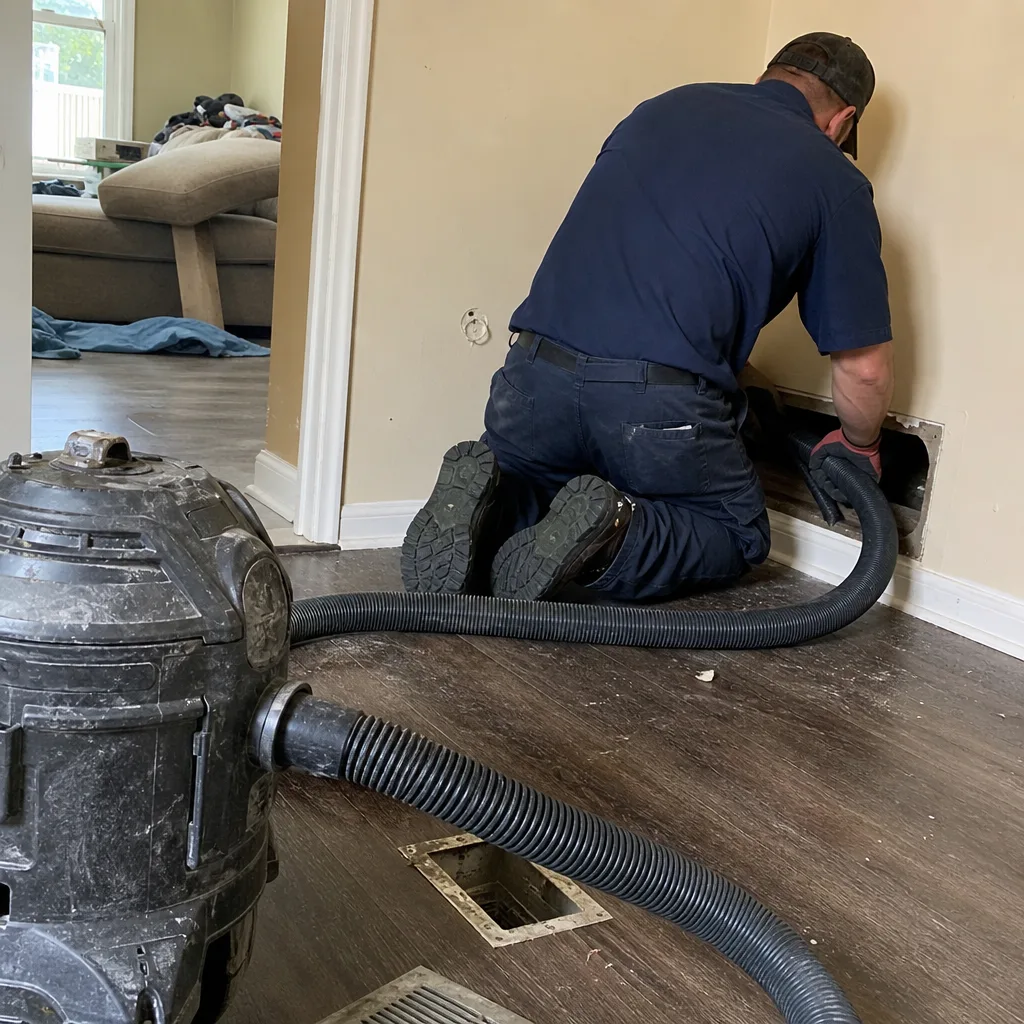 Before
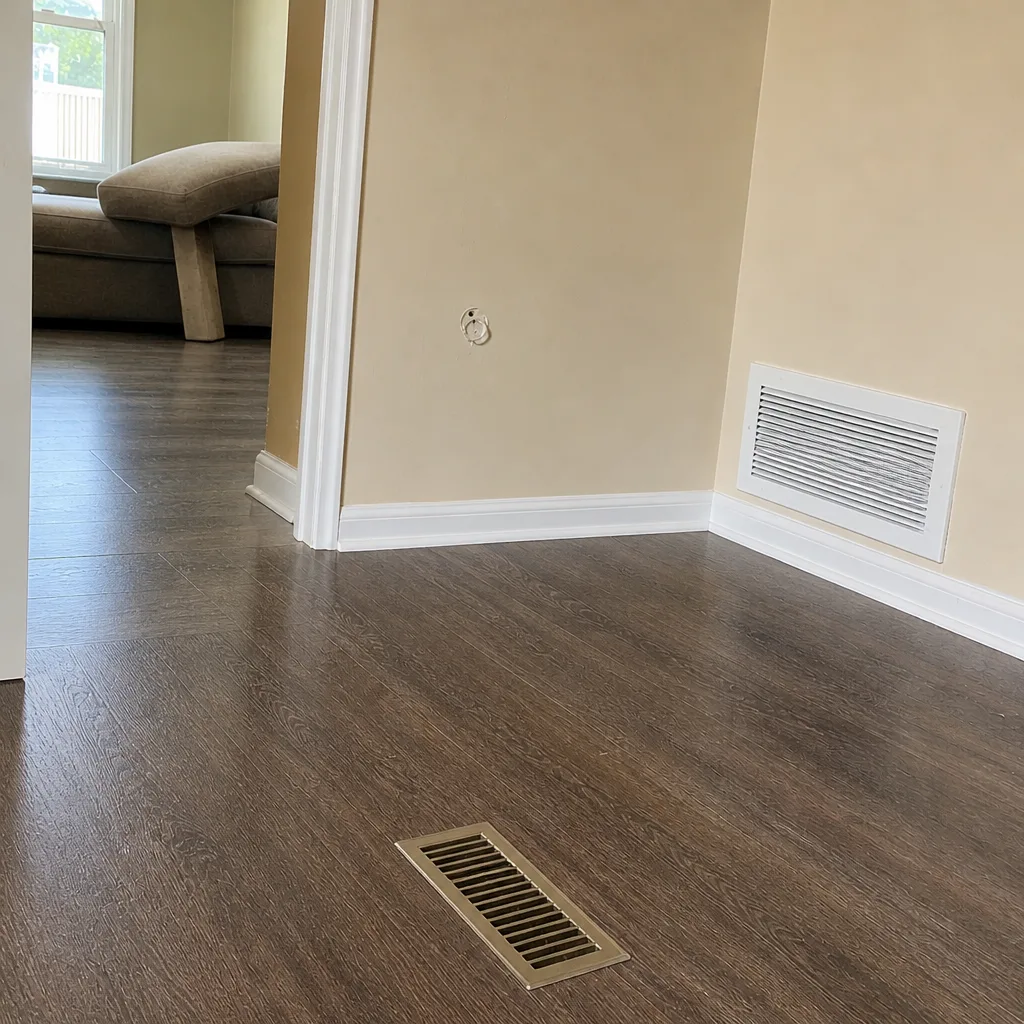 After
When to Call a Professional
Call a professional when you find: staining inside a register that’s spreading, a musty smell that returns after cleaning the grille, a runtime that’s lengthening without a temperature explanation, a disconnected or torn flex duct anywhere in the attic, standing water in the condensate pan, or a dryer vent with lint visible inside. Also call when it’s been more than two to three years since a full contact cleaning, particularly in a home with pets or recent renovation dust.
Duct Cleaning Palm Coast offers free estimates in Palm Coast – call (855) 592-3509. We use Rotobrush contact-cleaning systems, Nikro and Abatement Technologies extraction equipment, and our technicians have up to 15 years of experience. We answer 24/7. Fast dispatch from 7am to 7pm, Sunday through Friday.
Frequently Asked Questions
Every two to three years for most households, and annually for homes with pets, allergy sufferers, or recent renovation. The climate here raises the interval pressure. Long runtimes and humid air combine to load duct walls faster than in short-season climates, so if you’re used to a 5-year number from a national site, shorten it.
Honest whole-system pricing depends on square footage, the number of systems, and any repair work. We give one flat price per system, agreed before work starts, based on a written estimate; there’s no per-vent pricing and no coupon figure that grows after arrival. Call (855) 592-3509 for a free estimate.
Usually because the quote isn’t for contact cleaning. A low bid often means an air-only pass with consumer-grade equipment, which doesn’t touch a bonded film on the liner. The lower price is for less work, not a better price for the same work. Ask what equipment is used, and don’t accept a shop vacuum.
Ask for before-and-after photos of your own ducts. Every visit includes them on our side. You should also see a visible difference in the register boots and be able to look inside a supply register before and after the visit to confirm what the photos show.
Yes. Flex duct connections at elbows and boots are the first thing to fail in high wind, and the failure can be invisible from inside the house. Walk the attic in daylight after any tropical storm and look for sagging runs or gaps at flex-to-metal junctions. Don’t try to reseal them yourself.
Not necessarily. We offer air duct repair as a standalone service, so if a technician finds a disconnected or torn flex run during a cleaning, it can be fixed on the same visit. Ask any company you call whether they repair what they find, or whether you’d need to rebook a second contractor.
The Bottom Line
The checklist that works in Palm Coast isn’t the national one. Filter every 30 days in cooling season, register walkthroughs with a camera on a fixed schedule, drain pan verification every week in summer, runtime logging month over month, and an attic walk every time the wind gets serious. The homeowner part is observation. The cleaning, repair, and dryer vent work belong to a technician with commercial-grade equipment. Get the two parts separated clearly, and you’ll catch moisture, restriction, and storm damage before they get expensive.
If you’re ready for a professional look at the air pathway from furnace to vent, call Duct Cleaning Palm Coast at (855) 592-3509 for a free estimate. We answer 24/7. Fast dispatch from 7am to 7pm, Sunday through Friday.
Written by the team at Duct Cleaning Palm Coast.