
Last updated November 15, 2026
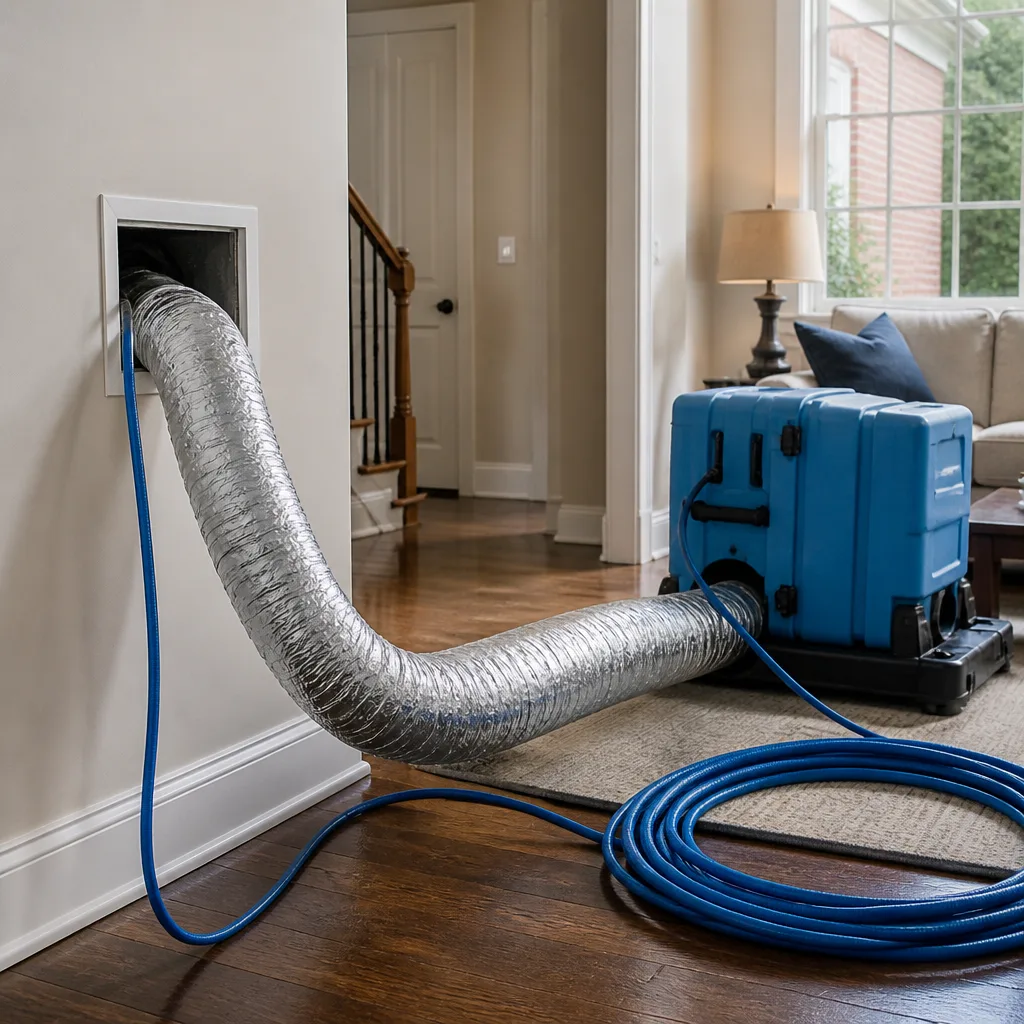 Whole-home duct cleaning
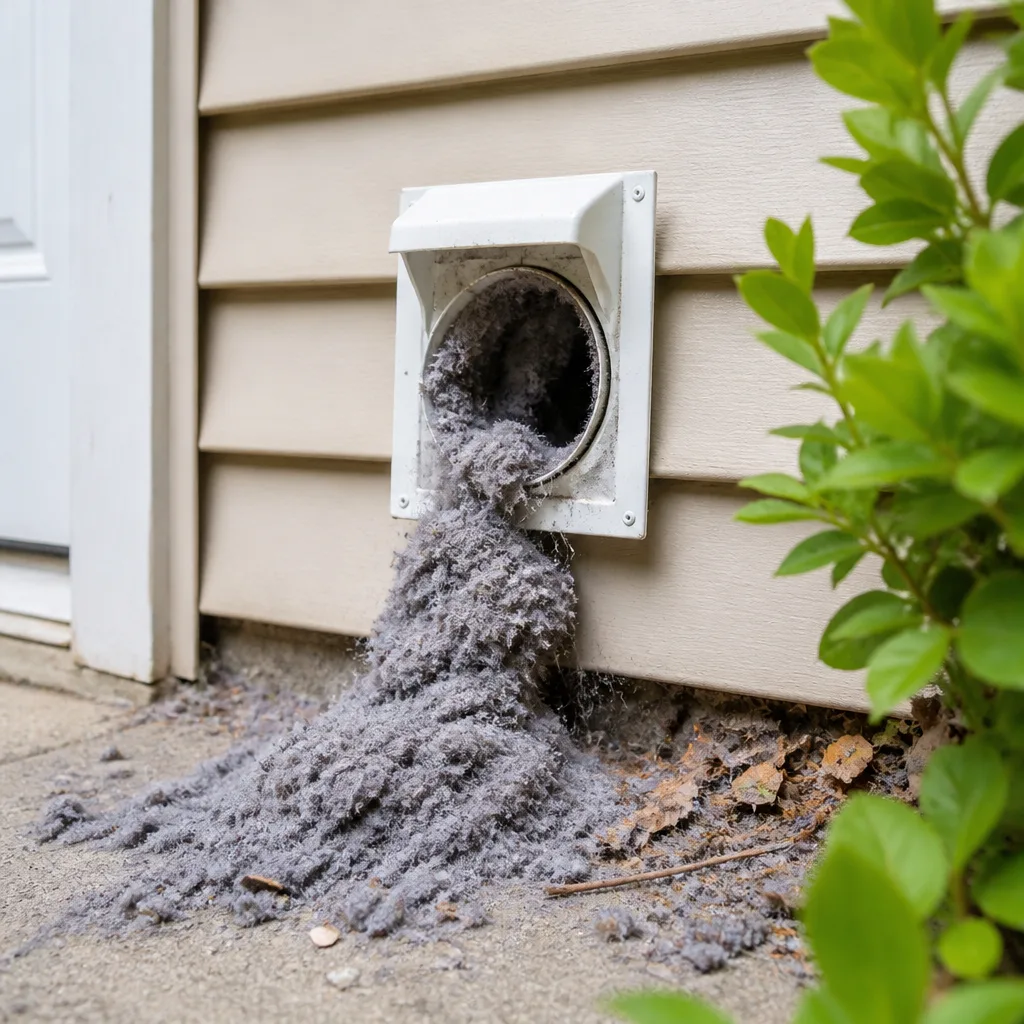 Dryer vent cleaning
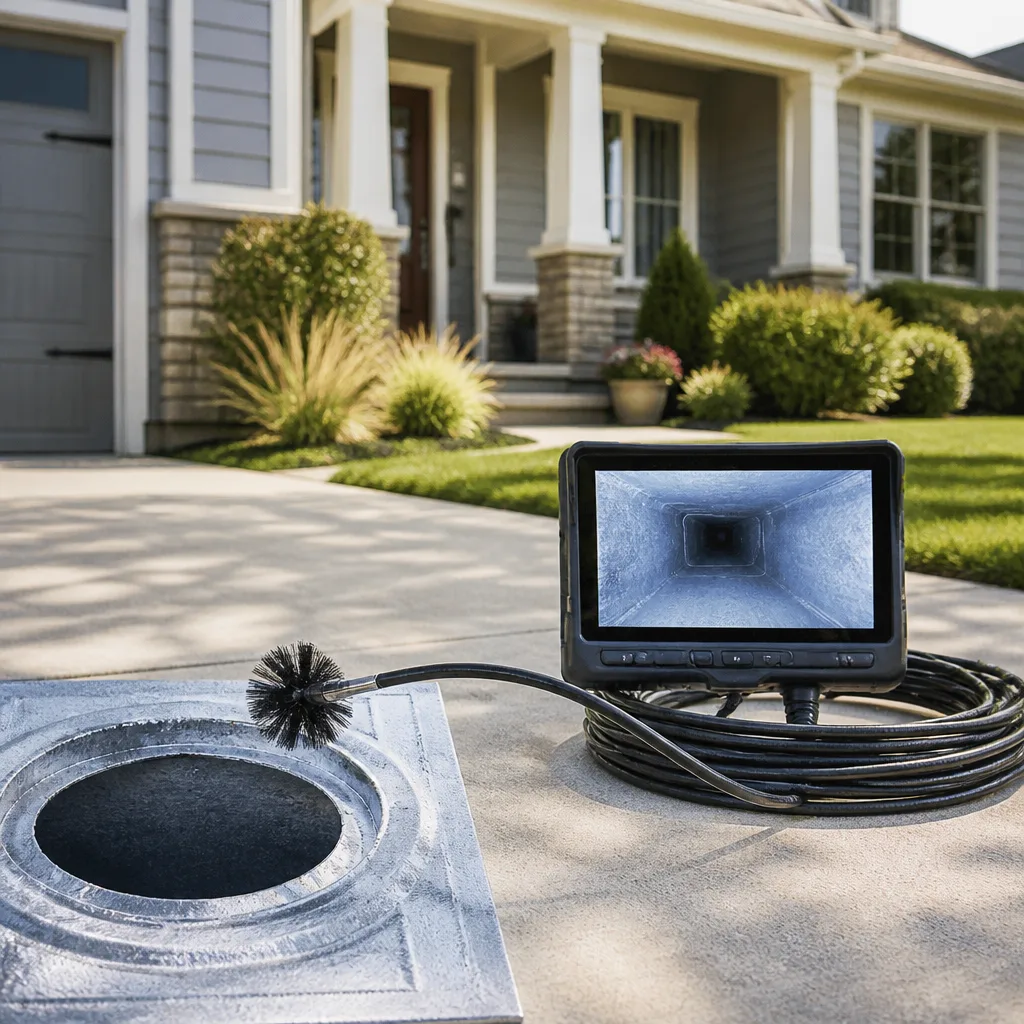 Camera inspection
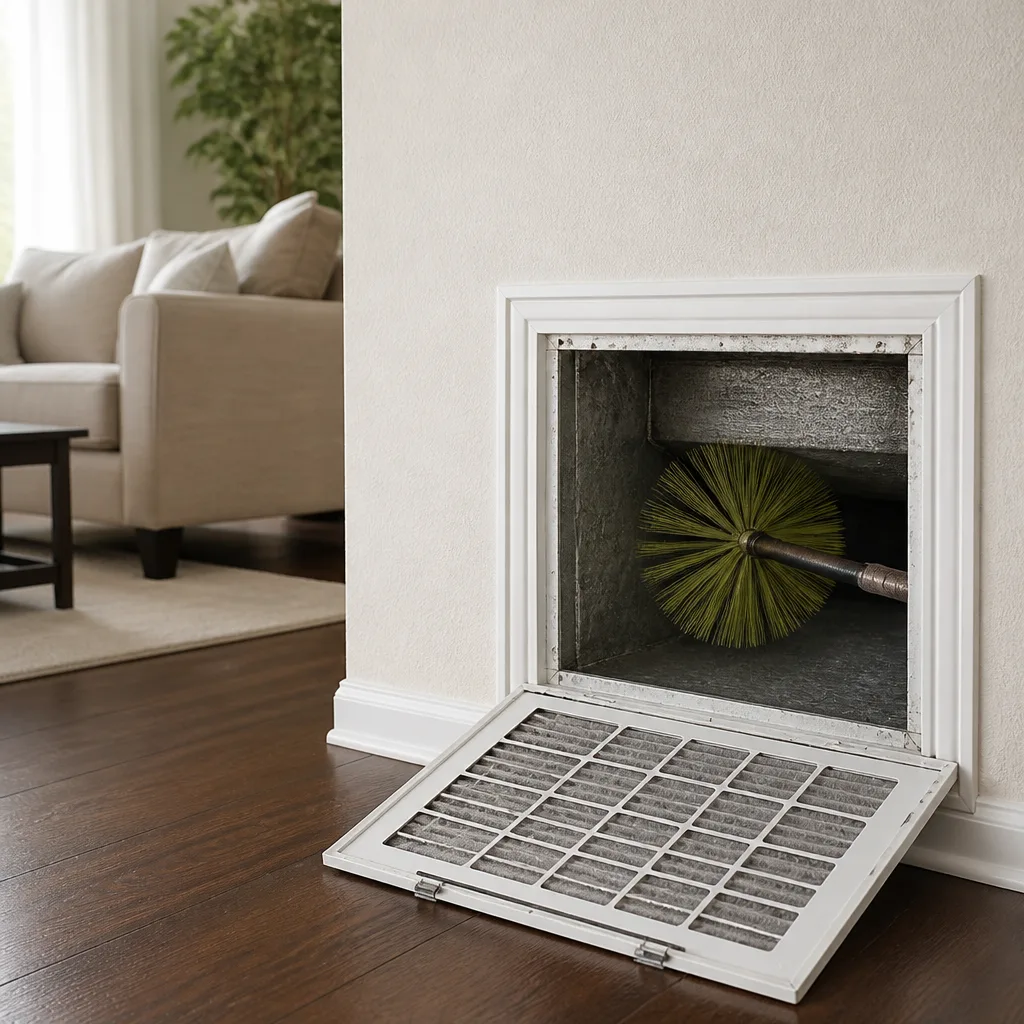 Sanitizing & deodorizing
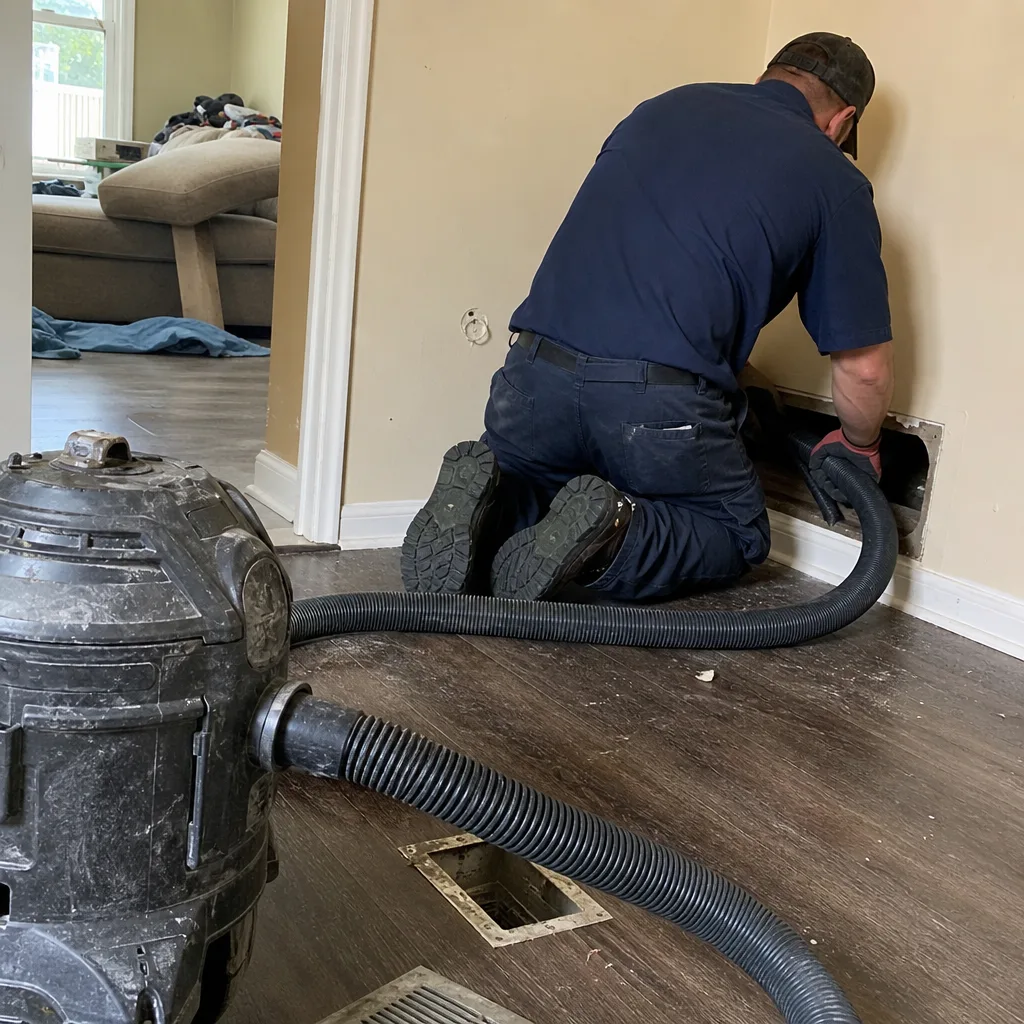
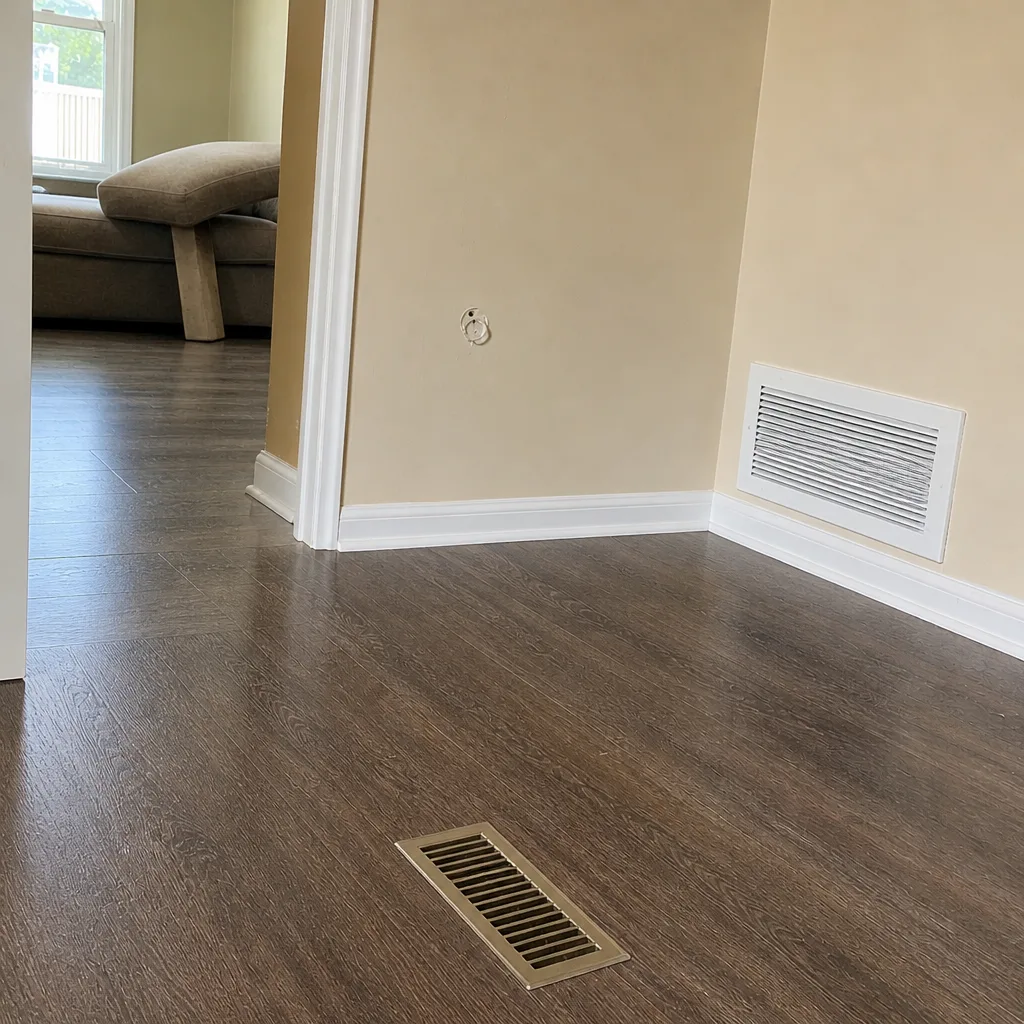
Whole-system duct and dryer vent check with before-and-after photos - you see exactly what came out of your vents
That "$99 whole-house special" is a bait ad - the real number appears once they are in your hallway, or the "clean" is a shop-vac at the register. We photograph the inside of your ducts before and after instead.
Air Duct Cleaning Warning Signs: A Palm Coast Homeowner’s Reference Guide
Most people assume the first sign of dirty ducts is visible dust, or maybe a bill that creeps up a little each month. It’s almost never either one first. The earliest, most reliable signal is usually a smell that shows up only when the air handler starts – a musty, damp, closed-up odor that fades after a few minutes and gets blamed on the weather, the dog, or nothing in particular. That smell is not vague. It’s a specific indicator, and it points to a small number of likely locations inside your air pathway. This guide walks you through what each warning sign actually means in a Palm Coast home, how those signs differ by construction type, and how to tell duct contamination from equipment failure. You’ll learn what’s worth monitoring and what isn’t.
Quick Answer
Air duct cleaning warning signs in Palm Coast go beyond visible dust. The ones that matter most are a musty odor that appears when the AC starts, dust settling on horizontal surfaces faster than normal, allergy or asthma symptoms that spike when the system runs, and visible dark specks near supply registers. These typically point to moisture at the air handler or supply plenum, a damaged duct run, or settled debris in the returns. A musty smell is the one that most often justifies scheduling an inspection, because it’s a moisture indicator, not a dust indicator.
Styles & brands we work with
- Whole-home duct cleaning
- Dryer vent cleaning
- Camera inspection
- Sanitizing & deodorizing
Table of Contents
- The Symptom-to-Cause Table: What Each Warning Sign Actually Points To
- Musty Odor When the AC Starts: The Most Misread Warning Sign
- Why Warning Signs Look Different by Palm Coast Home Type
- Duct Contamination vs. Equipment Failure: How to Tell Them Apart
- Florida Pest Intrusion: What Rodent and Roach Activity Looks Like in Ducts
- Active Mold vs. Settled Dust: When to Act and When to Monitor
- Dryer Vent Warning Signs: A Separate and More Urgent Category
- How a Diagnostic Inspection Actually Works
- When It’s Time to Bring in a Professional
The Symptom-to-Cause Table: What Each Warning Sign Actually Points To
Diffuse complaints like “the house feels dusty” don’t help anyone decide what to do. The useful question is: which warning sign points to which specific component inside your air pathway? Below is the diagnostic mapping we use on every inspection call. It’s not a substitute for looking inside the ductwork, but it tells you roughly where to focus before a technician arrives.
- Musty, damp, closed-up odor that appears 60-90 seconds after the AC starts and fades within five to ten minutes – points to microbial growth at the air handler, the evaporator coil drip pan, or the supply plenum where cool air first meets warm duct surface.
- Sour or stale smell present all the time, not just when the system runs – points to debris sitting in return ducts or a cracked return pan; the air isn’t circulating through it constantly.
- Dark discharge or soot-like staining around supply registers – points to airborne particulates escaping poor seals at the boot-to-duct junction, or to duct liner shedding.
- Dust settling on horizontal surfaces within days of cleaning – points to a leak on the return side drawing in unconditioned attic or garage air before it reaches the filter.
- Sneezing, wheezing, or eye irritation that starts five to fifteen minutes after the system kicks on – points to a contaminant load being distributed from the supply side rather than the returns.
- Weak airflow from one or two registers while others seem fine – points to a kink, crush, or disconnect in that branch run, not to systemic contamination.
- Rodent droppings or rub marks near registers, or a gritty sound when the system starts – points to pest intrusion into the duct system, which needs remediation, not routine cleaning.
- Clothes dry in more than one cycle, or feel unusually hot on the back of the dryer – points to lint accumulation in the dryer duct, an entirely separate air pathway with its own fire-safety implications.
That last item belongs in this guide because the dryer vent is an air pathway in your home that many people don’t think of as one. It behaves differently from the HVAC duct system and its warning signs have a different urgency curve. More on that below.
Musty Odor When the AC Starts: The Most Misread Warning Sign
Here’s what makes the musty odor so useful as a diagnostic: it’s time-gated. That means the smell appears in a predictable window, usually one to two minutes after the thermostat calls for cooling, because that’s how long it takes for conditioned air to travel through the supply ducts and reach your nose. The pre-existing contamination – likely biological – lives in a wet location upstream of the supply trunk. The smell appears when the system starts because the air moves across it, not because the contaminant was freshly generated.
In practice, that means a musty odor narrows the inspection zone to a few specific locations:
- The evaporator coil and drip pan. A pan that isn’t draining freely holds standing water, and standing water in a dark cabinet is exactly the environment that produces biofilm and odor.
- The supply plenum. The point where the air handler transitions to the supply trunk. If it’s under-insulated or has internal condensation, the plenum’s interior surface stays wet.
- The first few feet of the main supply trunk. Cooled air hitting a warm, insufficiently insulated duct surface causes condensation, which dries, wets, dries, and starts growing a film.
What a musty odor doesn’t usually mean is that the entire duct system is contaminated. That’s a common assumption and it leads people to pay for a full cleaning when the actual problem is at the coil. A technician who knows how to read the symptom inspects those three points before quoting any cleaning. If the source is a wet surface, cleaning alone won’t fix it – the moisture source has to be corrected first. That’s a repair conversation, not a cleaning one, and it’s worth knowing the difference before you book.
For the record, we handle this diagnostic sequence on every air duct cleaning call, because the alternative is cleaning a system that’s going to smell again within a month.
Why Warning Signs Look Different by Palm Coast Home Type
The same underlying problem can present three different ways depending on how a home was built and where the ductwork runs. Palm Coast has a mix of housing types and this matters more here than it does in older cities with more uniform construction, because the warning signs you should be watching for depend on your home’s air pathway layout.
Slab-foundation homes with ducts in the slab or low attic
Many Palm Coast homes sit on slabs, and ductwork runs either through the attic or (in some construction) through chases within the slab. When the ducts are in a low attic or in a slab chase, moisture intrusion after a heavy rain or a plumbing leak tends to show up as odor concentrated in one part of the house – often the bathroom and bedroom wing – because the affected run is localized. Dust complaints in these homes often trace back to a return leak where the system pulls humid air from a garage or wall cavity.
Homes with conditioned attics
A newer approach in this area keeps the attic inside the building envelope, meaning the ducts run through a conditioned space at roughly the same temperature and humidity as the house. Warning signs in these homes skew less toward condensation-driven odor and more toward dust, pest intrusion, and mechanical disconnections. You’re less likely to smell a musty odor when the system starts because the ducts aren’t cycling between wet and dry; you’re more likely to see dust at the registers when a flex duct run has slipped its collar.
Homes with unconditioned attic duct runs
This is the most common setup in older Palm Coast construction and the one that produces the widest variety of symptoms. In summer, unconditioned attics become extremely hot. The ducts crossing that space get cold conditioned air pushed through them, and any area of insufficient insulation develops condensation. That moisture is why warning signs in unconditioned-attic homes show up as seasonal odor patterns: worse in the wet months, less noticeable in drier air. Roof leaks that drip onto duct runs compound the problem and are worth looking for after any heavy rain.
If you don’t know which category your home falls into, the answer is usually visible in about ten minutes: look up in the attic and see whether the ductwork is surrounded by ventilation openings (unconditioned) or sealed inside an insulated envelope with HVAC equipment (conditioned). Getting this right tells you which warning signs to prioritize. If you’d like someone to walk you through the difference on-site, Palm Coast homeowners can schedule an inspection to walk through these cases.
Duct Contamination vs. Equipment Failure: How to Tell Them Apart
A lot of duct cleaning dollars are spent on homes with mechanical problems that cleaning can’t fix, and a lot of mechanical repairs get put off because the homeowner thinks the system is just dirty. Distinguishing the two is worth doing before you book anything.
Signs that cleaning will help:
- Odor that tracks with the system starting and fading – contamination being distributed
- Dust that builds back on furniture within days of cleaning, in a home with a sealed system
- Visible debris around registers when you remove the grille (use a flashlight, don’t reach in)
- Allergy symptoms that correlate with HVAC run time rather than season
- A known renovation, pest activity, or water intrusion that predated the symptoms
Signs that point to equipment failure and won’t be fixed by cleaning:
- Ice forming on the outside of the refrigerant lines or the air handler cabinet – a refrigerant charge or airflow problem, not a contamination issue
- A refrigerant hiss, a hard-start clunk, or a compressor that short-cycles
- Weak airflow from every register rather than one branch – often a blower or filter problem
- Burning or hot-plastic smell (as opposed to musty) – this is an electrical or motor problem; turn the system off and call an HVAC technician before anyone climbs into the attic
- Water pooled at the base of the air handler or a drain line that isn’t flowing
When we’re called to a home with both kinds of symptoms, we can identify what we can see inside the air pathway and can pull contaminants out of it, repair the ducts, and restore airflow through the system. What we don’t do is mechanical HVAC repair, refrigerant work, or motor replacement. Those belong to a licensed HVAC contractor. If the symptoms point to equipment, we’ll tell you so clearly rather than sell a cleaning that won’t help.
Florida Pest Intrusion: What Rodent and Roach Activity Looks Like in Ducts
Florida’s pest pressure is different from most of the country because the climate keeps insects and rodents active across more of the year and because a lot of ductwork runs through attic space that provides easy access. Pest intrusion into a duct system is not the same problem as accumulated dust, and the remediation approach is different. Treating it like ordinary cleaning can leave the problem in place.
What rodent activity inside ducts looks like
- Droppings or urine staining near interior registers or on the top of the air handler
- Chew marks on flex duct – usually near the collar where the duct connects to a boot or plenum, because that’s the easiest spot to gnaw through
- A scratching or scuttling sound inside the wall or ceiling when the system starts, or at night
- A smell that’s more ammonia-like or sharp than musty, and appears strongest in the room closest to the affected run
- Small tears in the outer jacket of flex duct runs – the insulation surface
What roach and insect activity looks like
- Droppings near registers (small, dark, roughly pepper-grain size)
- Shed wings or body parts in the return grille and in the supply boots
- A stubborn smell at register surfaces where insects have been traveling through gaps in the boot sealing
- Visible roach activity at the air handler cabinet, especially near the drip pan
When we find pest evidence inside the air pathway, the sequence is different from a routine clean: the animal access point has to be identified and sealed before anything else, otherwise you’re cleaning a system that will be re-contaminated within weeks. Then we remove nesting material and contaminated insulation, apply appropriate disinfection, and replace damaged duct sections – which is a repair step, not just a cleaning step. Our extraction equipment is Nikro and Abatement Technologies commercial-grade gear, which matters because the material pulled from a rodent-contaminated duct run is not something you want recirculated into the house. If you suspect pest intrusion, say so when you call so we can plan for the right scope of work.
Active Mold vs. Settled Dust: When to Act and When to Monitor
Not every warning sign requires immediate action. Some are clear cases of contamination that warrant cleaning; some are pre-conditions worth monitoring; a few indicate a moisture problem that has to be resolved before cleaning makes sense. Here’s the threshold logic we use.
Act now (schedule an inspection this week)
- Visible dark specks, fuzzy patches, or a film on the interior surface of a duct you can see (usually through a supply register just inside the boot)
- Persistent musty odor that has not resolved after cleaning the air handler and drain pan
- Any moisture evidence on duct insulation – water staining, softened insulation, or condensation dripping at a joint
- A smell that gets worse, not better, during the wet summer months
- Visible pest intrusion (droppings, chew marks, sightings inside a register)
Monitor (keep on a checklist, revisit in a season)
- Dust that builds up after a recent renovation – usually settles after a thorough cleaning, but if it continues months later, reassess
- General dusty smell that appears only when you turn the system on after months of disuse
- Symptoms in a household member who has seasonal allergies, where the timing correlates more with outdoor pollen than with HVAC runtime
- A single register showing minor debris but no smell and no visible growth
Resolve the moisture source first (before cleaning)
- Any active leak at the air handler, drip pan, or duct insulation
- Condensation that returns within a day of being wiped dry
- A high humidity reading inside the conditioned space that doesn’t respond to running the system
The threshold that matters most is moisture. Mold needs a wet surface, not just a dirty one. Settled dust that never gets wet stays dust and is a cleaning problem. A surface that has been wet, dried, wet again, and dried again tends to develop growth – and if you clean it without addressing the moisture, the growth returns. If you’re not sure which category your home is in, we can look at the inside of a couple of registers with you in about fifteen minutes and give you a straight answer.
Dryer Vent Warning Signs: A Separate and More Urgent Category
We treat dryer vent warning signs as a different category from duct warning signs because the consequences are different. The U.S. Fire Administration links thousands of residential fires annually to clogged dryer vents. Lint is highly flammable, and a dryer duct that can’t exhaust overheats. The warning signs are also distinct from the HVAC duct symptoms covered above, though they can overlap in homes where the dryer is in a closet off a bathroom that also has a bathroom fan tied into the same duct path.
- Clothes take two cycles to dry that used to dry in one. This is the single most reliable early signal. It means the duct is partially obstructed.
- The dryer itself gets hot to the touch, especially at the top or back. The heat isn’t being carried away, so it’s building up in the appliance.
- The laundry closet or room feels humid during and after a cycle. Most of the moisture that should be exiting the house is lingering indoors.
- A burning smell when the dryer runs. Turn the dryer off and don’t run it again until the duct is inspected. Burning smell is not a “monitor” sign.
- The outside vent flap doesn’t open when the dryer runs, or barely moves. You can check this from outside by watching the flap while someone inside starts the dryer. If it doesn’t flip open, the duct is obstructed.
- Visible lint around the connection behind the dryer, or lint on the floor near the dryer. Lint that’s escaping the connection is also accumulating inside the duct.
Dryer vent cleaning is one of our three core services, and we treat it as a fire-safety service rather than a home-maintenance add-on. If you’ve noticed any of the six signs above, that’s the point at which a professional inspection pays off. Our dryer vent cleaning includes a full duct inspection and removal of lint along the entire run, not just the visible section behind the dryer.
How a Diagnostic Inspection Actually Works
A diagnostic inspection is not a sales visit. Its purpose is to determine what’s inside your air pathway, where it is, and what the correct next step is. This is how our process runs, and what you should expect from any technician who’s about to quote substantial work.
- Walk the home with you. We ask when each symptom appears, how long it’s been happening, whether there have been renovations, pest issues, or leaks. The history narrows the inspection before we’ve opened anything.
- Open a representative set of registers. Usually one supply register in each major zone and one return. We use a flashlight and a small inspection mirror. Visible contamination, moisture, or growth right at the boot changes the scope.
- Inspect the air handler and plenum. This is where most odor-contributing problems live. The evaporator coil cabinet, drip pan, and plenum connection are the key checkpoints.
- Camera-inspect the main trunk and a representative branch. A duct camera goes into the main trunk through the plenum and confirms what’s actually there rather than what the register view suggests.
- Test the seal at the boot-to-duct junction and at the plenum. Hand-in-front-of-register testing for airflow leaks; sometimes a smoke pencil around joints.
- Check the filter, the filter housing, and the return path. Bypass around an undersized filter is a common source of the dust that appears to be coming from dirty ducts.
- Summarize findings and quote in writing. We quote per system, agreed before any work starts, with a flat price for the job, not a per-vent rate. If findings point to something we don’t handle (mechanical HVAC, refrigerant), we say so.
We use a Rotobrush contact-cleaning system when cleaning is the answer, which matters because it brushes debris off the duct walls rather than agitating air and hoping the dust comes loose. We pair that with Nikro and Abatement Technologies extraction equipment, so what gets loosened also gets removed. And because we can repair ducts, damaged runs discovered during inspection can usually be addressed on the same visit rather than requiring a separate contractor. Filter upgrades to Honeywell, Aprilaire, or Guardsman products can also be handled in-appointment if your filter housing supports them.
When It’s Time to Bring in a Professional
Bring in a professional when the warning signs add up to a hypothesis you can’t test from the outside. The specific cases: a persistent musty odor that returns after the air handler and pan are cleaned; visible dark specks or fuzzy growth inside a supply boot; any pest evidence in a register or at the air handler; a dryer that needs two cycles to dry clothes or a burning smell when it runs; and any leak or condensation you can’t track to a source. A dust pattern in a home without pets or recent renovation that reappears within days of cleaning is also worth investigating, because it usually points to a return-side leak that a thorough inspection can find and a proper repair can close off. We’ve walked through these cases in hundreds of Palm Coast homes. Duct Cleaning Palm Coast offers free estimates in Palm Coast – call (855) 592-3509. We answer 24/7. Fast dispatch from 7am to 7pm, Sunday through Friday.
See the difference
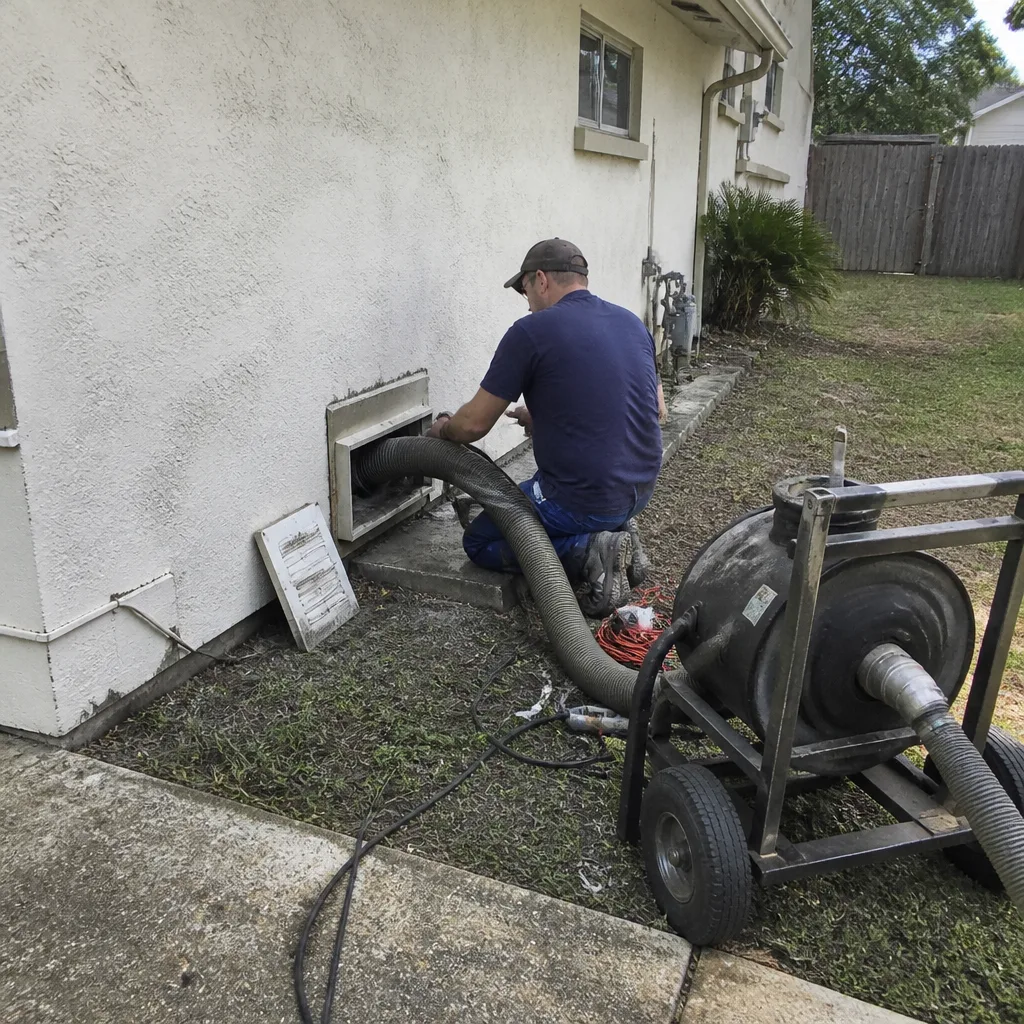 Before
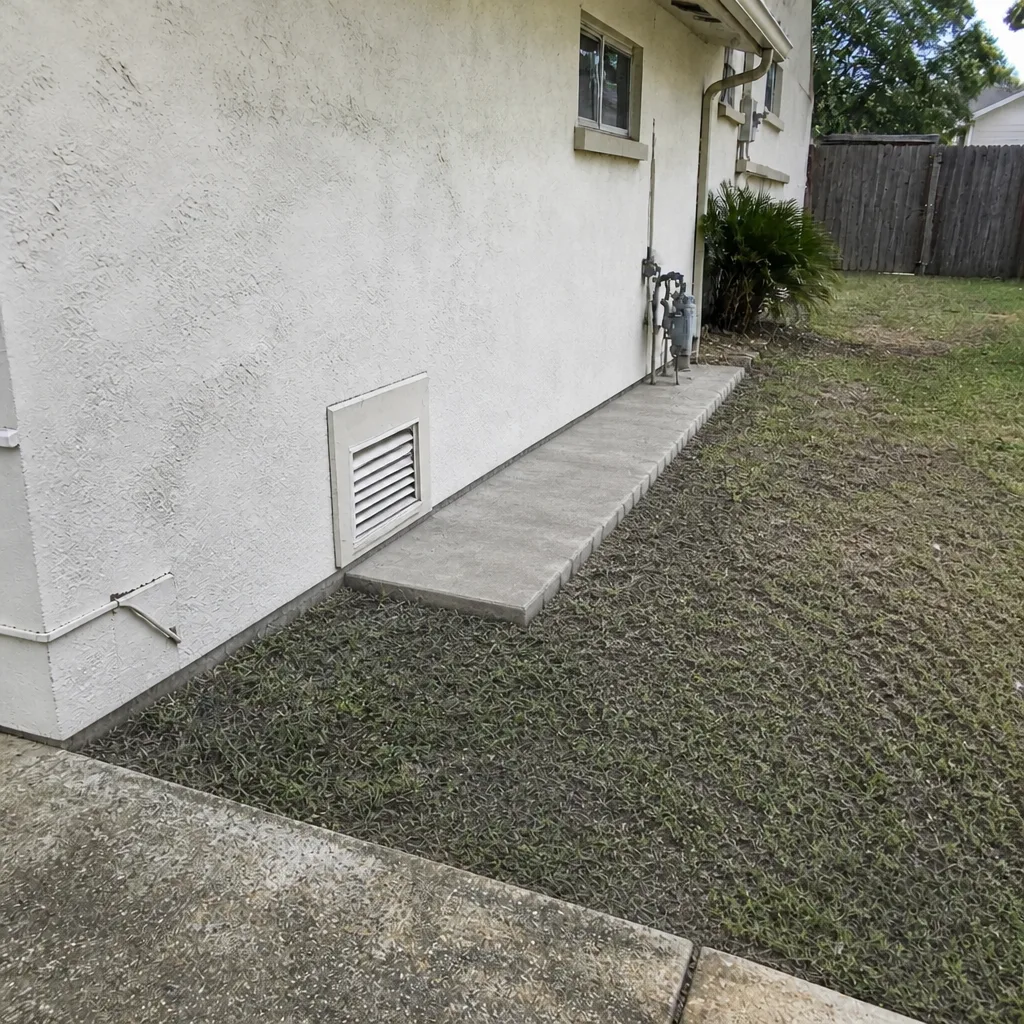 After
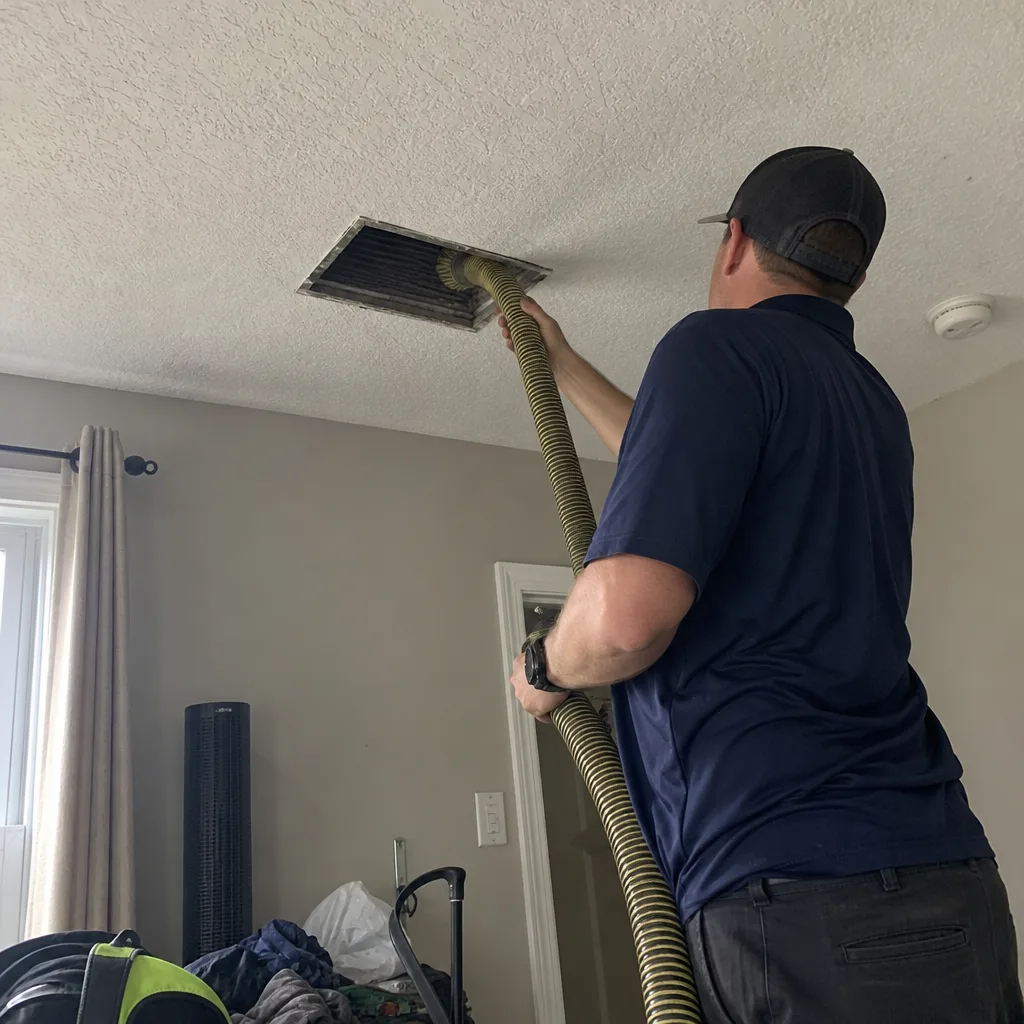 Before
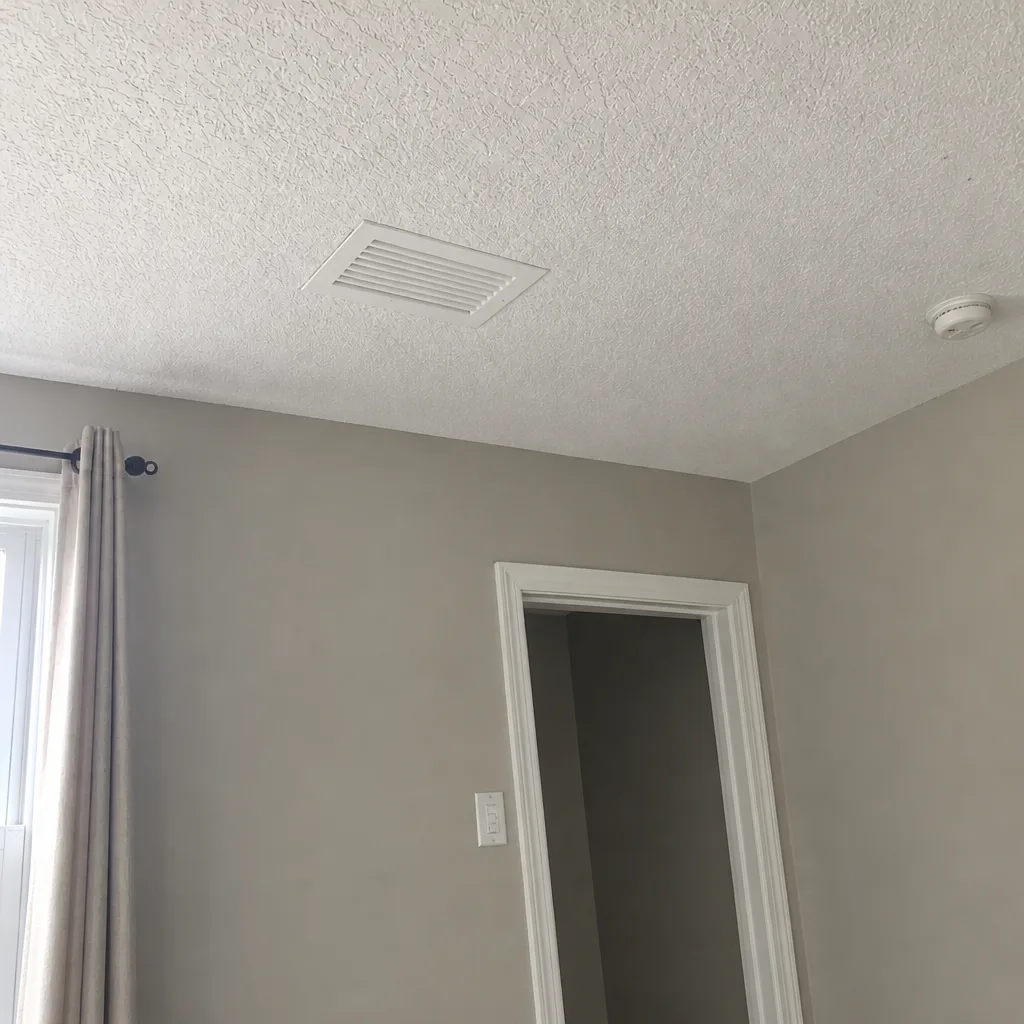 After
 Before
 After
Common Mistakes to Avoid
- Assuming a musty smell always means the entire duct system is contaminated. It usually means moisture at the air handler, coil, or plenum. Cleaning without fixing the moisture source leaves you with the same smell a few weeks later, and the money spent on cleaning isn’t recoverable.
- Choosing a quote based on the lowest per-vent price. Per-vent pricing rewards speed, not thoroughness. A well-executed clean with contact equipment and commercial extraction takes longer per system than an air-blower pass, and the numbers aren’t comparable.
- Skipping the pest question if you’ve seen any signs. In Palm Coast, a chew damage or droppings near a return should be disclosed before the technician arrives, because the scope of work and the containment approach are different. Not saying so up front leads to the wrong job.
- Treating dryer vent warning signs as monitoring signs. Clothes that need two cycles, a hot dryer, or a burning smell are action signs, not monitor signs. If any of those apply, get the duct inspected before running the appliance again.
- Cleaning a duct system on a home with active condensation problems. The right sequence is to identify and resolve the moisture first, then clean. Cleaning wet ductwork without proper drying leaves the growth to return.
- Confusing equipment failure with contamination. Ice on the refrigerant line, hard-start clunks, and burning-plastic smells are HVAC mechanical problems, not duct problems. Cleaning won’t fix them and can delay a repair that matters.
- Assuming the filter is fine because it was changed recently. Bypass around an undersized or badly seated filter pulls air (and dust) past the filter entirely. It looks like dirty ducts; it’s a filter housing issue.
- Skipping the inspection walk-through. If a technician quotes a large job without walking the home, opening registers, and looking at the air handler, ask them to. A responsible quote is built on what’s actually inside the duct system.
Frequently Asked Questions
The honest answer is: only after looking inside. But the warning signs that most often justify an inspection are a musty smell that appears when the AC starts, dust building back on furniture within days, allergy symptoms that correlate with HVAC runtime, and visible dark specks inside a supply register. None of those alone confirms the need for cleaning, but two or more together usually does. Call (855) 592-3509 for a free estimate and an inspection.
That timing pattern means contamination is being distributed by airflow rather than sitting passively. The likely source is microbial growth at the air handler, evaporator coil drip pan, or supply plenum. Because the contamination is upstream and wet, the smell appears only when air moves across it, and it fades once the surface has been holding dried air for a few minutes. Cleaning without addressing the moisture source leaves the growth in place. Call (855) 592-3509 and we’ll inspect those three points with you.
Pricing is per system and depends on the number of zones, accessibility, amount of contamination, and whether repair work is needed. The written estimate sets the final price. What we don’t do is quote a per-vent rate or a low teaser price that turns into a bigger invoice on-site – the number we write is the number for the job. Call (855) 592-3509 for an exact quote. Estimates are free.
Per-vent pricing, blower-only equipment, and limited containment are the usual reasons. A clean done with a contact-cleaning system – brushing the interior duct walls – and commercial extraction takes longer and uses heavier equipment than a blower pass, so the numbers aren’t directly comparable. When you compare quotes, ask what equipment is used and how debris is contained. The lower price isn’t a discount on the same job; it’s a different job. Call (855) 592-3509 to compare an estimate from a system that uses Rotobrush contact cleaning and Nikro extraction.
Ask for before-and-after photos of your own ducts – not stock photos, not the equipment, your system. We photograph the interior of the duct at the same points before and after cleaning, so you can see what was removed. If a company can’t show you the ducts they’re charging you to clean, that’s the point to have a conversation. Call (855) 592-3509 to schedule with photos included.
There’s no universal schedule, and we don’t recommend one. Homes with pets, allergy sufferers, recent renovations, or persistent warning signs benefit from a thorough cleaning at shorter intervals. Homes with no warning signs and a well-sealed system can go much longer between cleanings without concern. The warning signs in this guide are a better guide than a fixed calendar. If you’re not sure where your home falls, call (855) 592-3509 for an inspection.
They can contribute, which is why we see more duct inspections here during the wet months. A duct system that’s distributing contaminants increases the airborne particulate load inside a home, and people with respiratory sensitivity tend to notice symptoms that correlate with HVAC run time. That said, the source is usually a specific contamination site – not the entire ductwork – which is why inspection matters before cleaning. Call (855) 592-3509 for a free estimate if the pattern is consistent.
The Bottom Line
The warning signs that actually matter in a Palm Coast home are specific, and they point to specific locations. A musty odor when the AC starts narrows the inspection to the coil, drip pan, and plenum. Dust that reappears in days points at the return seal. Chew marks at a duct collar mean pest intrusion, which needs a different remediation scope. Dryer symptoms – two cycles to dry, a hot dryer, a burning smell – are action signs because the risk category is fire. Distinguishing duct contamination from equipment failure matters as much as the diagnosis itself, because cleaning won’t fix a failing compressor and mechanical repair won’t fix a contaminated air pathway. If you’re seeing any of the signs in this guide, a diagnostic inspection is the right next step.
Contact
Ready to have your air pathway looked at by a team that uses Rotobrush contact cleaning, Nikro and Abatement Technologies extraction, and can repair what it finds on the same visit? Call (855) 592-3509 for a free estimate. We answer 24/7. Fast dispatch from 7am to 7pm, Sunday through Friday. We’re licensed and insured, and we quote a flat price per system in writing before any work starts. Estimates are always free.
Written by the team at Duct Cleaning Palm Coast.