
Last updated November 15, 2026
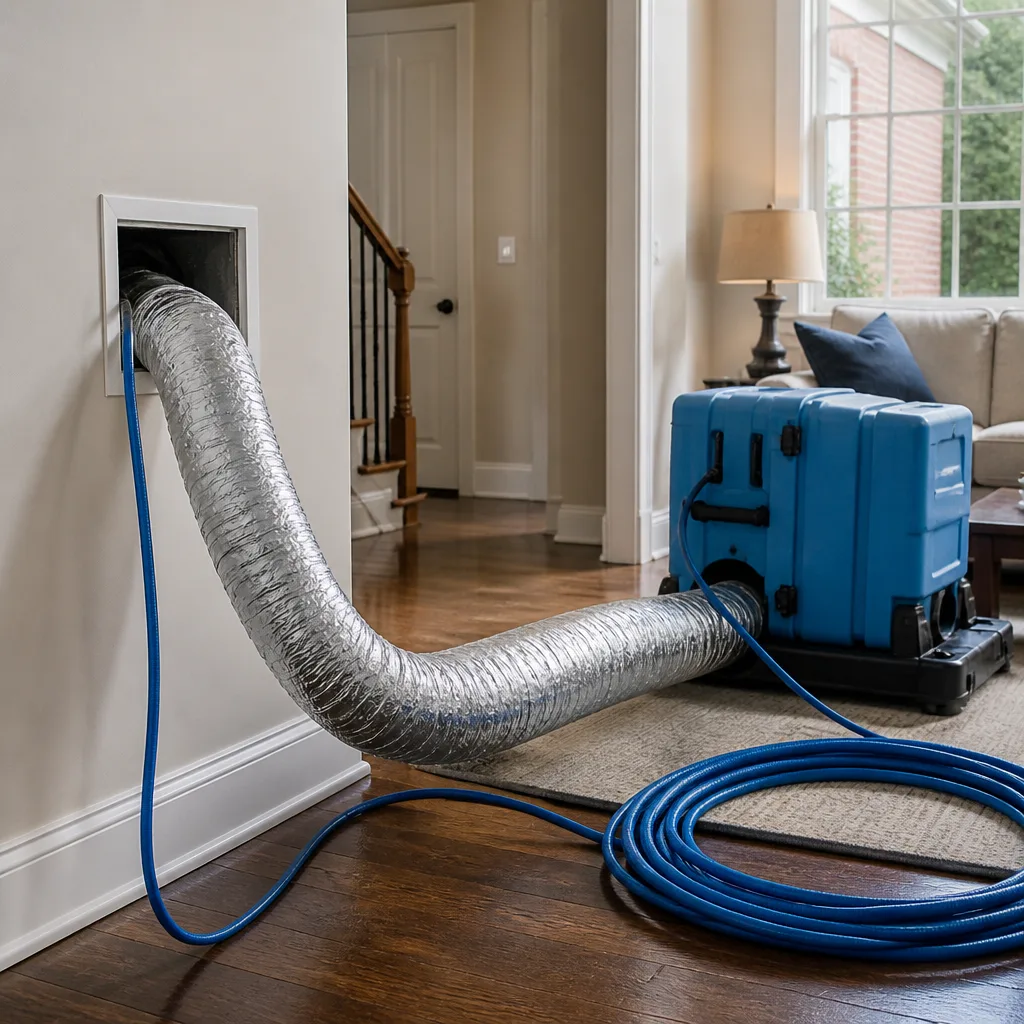 Whole-home duct cleaning
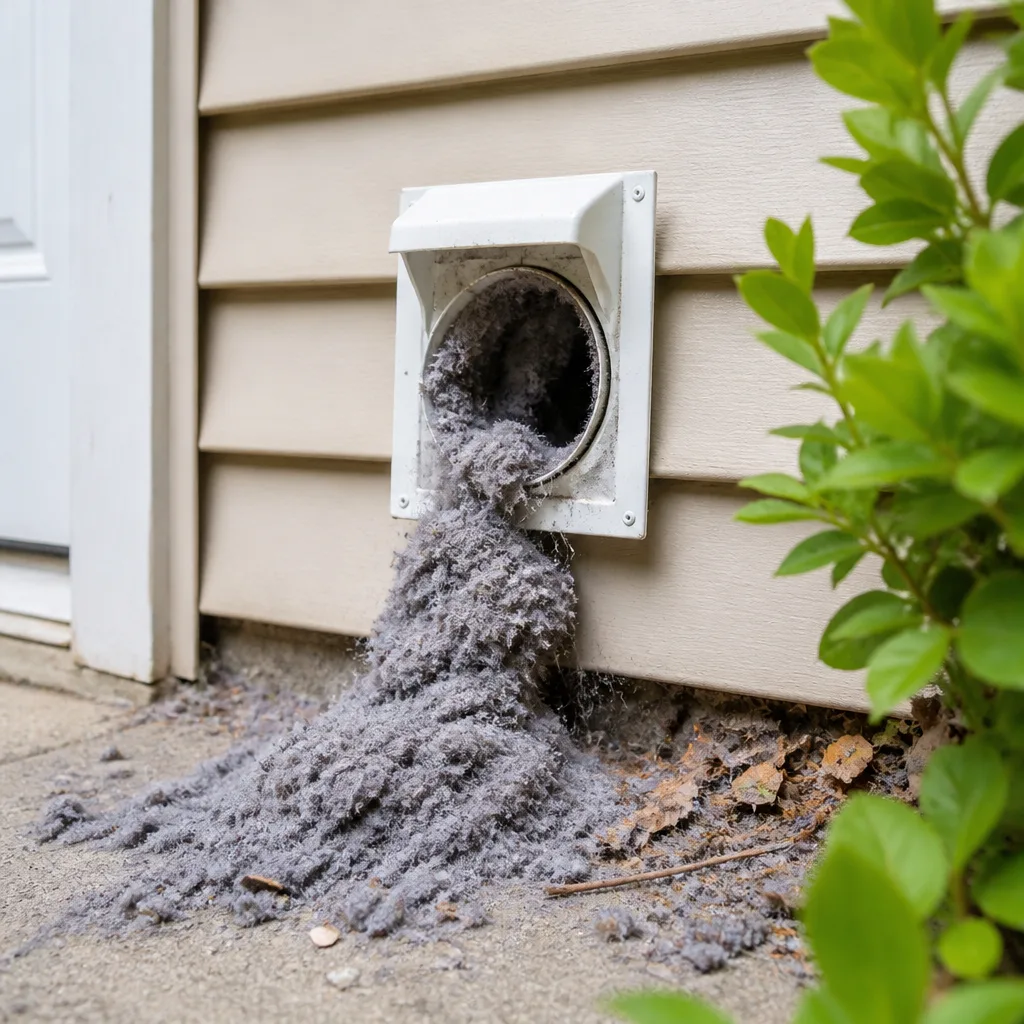 Dryer vent cleaning
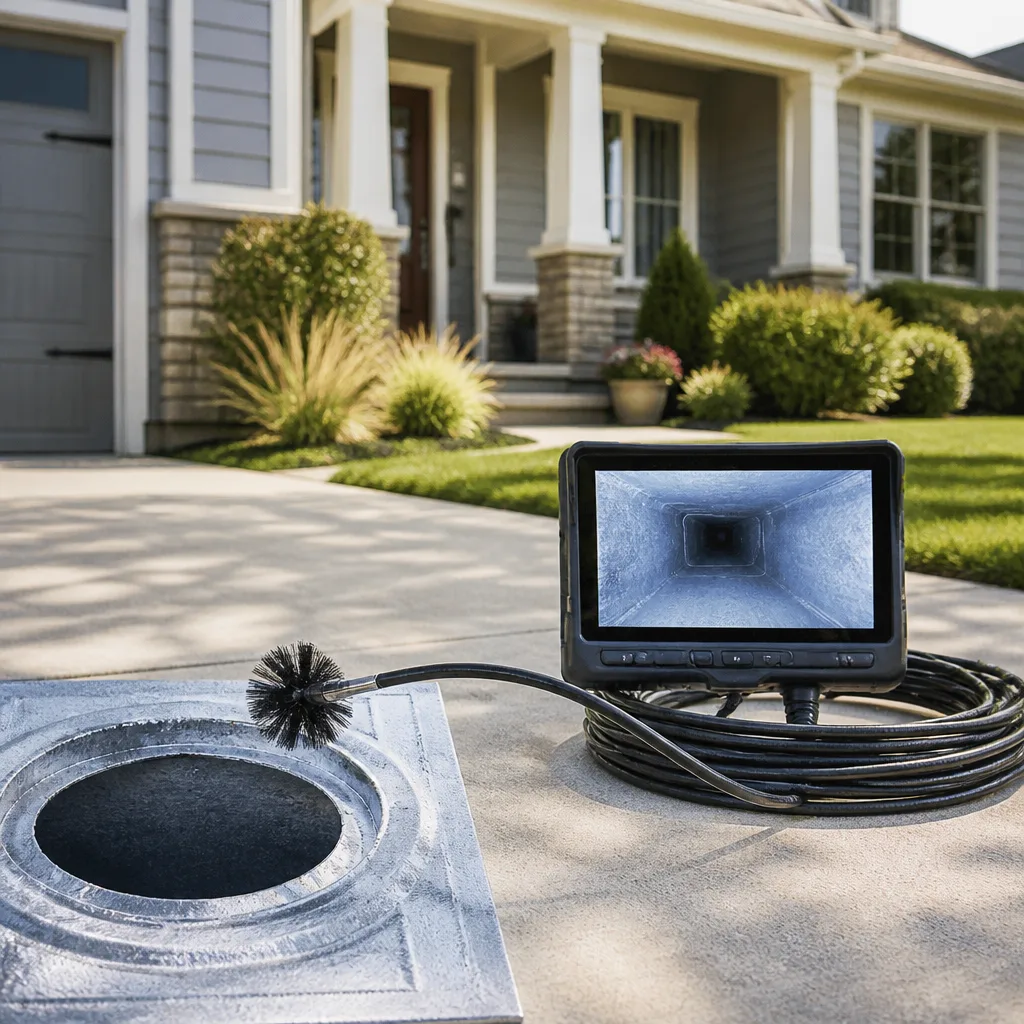 Camera inspection
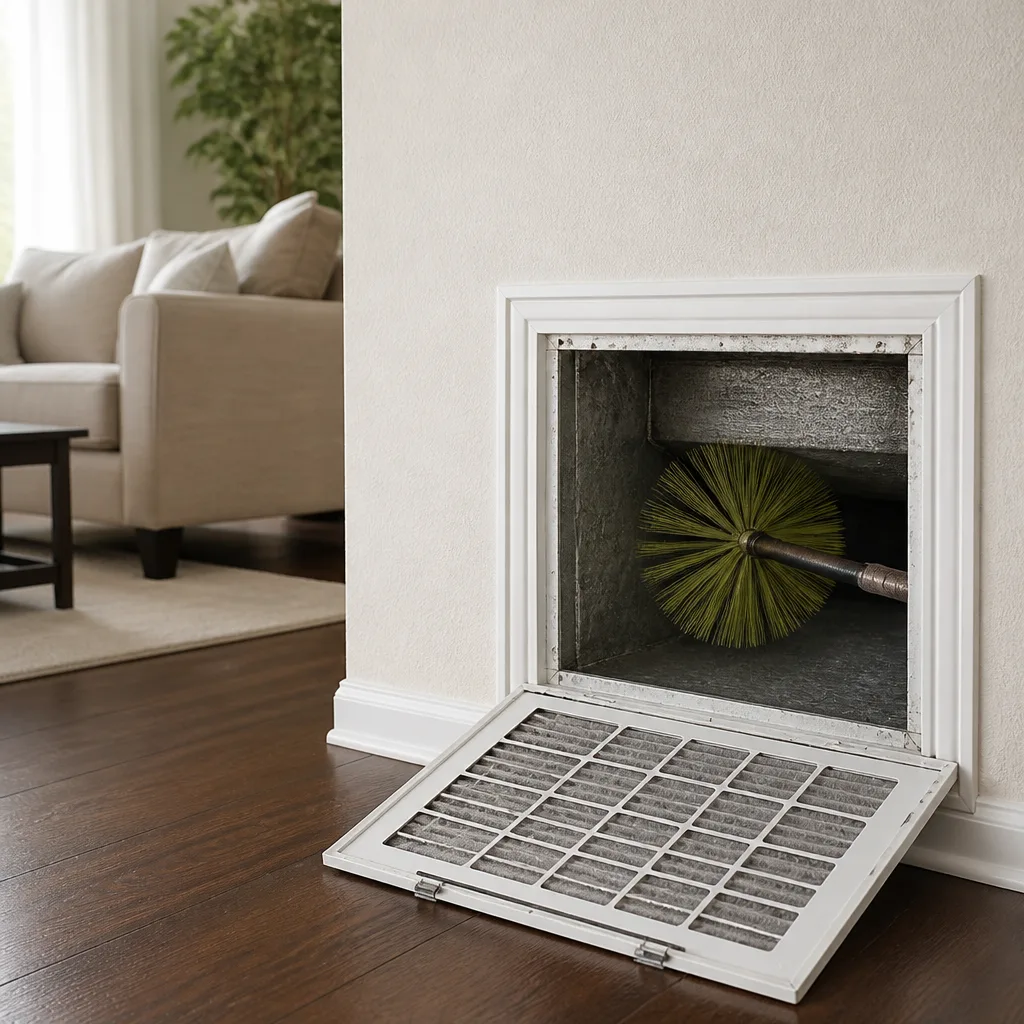 Sanitizing & deodorizing
Whole-system duct and dryer vent check with before-and-after photos - you see exactly what came out of your vents
That "$99 whole-house special" is a bait ad - the real number appears once they are in your hallway, or the "clean" is a shop-vac at the register. We photograph the inside of your ducts before and after instead.
Choosing the Right Air Duct Cleaning Brand: A Buyer’s Guide for Palm Coast
Here’s a fact that surprises most homeowners: the equipment used by a duct cleaning contractor ranges from a $200 consumer kit you could buy at a hardware store to a $30,000 professional system that fills a van. Every contractor in between claims to do the same job with the same results. They don’t. The single most useful way to tell them apart is to look at what equipment actually shows up, because the equipment is the process. This guide translates the technical specifications – CFM ratings, brush speeds, filtration stages – into plain language, so you can verify what’s coming to your Palm Coast home before anyone touches your ducts.
Quick Answer
The best air duct cleaning equipment for a Palm Coast home is a contact-cleaning system that brushes duct walls while simultaneously extracting debris with commercial-grade negative air pressure and multi-stage HEPA filtration. Rotobrush contact-cleaning systems, Nikro negative-air machines, and Abatement Technologies containment equipment represent the professional standard. Any contractor who can’t name their equipment, or who won’t show it before work begins, is a question mark.
Styles & brands we work with
- Whole-home duct cleaning
- Dryer vent cleaning
- Camera inspection
- Sanitizing & deodorizing
Table of Contents
- Why Equipment Brand Is a Specification Sheet, Not a Label
- What Rotobrush Systems Do Differently From Generic Brush Rigs
- How Nikro Negative-Air Machines Are Rated and What CFM Means for Your Home
- What Abatement Technologies Equipment Is Built For
- How to Verify Equipment On-Site Before Work Begins
- Why Equipment Is Your Best Proxy in a Lightly Licensed Market
- A Numbered Checklist for Vetting Any Duct Cleaning Contractor
- Filter Upgrades and Air-Quality Add-Ons: Honeywell, Aprilaire, and Guardsman
Why Equipment Brand Is a Specification Sheet, Not a Label
Contractors talk about duct cleaning as if it’s a single service, when it’s really a family of processes that produce very different results. Some of those processes improve your indoor air. Others just move dust from one part of your system to another.
Think of it this way. A cleaning method has three variables that matter: how you dislodge debris from the duct wall (the brush or air tool), how you capture that debris once it’s airborne (the vacuum and containment), and what your system can reach (the length and flexibility of the tools). Equipment brand matters because these three variables are engineered together. A generic brush on a drill is just the first variable, with no plan for the second or third.
Brand names in this trade – Rotobrush, Nikro, and Abatement Technologies among them – aren’t marketing labels slapped on the same Chinese-manufactured hose and blower. They’re engineered systems designed around specific jobs. Rotobrush built its name on contact cleaning. Nikro on negative-air and HEPA filtration. Abatement Technologies on remediation-grade containment. Knowing what each is built for tells you what to expect.
When we say “commercial-grade equipment,” we mean equipment designed for the standards of professional indoor air quality work, not hardware-store vacuums. When you look at a contractor offering duct cleaning Palm Coast homeowners can verify, the question to ask is simple: What brand of machine are you bringing, and what does it do? A serious answer tells you a lot. A shrug tells you more.
What Rotobrush Systems Do Differently From Generic Brush Rigs
Rotobrush systems are the most useful example of “equipment is the process” in our trade, because they solve the specific problem every homeowner should understand: dislodged debris must be captured, not just redistributed.
Here’s the difference between two approaches.
- Generic brush rig: A stiff brush on a drill or flexible shaft is pushed through a duct to scrape debris from the walls. The scraping works. But if the vacuum isn’t connected and pulling air at the same moment the brush is loosening material, the debris simply becomes airborne inside the duct and settles downstream – in your plenum, your return grille, or on the next stretch of duct.
- Rotobrush contact-cleaning system: Brush and extraction run together. As the brush loosens debris from the duct wall, the vacuum pulls those particles into the collection chamber in real time. This is what “contact cleaning” means in practice: the brush makes contact, and the extraction happens while the wall is being cleaned, not after.
The result is a measurable difference in what comes out of the duct versus what stays in it. Homeowners who’ve had a poor duct cleaning done previously often find a fresh layer of dust settling on furniture within days. That’s not the dust that left. That’s redeposited debris that was scraped, not captured.
Contact cleaning matters especially in Palm Coast homes where debris has had years to compact against the duct walls. The region’s humid spring and summer air means dust, pet dander, and construction residue often bind to the sheet metal in grime layers that a simple air sweep won’t lift. Our technicians have up to 15 years of experience with these systems, and the difference in results from a proper brush-and-extract process versus a simple air sweep is the single biggest factor in whether you feel the outcome in the first week.
The distinction is what separates clean, repair, and restore as a scope, rather than clean alone. Clean is what a consumer blower attempts. Clean, repair, and restore is what a system designed to handle all three phases can deliver. That’s the standard we hold ourselves to when we talk about a full-service approach to air duct cleaning.
How Nikro Negative-Air Machines Are Rated and What CFM Means for Your Home
CFM stands for cubic feet per minute, and it’s the airflow rating of a vacuum. In duct cleaning, it’s the difference between a wet/dry shop vac and a system designed to pull whole-house air.
Nikro negative-air machines are designed to generate sustained high-volume airflow under a sealed system. Here’s why the number matters to a Palm Coast homeowner:
- A shop vac runs a few dozen CFM. That’s fine for a small spill. It’s not enough to pull debris through 30 feet of flex duct from the far side of a two-story house.
- A Nikro-class negative-air machine runs substantially higher CFM and, critically, keeps that airflow sustained during the entire cleaning – not just at startup – while pulling through HEPA filtration so the exhaust doesn’t reintroduce particles into your home.
- Home size and duct configuration determine the CFM you actually need. A single-story ranch with a compact duct run and one return is a very different job from a Palm Coast two-story with long trunk lines, a conditioned attic, and multiple returns. An undersized machine on a large duct system means the far corners never get proper pull.
What a technician should be able to tell you: the CFM rating of the machine, the filtration stage it’s using (HEPA means the exhaust is filtered at a level that captures sub-micron particles), and how many return trunks they’ll set the machine up to pull from during the visit. If you have a multi-return system, a real setup takes some planning. If the answer is “we have a big truck with a big hose,” that’s a color, not a specification.
Negative air matters most when ducts actually have significant debris – after renovation, after years of pets, or in homes with old inadequate filtration. A properly sized Nikro system pulls in the correct volume without pressurizing duct seams or creating pull-back at the supply registers. The right size is a calculation, not a feeling.
What Abatement Technologies Equipment Is Built For
Abatement Technologies makes equipment specifically for professional remediation work: containment, negative pressure, HEPA filtration, and air scrubbing. That’s a specific context, and it’s worth understanding when that equipment is the right choice for your home.
The scenarios where remediation-grade equipment is appropriate include:
- Post-renovation cleanup. Drywall dust, sawdust, and joint compound residue are heavy, fine, and airborne. Cleaning after a renovation in Palm Coast often means capturing particles that standard duct cleaning equipment won’t contain while it’s working.
- Mold or moisture-related contamination. Palm Coast’s humid climate and long cooling season mean condensation in ducts is a real risk. When contamination is present, remediation-grade containment and HEPA extraction are not optional.
- Homes with significant occupant sensitivity. If someone in the household has asthma or significant allergies, the bar for containment and filtration needs to be higher, and remediation-standard equipment is the right answer.
- Multi-unit or unusual systems. Certain duct configurations call for air scrubbing on top of extraction. Remediation-grade machines can do both.
Not every job needs the full remediation setup. A routine duct cleaning in a well-maintained Palm Coast home usually needs contact cleaning and high-CFM negative air, which is where the Rotobrush and Nikro systems come in. What matters is that the contractor has access to remediation-grade equipment and knows when the job calls for it. A crew that only owns a consumer blower can’t scale up to a real problem. A crew that owns professional systems can scale down to a routine job correctly.
When you’re evaluating contractors, ask the question this way: “If you find a bigger problem during the cleaning, what equipment do you have to handle it?” The answer separates professionals from hobbyists.
How to Verify Equipment On-Site Before Work Begins
You don’t need to be an HVAC technician to spot-check a contractor’s equipment. You do need to know what to look for and what an evasive answer signals.
Before work begins, ask these five questions. Any legitimate crew should answer them without hesitation.
- “What brand of machine is this and what is it designed for?” A real answer names a brand (Rotobrush, Nikro, Abatement Technologies) and describes what it does. An evasive answer is “it’s a professional unit” with no further detail.
- “Can you show me the filtration stage?” A serious crew can walk you through the machine’s HEPA or multi-stage filtration and show you the collection chamber. If they can’t, filtration may be nominal, and you’re getting exhaust that’s only partially captured.
- “Are you using a brush-and-extract system or an air-only system?” A brush-and-extract process brushes the duct walls while pulling air. An air-only system just moves air. The contact method matters more than the CFM number.
- “Will you photograph the before and after inside the ducts?” A legitimate crew will. If they don’t already do this as standard practice, ask for it. Photos of your own ducts are the single best verification you have that the work was actually done.
- “What is the price, per system, written down before we begin?” A one-flat-price-per-system model agreed before work starts is the standard you want. Per-vent pricing or a coupon teaser that grows once the technician is on-site is a red flag.
What evasive behavior looks like: “the equipment’s in the truck” without a brand name, “we’ve been doing this forever” instead of a specification, “our truck does everything” with no way to show you the filtration stage, or refusal to photograph the work. Any of these should end the conversation before work begins.
Our standard is: any homeowner who wants to see the equipment before we start is welcome to look. That’s not a concession – it’s part of what Palm Coast homeowners should expect from the people they invite into their homes.
Why Equipment Is Your Best Proxy in a Lightly Licensed Market
Duct cleaning is not heavily licensed in most of Florida, and that means the ordinary signals homeowners rely on – a license number, a bond, a certification – don’t always apply the same way as they do to, say, general contracting or electrical work. That’s a hard thing to hear, but it’s also why equipment is the single most revealing thing you can evaluate.
Here’s why it works so well:
- Equipment cost is a commitment. Owning professional systems implies a contractor has invested in the capability to do the work to a standard, and that investment only pays off if they’re running real jobs consistently.
- Equipment is inspectable before the job. You can’t verify a contractor’s training, but you can look at the machine on-site. You can read the brand name. You can ask about filtration.
- Equipment dictates process, and process dictates outcome. Two crews with identical pricing but different equipment will produce different results. The equipment is the closest visible thing to the actual methodology.
- Equipment cannot be faked easily. A crew can print a professional-looking website or carry an impressive truck wrap. A consumer blower with a plastic hose is still a consumer blower with a plastic hose.
Alongside equipment, look for licensed and insured credentials and ask what documentation the crew carries. Those are still meaningful checks. But in a market where licensing requirements are thin, the machine is the more reliable signal. Any con artist can promise “professional service.” Only the real ones can show you what’s actually going to be inside your ducts.
This is why we talk about equipment specifically, not just “quality.” Quality is a claim. Equipment is a specification. One you can check, the other you can’t.
A Numbered Checklist for Vetting Any Duct Cleaning Contractor
Here’s the process a Palm Coast homeowner can use to evaluate a duct cleaning contractor from first call to finished job. It’s the same checklist a careful buyer would apply to any home service, translated for this trade.
- Call and ask about equipment first. Before confirming a price, ask what brand of equipment they use and what it’s designed for. Note whether the answer is specific or generic.
- Ask about brush-and-extract versus air-only. A professional will describe contact cleaning – a brush that brushes the duct wall while extraction pulls the loosened debris. A vague answer here is one of the most meaningful red flags.
- Ask about filtration. The exhaust air from the machine should pass through HEPA or multi-stage filtration. If the only answer is “we have a big vacuum,” ask what happens to the air that comes out.
- Confirm pricing structure. Ask whether the price is per system, flat, and agreed before work begins. If it’s per-vent or has a coupon headline, ask exactly what the final invoice might look like. A firm, honest answer is a good sign.
- Ask for before-and-after photos. This is not a luxury. It’s the minimum verification that the work was actually done. Reputable contractors take them as a matter of course.
- Ask about scope. A duct cleaning is one visit. If the crew finds duct damage, mold, or other issues, will they be able to address it? A company that offers cleaning, repair, and restoration under the same roof avoids the two-contractor problem.
- Verify insured status. Ask for proof of insurance, and verify the crew is insured and bonded for residential work. If they can’t or won’t provide documentation, walk.
Our process is a one-flat-price-per-system quote agreed before work begins, before-and-after photos of your own ducts on request, and a satisfaction guarantee backed by licensed and insured credentials. If the crew finds something during the cleaning that wasn’t obvious from the outside, our repair scope means we can fix it on the same visit rather than sending you to a second contractor.
Filter Upgrades and Air-Quality Add-Ons: Honeywell, Aprilaire, and Guardsman
The equipment discussion doesn’t end with the cleaning machine. The filter at your return grille is part of the same air pathway, and a duct cleaning is often the moment to look at it with fresh eyes.
Honeywell, Aprilaire, and Guardsman are brand names most homeowners recognize from the shelf, but they mean different things in the HVAC context:
- Honeywell makes electronic air cleaners and high-efficiency media filters that fit many residential systems, offering higher filtration than a standard 1-inch pleated filter without adding significant airflow resistance.
- Aprilaire is well known for whole-home media filters and fresh-air and humidity control systems, which are relevant in Palm Coast’s humid climate.
- Guardsman filters and air-quality products round out the options for standard return-grille upgrades.
Why does this matter in a buyer’s guide about duct cleaning equipment? Because the outcome is the sum of the process. Cleaning the ducts is one step. Keeping them clean is the next. A properly sized filter upgrade means your ducts stay cleaner longer, and the return on a professional cleaning is better. Choosing a filter that’s too restrictive for your blower is a common mistake – it lowers airflow and can actually degrade comfort and system lifespan.
We carry these product lines so a filtration upgrade can happen in the same appointment as the cleaning. That’s the “one appointment, one visit” idea in practice. It’s not an upsell; it’s a natural pairing, and one worthwhile conversation to have with whoever is cleaning your ducts. A contractor who can’t talk to you about your filter is telling you what scope they actually offer.
Common Mistakes to Avoid
- Buying on price alone. The lowest quote in town is almost always a price that only makes sense if the crew skips filtration, skips containment, and rushes the contact cleaning. A cheap price and a professional process rarely coexist.
- Not asking what’s inside the truck. A truck with a hose is not the same as a truck with a Rotobrush or Nikro system. Ask for a brand name and a description of the process before work begins.
- Trusting a coupon that grows on-site. A headline price that becomes a much larger invoice once the technician finds “hidden problems” is the classic bait-and-switch. Confirm a one-flat-price-per-system standard in writing.
- Skipping the before-and-after photos. If you can’t see what was pulled out of your ducts, you have no way of knowing whether the work happened. Request photos of your own ducts before and after.
- Ignoring the dryer vent. Dryer vents are part of the air pathway too, and the U.S. Fire Administration links thousands of residential fires each year to clogged dryer vents. If you’re already booking a duct cleaning in Palm Coast, ask whether the dryer vent is being checked as part of the visit.
- Skipping the filter conversation. A duct cleaning without a plan to keep the system cleaner is a temporary fix. A filter audit – ideally with a media filter upgrade – is part of making the cleaning last.
- Choosing a duct-only company when repair may be needed. If your ducts have damage, mold, or detached joints, a cleaning-only company will hand you off to a second contractor. Choose a company with a repair scope so the fix can happen on a single visit.
See the difference
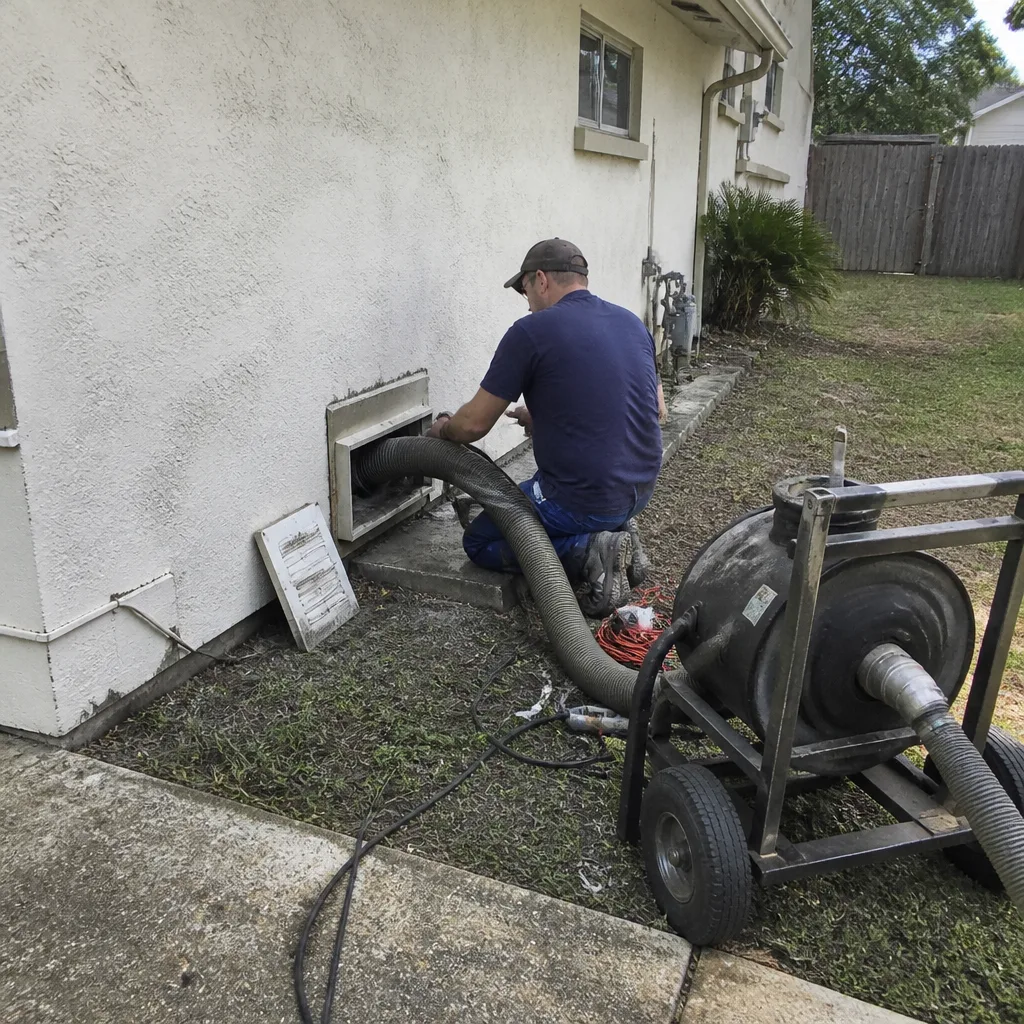 Before
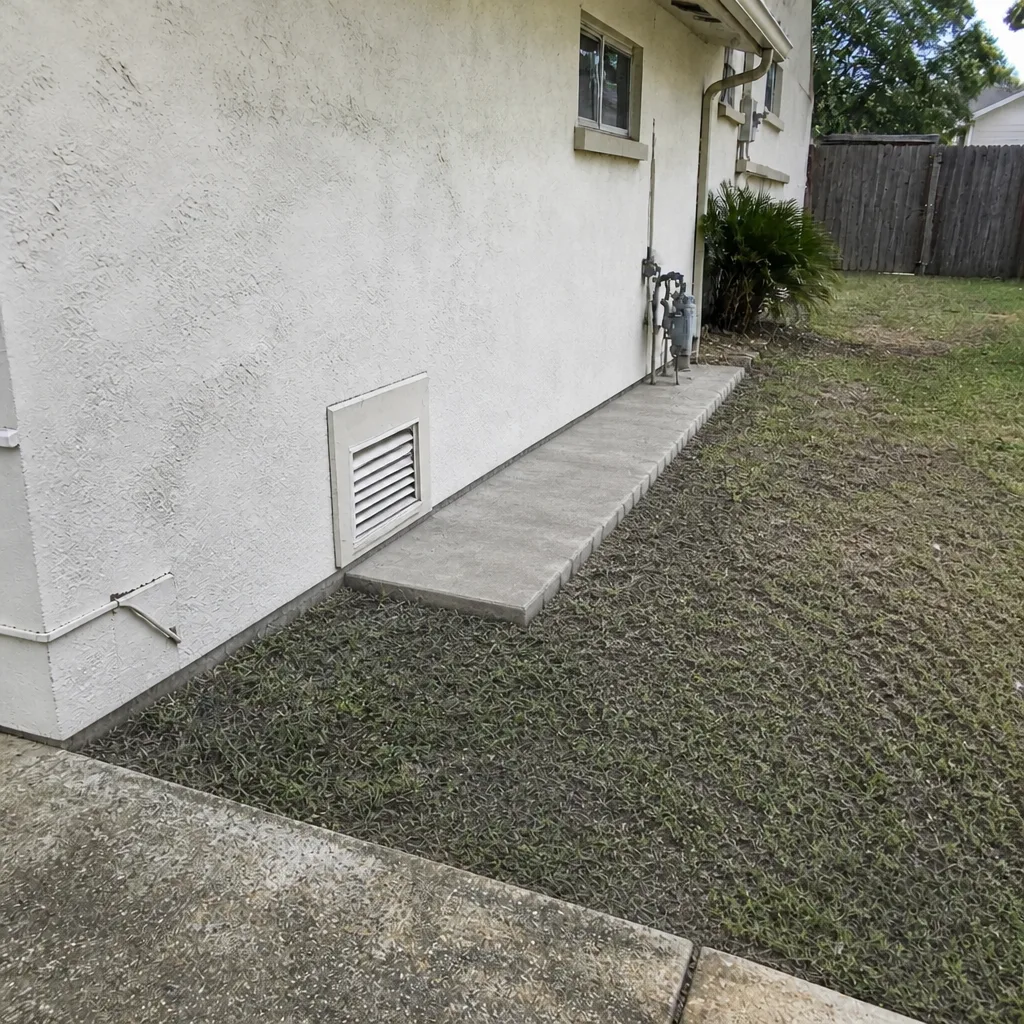 After
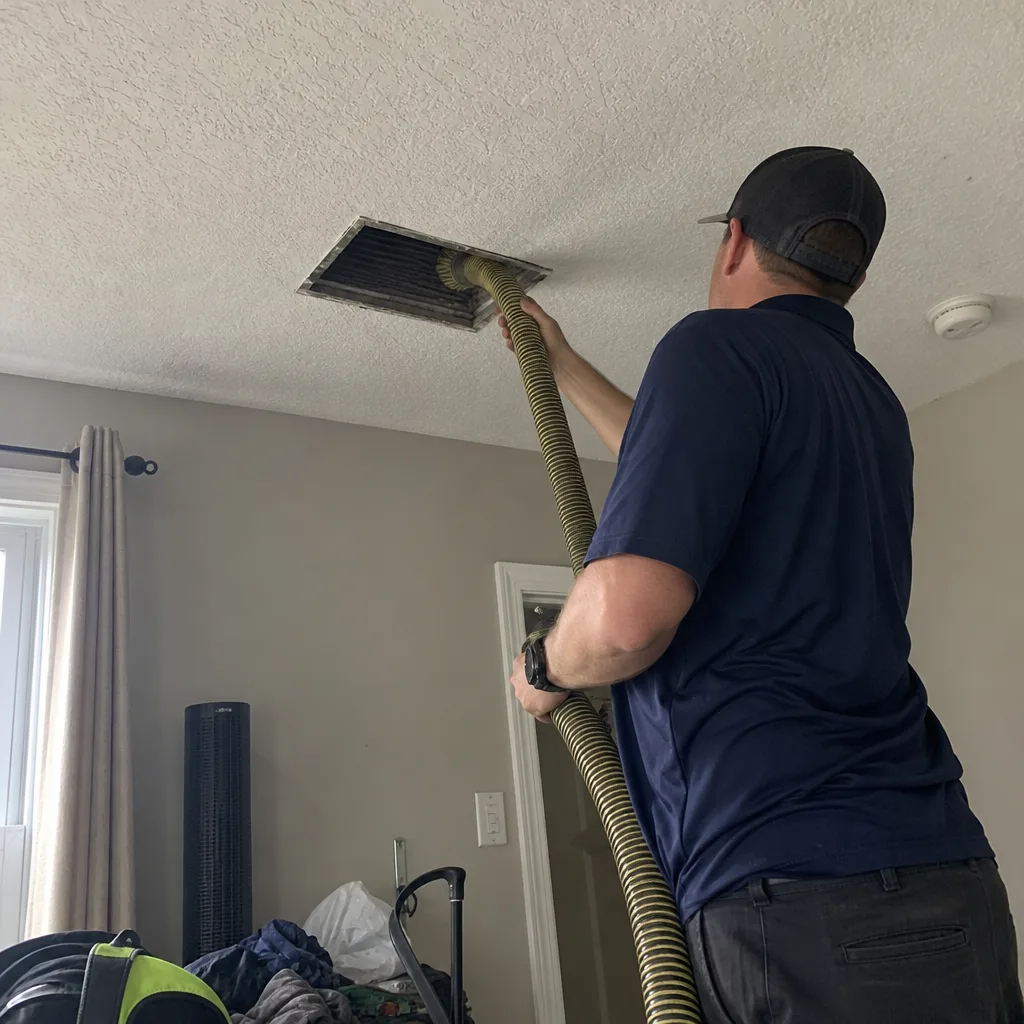 Before
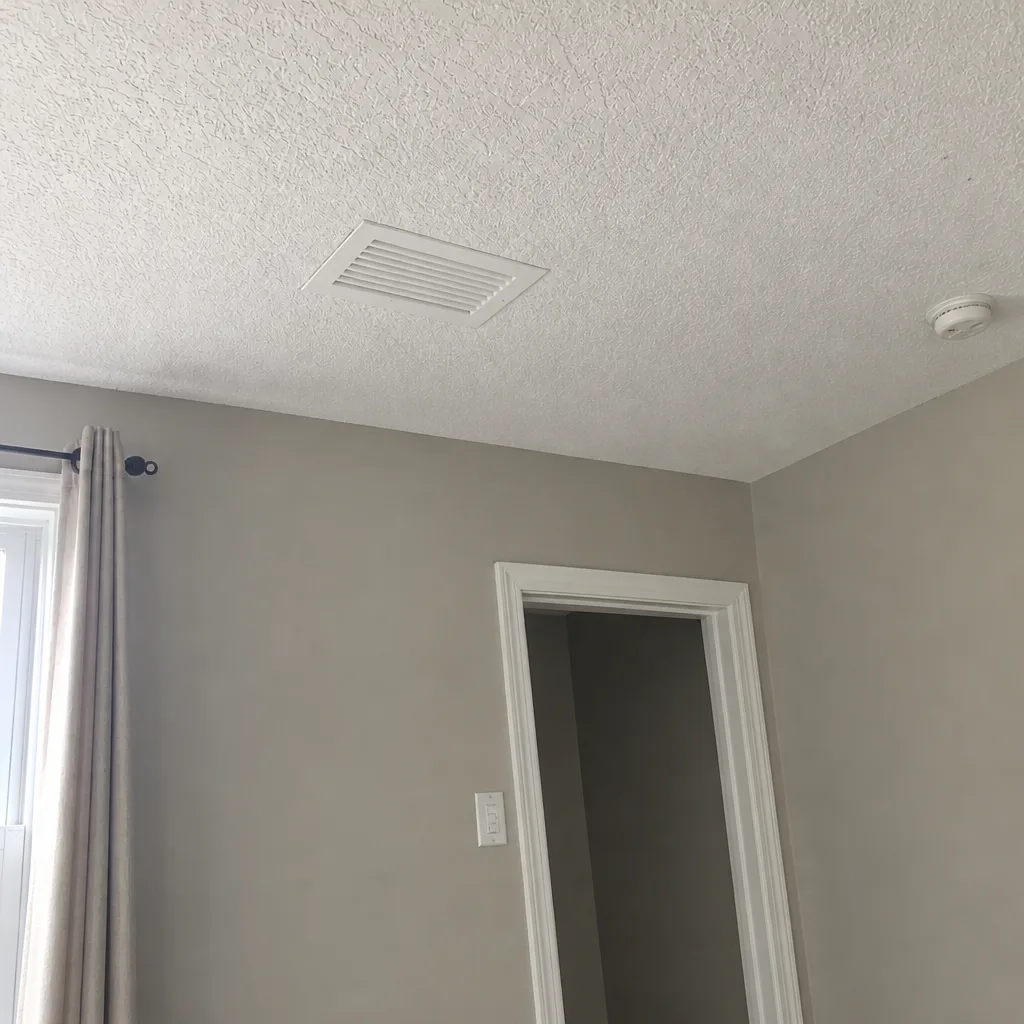 After
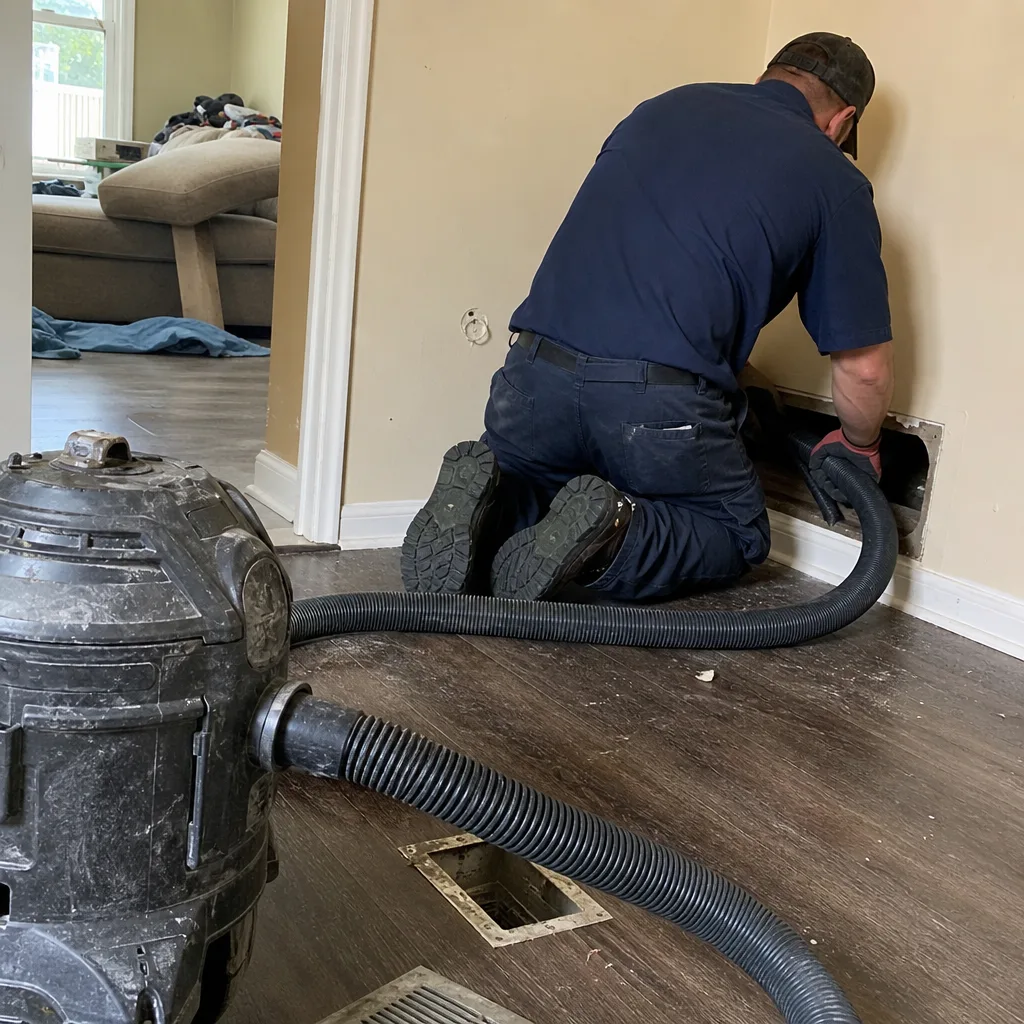 Before
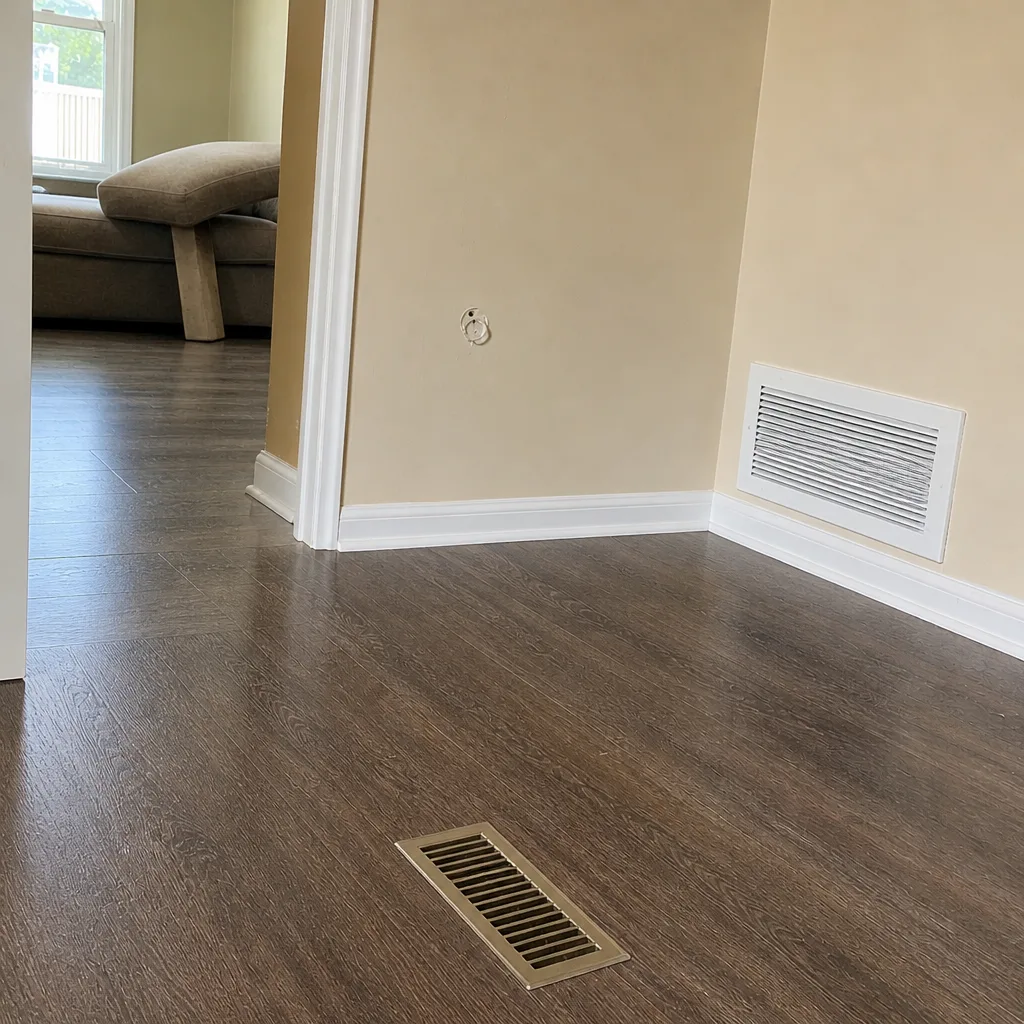 After
When to Call a Professional
Not every home needs a duct cleaning every year. Here are the situations where it’s genuinely warranted:
You’ve recently finished a renovation and drywall dust has been cycling through your returns. Your ducts have visible dust buildup at the registers, or you smell a musty odor when the system kicks on. Someone in the household has persistent allergy or asthma symptoms that seem worse indoors. You have multiple pets and it’s been several years since your last cleaning. Your HVAC system is older and you’re noticing reduced airflow or comfort issues. Or you’ve never personally seen inside your ducts and you want to know what’s there.
If you recognize yourself in any of these, Duct Cleaning Palm Coast offers free estimates in Palm Coast – call (855) 592-3509 for a written, one-price-per-system quote before you commit. Our team is licensed and insured, and our technicians have up to 15 years of experience with the equipment described above.
If you’re looking for a comprehensive dryer vent cleaning as part of the same visit – and you should be – ask for it when you call. Dryer vent cleaning that reduces fire risk is part of the same air-pathway thinking, and it’s a service worth bundling into the appointment.
Frequently Asked Questions
Rotobrush, Nikro, and Abatement Technologies are three of the strongest brands in professional duct cleaning. Rotobrush is known for contact-cleaning systems that brush and extract simultaneously. Nikro is known for high-CFM negative-air machines and HEPA filtration. Abatement Technologies is known for remediation-grade containment and extraction. Each covers a different part of the process, and a professional setup usually includes more than one.
Ask before the appointment, and ask again when the crew arrives. A legitimate contractor will name the equipment brand(s) and describe the process – brush-and-extract versus air-only – without hesitation. On arrival, ask to see the machine and its filtration stage. Evasive answers like “we have a big truck” without further detail are a red flag.
Low quotes are usually low because the process is shorter and the equipment is cheaper. A consumer-grade blower costs a fraction of a professional system, and a rushed air sweep is faster than a proper contact-cleaning pass. Some low quotes are also teasers that grow on-site once the technician has arrived. Confirm the price per system in writing before work begins.
Pricing depends on the number of systems, the size of your home, the condition of the ducts, and whether filter upgrades or repair work are involved. We don’t publish a per-vent or coupon price because honest pricing is a per-system flat rate quoted after we’ve looked at your setup. Call (855) 592-3509 for a free, written estimate specific to your home – the written estimate sets the final price, and there’s no charge for the estimate itself.
For most Palm Coast homes, professional duct cleaning every few years is a reasonable interval, and some homes need it more often. Homes with pets, allergy sufferers, recent renovation, or ongoing construction should be cleaned more frequently. Homes with tight filtration and no pets might stretch further. The honest answer is that it depends on what’s actually in your ducts, which is why a before-and-after photo record is worth asking for.
Ask for before-and-after photos of your own ducts, taken by the crew during the visit. A professional contractor takes these as a matter of course, and they’re your clearest verification that the work happened. If a contractor won’t provide them, that’s your answer. For a straightforward, verifiable visit in Palm Coast, we provide before-and-after photos on request as standard practice.
The Bottom Line
Equipment brand in duct cleaning is not a marketing label. It’s a specification sheet, and it tells you more about what will happen in your Palm Coast home than any pitch or web page will. Rotobrush contact-cleaning systems brush and extract simultaneously, so debris is captured rather than redistributed. Nikro negative-air machines give you the CFM and filtration to handle real duct systems. Abatement Technologies equipment covers the remediation-grade scenarios that call for full containment. A contractor who can name their equipment, describe the process, and show you before-and-after photos is the one to hire. A contractor who can’t, isn’t. Call (855) 592-3509 for a free estimate. We answer 24/7. Fast dispatch from 7am to 7pm, Sunday through Friday.
Written by the team at Duct Cleaning Palm Coast.